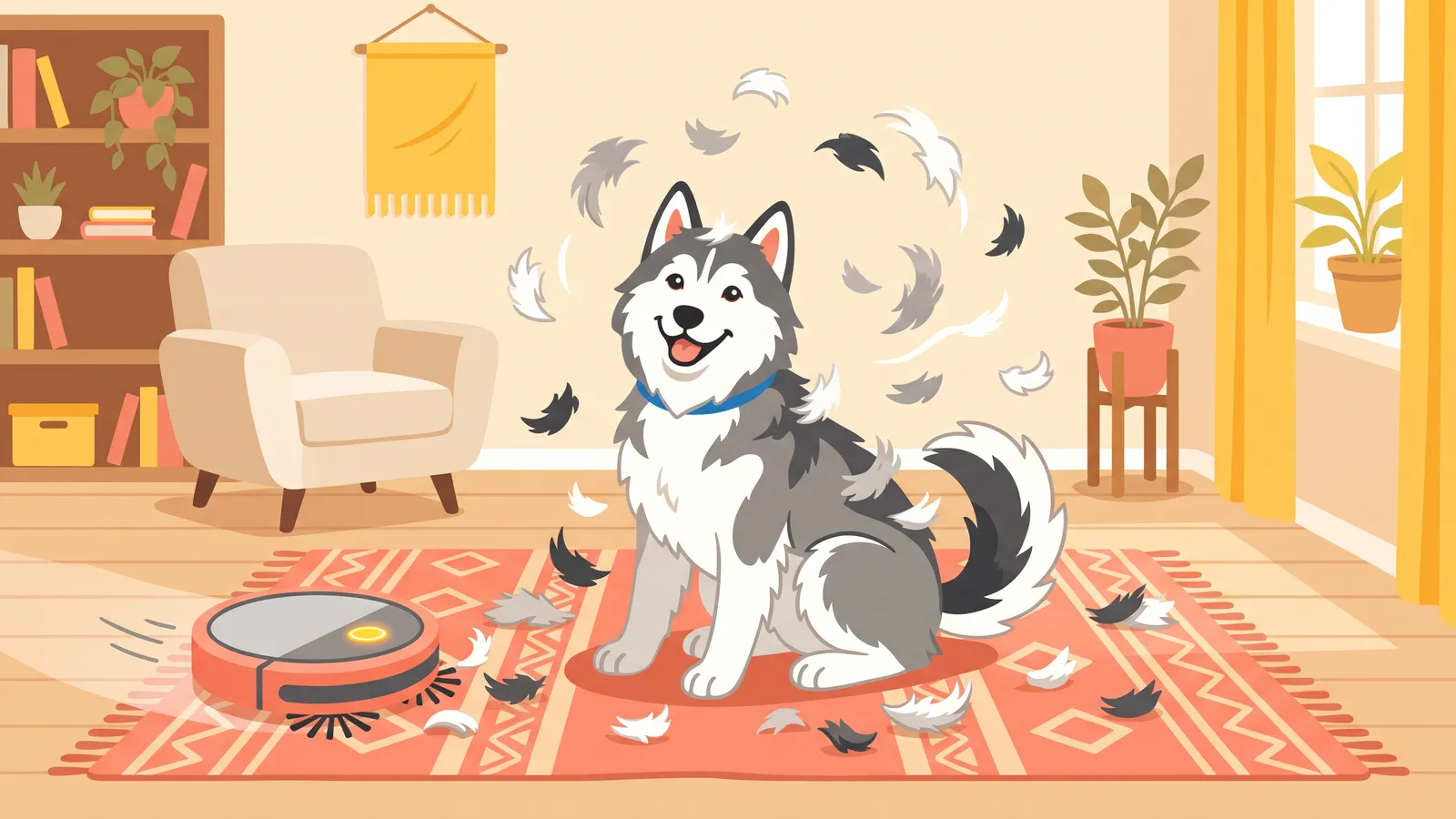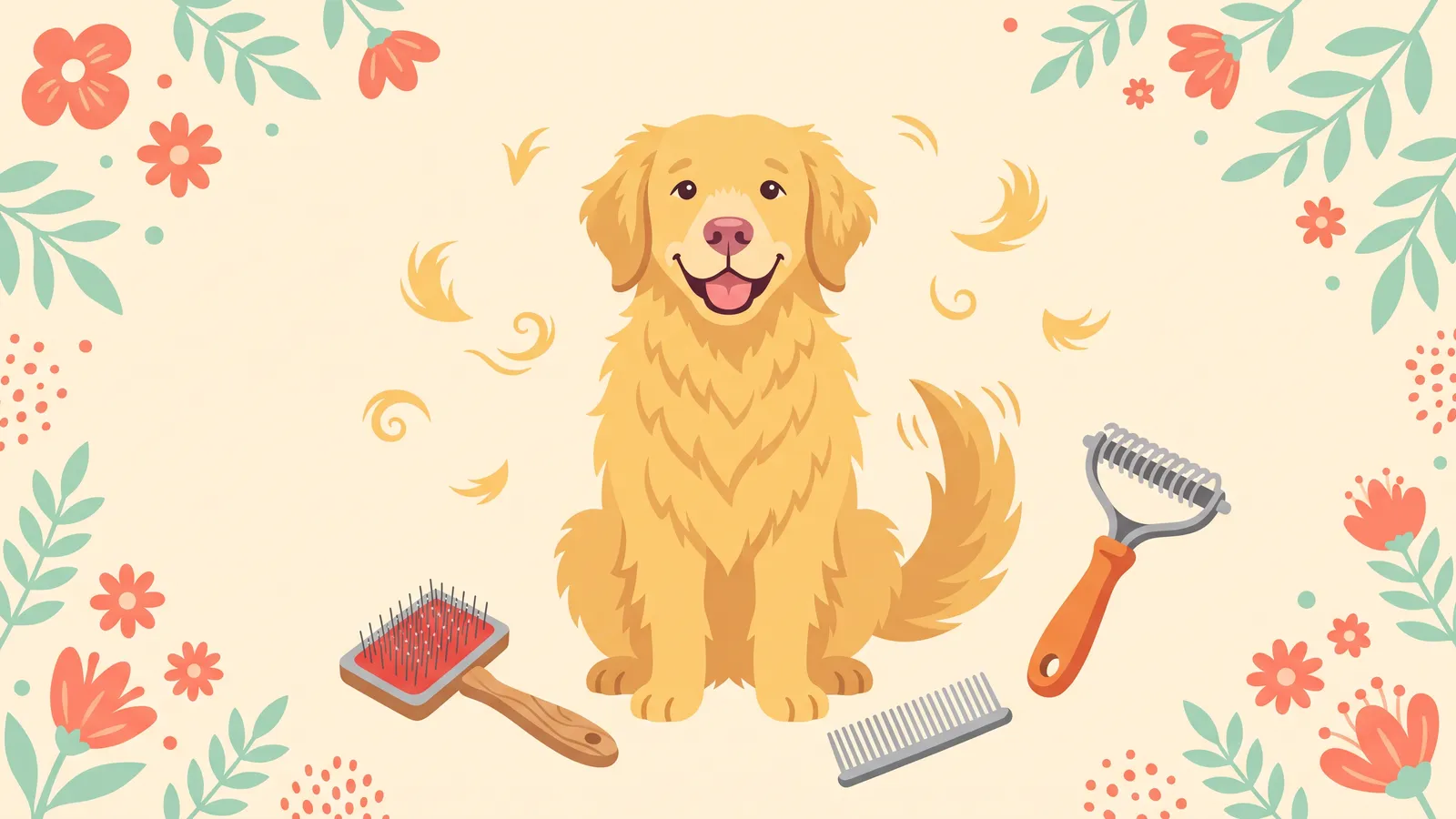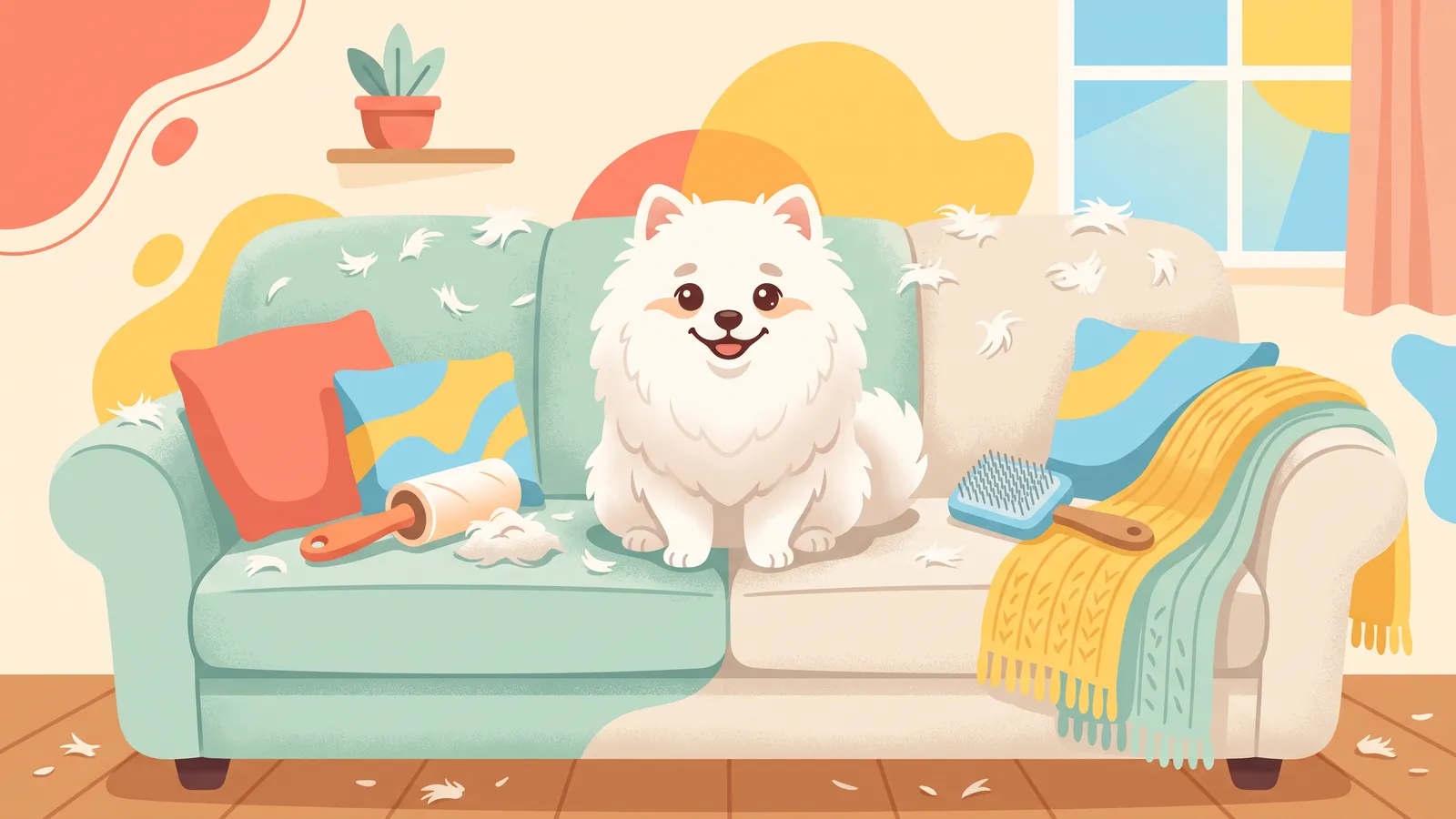
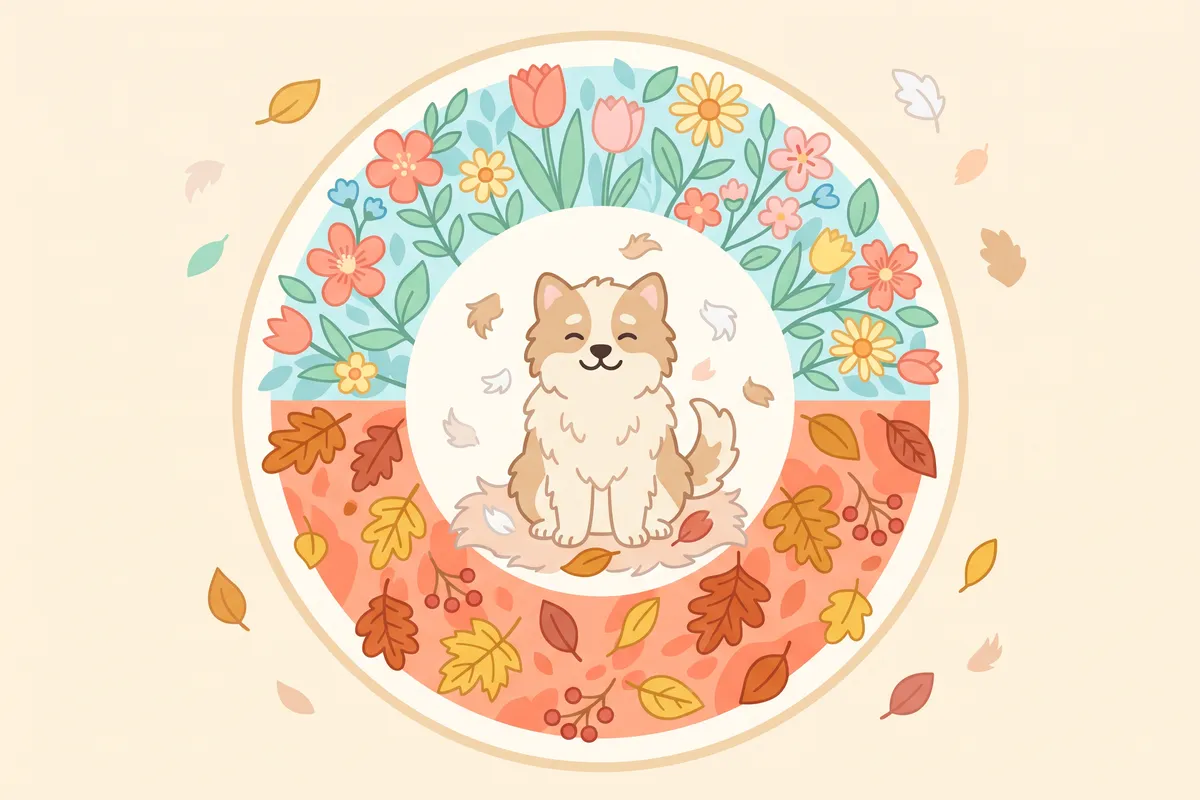
Dogs that shed seasonally shed the most in spring and fall. In spring they drop the heavy winter undercoat; in fall they shed the lighter summer coat to make way for a thicker one. Each coat blow lasts a few weeks to a couple of months, per the AKC. Indoor dogs and dogs in warm climates often shed more evenly through the year.
If it's October and your Lab is leaving tufts on every rug, you're right on schedule. This page is the when: the shedding calendar and how 10 popular breeds shed. If you want the what to do (deshed, bathe, dry, vacuum) or you're worried the shedding isn't normal, our guide to a dog shedding a lot covers that.
Do dogs have shedding seasons?
Yes, mostly the ones with a double coat: a soft, dense undercoat under longer guard hairs. The AKC explains it this way:
- Spring: dogs lose their heavier winter coat to stay cool.
- Fall: they shed lighter hair to make way for thicker insulation.
- What triggers it: changes in daylight and temperature, which set off hormonal changes that move the coat to the next season.
- How long it lasts: a few weeks to a couple of months, depending on breed, coat and environment.
Climate matters too. Dale Martins, a groomer with more than 40 years of double coats, told the AKC that a double-coated dog in a cold place may shed its undercoat only in spring and fall, but in a warmer place it could shed four times a year, or all the time. The AKC adds that indoor dogs with steady artificial light and heating may shed lightly all year and still have heavier spells.
Single-coated and curly-coated dogs (Poodles, many doodles) don't really have a season. Their hair grows longer and falls out slowly, often getting trapped in the coat instead of landing on your floor.
Dog shedding season months
Here's how the year usually breaks down in most of the US. Treat the months as a rough guide: your dog's own coat, your climate and how much time they spend indoors all shift it.
| Months | What's happening | Brushing for a double coat |
|---|---|---|
| March to May | Spring coat blow: the winter undercoat comes out, often in clumps | Daily short sessions while it's coming out |
| June to August | Summer coat, lighter steady shedding | About weekly |
| September to November | Fall coat blow: summer coat drops, winter undercoat grows in | Daily short sessions while it's coming out |
| December to February | Full winter coat, lighter steady shedding | About weekly |
Our reading. The AKC names spring and fall but not exact months; the months above are our translation for a typical US climate. Breed pages add detail where they have it, like late spring for Corgis and spring for Beagles.
Shedding by breed: 10 popular dogs
Our data. We pulled each breed's coat, shedding score and grooming advice from its AKC breed page (read October 10, 2026). The AKC scores shedding from 1 (low) to 5 (high). Goldendoodles aren't an AKC breed, so that row comes from the Goldendoodle Association of North America (GANA).
| Breed | Coat | Shedding (AKC, 1–5) | When it's heaviest | AKC brushing advice |
|---|---|---|---|---|
| Golden retriever | Medium-length, thick, water-repellent double coat | 4 | Heavy once or twice a year, moderate the rest of the time | Slicker once or twice a week; daily during heavy shedding |
| Labrador retriever | Short, thick, water-repellent double coat | 4 | "Twice a year in handfuls" (Labrador Retriever Club, via the AKC) | Comb every day during heavy shedding |
| German shepherd | Medium-length double coat: harsh outer coat, softer undercoat | 4 | "More profusely once or twice a year" | Quick brushing every few days; more often in heavy periods |
| Corgi (Pembroke) | Thick, weatherproof double coat | 4 | A fair amount daily; more in late spring and early summer | Daily comb and slicker; a rake in shedding season |
| Beagle | Smooth, dense double coat, heavier in winter | 3 | Spring; moderate all year | Weekly with a medium-bristle brush, rubber mitt or hound glove |
| French bulldog | Short, smooth coat | 3 | No season given; the AKC says it "sheds minimally" | Weekly with a medium-bristle brush, rubber mitt or hound glove |
| Dachshund | Smooth, longhaired or wirehaired | 2 ("moderate shedders") | No season given | Smooth: a towel or hound glove. Long: more often. Wire: once or twice a week, hand-stripped a few times a year |
| Chihuahua | Smooth or long | 2 | No season given | Smooth: occasional. Long: at least weekly |
| Poodle | Curly, keeps growing | 1 ("relatively non-shedding") | No shedding season | Daily unless kept in a short trim; brush and comb to the skin |
| Goldendoodle | Curly, wavy or straight (GANA) | Not scored | Furnished coats are typically non-shedding; flat-coated doodles shed more (GANA) | Treat a curly coat like a Poodle's |
Golden retriever shedding calendar
Goldens shed a little all the time and a lot once or twice a year. Most owners notice it in spring and again in fall. The AKC suggests a slicker brush once or twice a week normally, and daily during the heavy shed. A slicker alone tends to skim over the undercoat, which is why our best dog brush for golden retrievers roundup builds a small kit: undercoat rake, slicker and steel comb.
Lab shedding in fall (and spring)
"Labrador Retrievers shed twice a year in handfuls," Marilyn Little of the Labrador Retriever Club told the AKC. Her advice: comb every day during the heavy shed and bathe in warm water to loosen the dead hair. Labs have short hair, so a deshedding tool made for short coats reaches the undercoat better than a long-pin slicker. The club also says a Lab's coat should never be clipped or trimmed.
German shepherd shedding season
The AKC says they shed all year but "more profusely once or twice a year". In between, a quick brushing every few days is enough. During the blow, an undercoat rake daily and a high-velocity dryer after a bath make the biggest difference.
When do Corgis shed?
All the time, and more in late spring and early summer, per the AKC's Pembroke page. The AKC suggests a daily once-over with a comb and slicker, plus a rake in shedding season, and says a bath helps loosen dead hair as long as the dog is completely dry before you brush.
How often to brush a dog during shedding season
- Double coats: short daily sessions while the coat is blowing, then back to weekly. The AKC says heavy shedders may need brushing several times a week or daily at peak.
- Short single coats: weekly is usually enough; a rubber mitt picks up the loose hair.
- Curly coats: no change, because there's no season. Keep brushing to the skin.
Keep each session to 10 or 15 minutes. Two short sessions beat one long, grumpy one. For bath timing by coat type, see our bathing and brushing schedule, and for keeping the fallout off your furniture, how to get dog hair off the couch.
Gear that helps in shedding season
Maxpower Planet Pet Grooming Undercoat Rake
Best undercoat rake. Evidence level: specs only (Canine Journal's pick for thick coats). Two sides: a 9-tooth side for mats and a 17-tooth side for loose undercoat. Canine Journal says it's "not for use on legs, head, or tail", so keep it to the body. It's the daily tool for a coat blow on a golden, shepherd, Lab or Corgi.
FURminator Undercoat deShedding Tool
Best deshedder for coat-blow weeks. Evidence level: specs only (Canine Journal's overall best deshedding tool). The stainless edge reaches through the topcoat to loose undercoat. It's sold by dog weight and in short-hair and long-hair versions: short-hair for Labs and Beagles, long-hair for goldens and shepherds. Use light strokes about once a week in shedding season, since overuse can thin the coat.
SHELANDY Dog Grooming Dryer
Best budget dryer. Evidence level: tested by Whole Dog Journal, which named it its best budget dog dryer. After a bath, a high-velocity dryer blows loose undercoat straight out of the coat, which is the fastest way through a coat blow if you bathe at home. It has variable speeds, so you can start low with a nervous dog. WDJ notes users report it's loud. Stronger options are in our dog dryer guide.
For tangles on ears and feathering, add a slicker like the Hertzko Self Cleaning Slicker Brush (specs only; Totally Goldens' best slicker pick).
This guide is general information, not veterinary advice. If you're worried about your dog, talk to your vet. Seasonal shedding comes out evenly and leaves healthy skin underneath. The AKC says to check with your vet if you see thinning fur, bald patches, irritated skin or a sudden increase in hair loss.
Shaving won't stop shedding: see should you shave a double-coated dog.
FAQs
What months do dogs shed the most?
Spring and fall. In most of the US that's roughly March to May and September to November, though the AKC says daylight, temperature and breed all shift the timing. Dogs in warm climates or kept mostly indoors may shed more evenly all year.
Do golden retrievers blow their coat?
Yes. The AKC says goldens heavily shed their double coat once or twice a year and shed moderately the rest of the time. Brush daily while it's blowing, with an undercoat rake for the body and a slicker for the feathering.
Do Labradors shed a lot?
Yes. The AKC gives Labs 4 out of 5 for shedding, and the Labrador Retriever Club says they shed twice a year "in handfuls". The hair is short, so it's less obvious on the dog than on your black pants.
How long does dog shedding season last?
A few weeks to a couple of months for each coat blow, per the AKC, and it tapers off gradually. Daily brushing while it lasts gets the hair out faster and in one place.
Which of these breeds sheds the least?
The Poodle, which the AKC scores 1 out of 5 and calls relatively non-shedding. Goldendoodles with a furnished (curly or wavy) coat are typically non-shedding too, per GANA. Both need more brushing and clipping instead, because loose hair mats in the coat.
Know your dog's season, brush daily while it lasts, and the spring and fall tumbleweeds get a lot smaller.