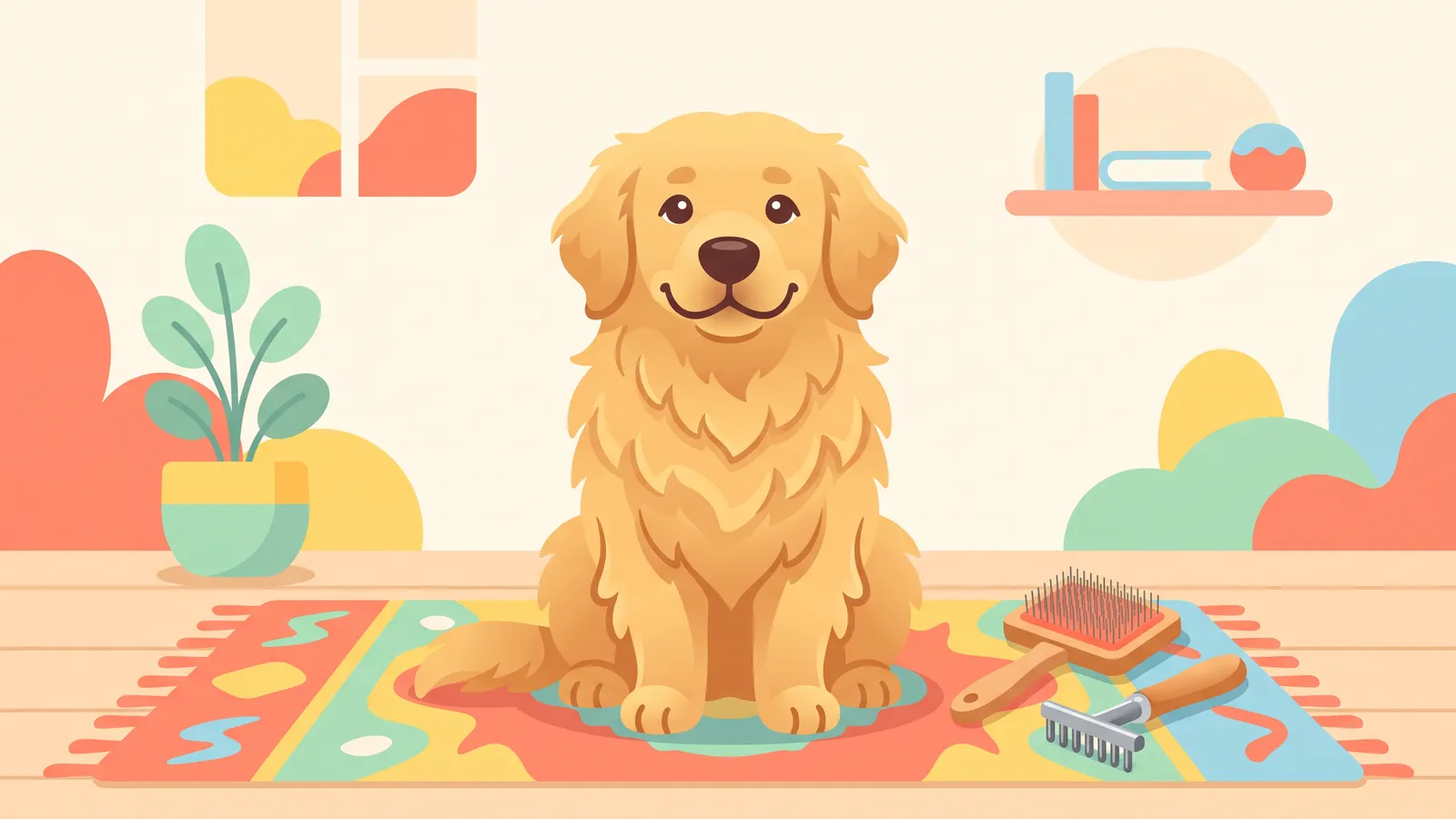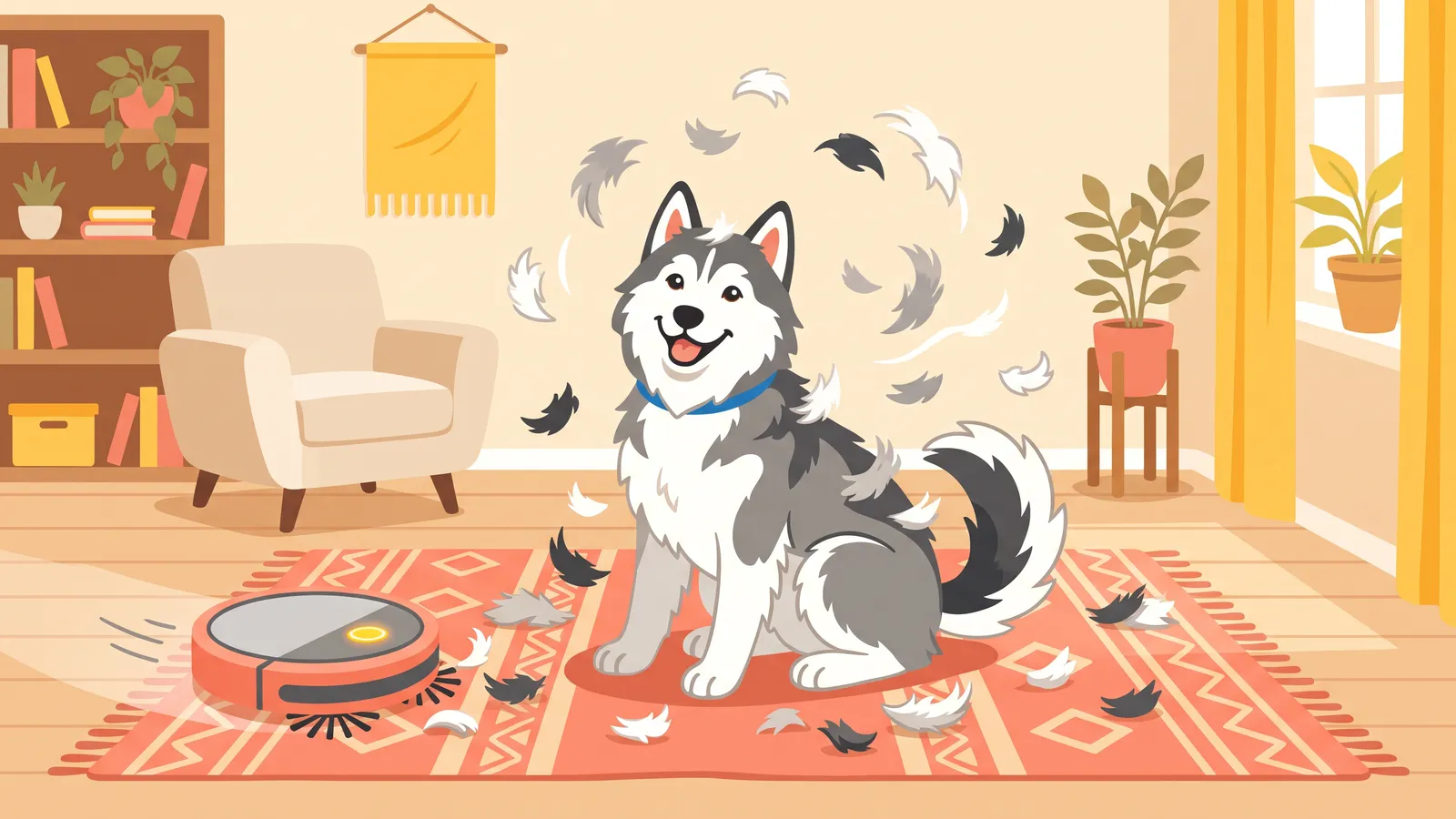
A husky doesn't shed so much as detonate. Most of the year you get a manageable drift of fur. Then the coat blows, and the undercoat comes out in sheets, tufts and little wool clouds that float across the kitchen. The fix is the right tool: not a general-purpose brush, but a long-toothed undercoat rake that reaches the woolly layer under the guard hairs.
Our verdict. We haven't used any of these brushes ourselves, so this is a roundup of what makers and published reviews say. If we owned a husky, we'd start with a Coastal Pet Safari long tooth rake for the body and an Andis steel comb to check we got down to the skin. A large slicker would handle the feathering and the pants. A FURminator-style deshedding tool would be an occasional extra, not the daily brush.
Quick picks
| Badge | Pick | Why it's here |
|---|---|---|
| Top pick (undercoat rake) | Safari Long Tooth Undercoat Rake | Play Bark Run's top husky pick; single row of long, rounded pins |
| Best rotating-tooth rake | FURminator Grooming Rake | Made for thick double coats; teeth rotate rather than snag |
| Best comb to check your work | Andis Stainless Steel Pet Comb | Long pins reach deep; the "did I get it all?" test |
| Best large slicker | Chris Christensen Big G Slicker | Upkeep on the pants, ruff and tail |
| Best deshedding tool | FURminator Undercoat deShedding Tool, Large, Long Hair | Named for huskies by Dog Notebook; sources say go easy |
| Best budget dryer | SHELANDY 3.2HP Pet Dryer | Loosens a lot of undercoat in one session |
The husky brushing system: rake first, slicker for upkeep, comb to check
One brush can't do the whole job, because a husky's coat has two layers. The guard hairs are straight and weather-resistant. The undercoat underneath is soft, dense and woolly, and that's the part that comes out in clumps. Published husky guides, including Play Bark Run and Dog Notebook, land on the same order of work:
- Rake first. Work an undercoat rake through the coat in the direction the hair grows. It pulls out the loose wool without cutting the guard hairs.
- Slicker for upkeep. Use a large slicker where a rake does poorly or shouldn't go: the fluffy pants on the back legs, the ruff, behind the ears, the tail. Dog Notebook calls a rake first, then a slicker or deshedder to finish, a common routine.
- Comb to check. Push a long-pin steel comb down to the skin. If it glides through, you're done. If it snags on a tuft of undercoat, rake that spot again. Play Bark Run calls its Andis comb the "seek and destroy" tool for the neck, rear and mane.
A few husky-specific technique notes from the same sources:
- Light pressure. Skin on the flanks, belly, armpits and behind the ears is thin, so go easy there.
- Don't overwork one spot. Play Bark Run suggests no more than about three passes over the same area per session. If more hair is waiting, come back in a few days.
- Focus on the heavy zones. The neck, the britches and the base of the tail tend to hold the most undercoat.
- A slightly damp coat can help. Play Bark Run suggests raking while the coat is slightly damp after a bath. Dry the rake afterward, since it notes this style of rake can rust if left wet.
Safari Long Tooth Undercoat Rake (Coastal Pet)
Best for: daily or every-other-day raking through a coat blow.
Evidence level: Specs only. We're working from Coastal Pet's product line, retailer listings and Play Bark Run's husky roundup, which ranks it first.
Retailers describe a single row of long tapered pins with rounded tips, built to remove loose undercoat and help prevent matting. Play Bark Run calls it "incredibly efficient at removing shedding hair" and likes the price. It's the plain, no-gimmick rake most husky roundups end up back at.
What sources like
- Long pins that reach a husky's dense undercoat
- Rounded tips and a lightweight build
- An inexpensive tool you can replace without drama
Keep in mind
- Play Bark Run says it can rust if you leave it wet, so dry it after damp brushing
- Coastal also sells a separate Safari rotating-tooth comb for medium and coarse coats. That's a different tool, so check you're ordering the rake
FURminator Grooming Rake
Best for: dogs who dislike being raked, or owners who want a gentler first pass.
Evidence level: Specs only, from FURminator's own product page and reviews that cover it.
Don't confuse this with the FURminator deshedding tool. This one is a rake with rotating metal teeth. FURminator says the teeth remove loose undercoat and help prevent tangles and mats, and that it suits dogs with thick or dense double coats. Dog Notebook describes the rotating teeth as gentler for sensitive or anxious dogs. FURminator also advises brushing out tangles before using a deshedding tool, and this rake is one way to do that.
What sources like
- Rotating teeth that roll through snags
- Gentler feel for a dog who flinches at a fixed-pin rake
Keep in mind
- Dog Notebook notes it sends more loose fur into the air, so work outside or over a tarp if you can
Andis Stainless Steel Pet Comb
Best for: checking the job and working the neck, britches and ruff.
Evidence level: Specs only. Play Bark Run recommends an Andis steel greyhound-style comb for huskies.
A long-pin steel comb is the cheapest quality control you can buy. After you rake, run it down to the skin. Play Bark Run uses it as a finishing pass for the deeper areas such as the neck, rear and mane. It also notes the pins can bend and wear out over time, though replacements are cheap.
What sources like
- Long pins that reach deep hair and debris
Keep in mind
- Pins can bend with hard use
- A comb isn't a deshedder. It finds what's left; it won't pull out a whole coat blow
- Check the pin length on the listing so you buy a medium-to-wide spacing that suits a thick coat
Chris Christensen Big G Slicker Brush
Best for: off-season upkeep and the feathering on the pants, ruff and tail.
Evidence level: Specs only. It's a groomer-brand slicker widely recommended for double coats; no husky-specific review of this exact model turned up.
Get a large slicker for a husky, not a small one, so the pins aren't fighting the density of the coat. This one is a groomer-brand slicker with a large head. Use it for the finishing pass after raking, and as a weekly brush outside blow season. It isn't an undercoat tool. The dense wool under the guard hair needs the rake.
What we like on paper
- Large head covers more coat per stroke
- Made by a professional grooming-tool brand
Keep in mind
- Slickers can scratch skin if you press. Light strokes, always
- A slicker alone leaves a lot of undercoat behind, which is why it's the second tool in this system
FURminator Undercoat deShedding Tool, Large, Long Hair
Best for: an occasional, careful pass during the heaviest weeks.
Evidence level: Specs only. Dog Notebook names it as its editor's choice for huskies and German shepherds, with a caveat; Play Bark Run advises against this style of tool altogether.
Opinions split on this one. Dog Notebook says it's effective on huskies but "requires proper technique to avoid coat damage," and says the brand recommends using the original tool about once a week rather than daily, to protect the topcoat. It also notes huskies under about six months old don't have the coat density to benefit. Play Bark Run goes further and argues that deshedding blades cut the hair instead of lifting it out, leaving a choppy coat over time. We'd treat it as optional. If you use it, rake first, keep the strokes light, and stop if the topcoat starts to look thin.
What sources like
- Pulls out a lot of loose undercoat in one go (per Dog Notebook)
Keep in mind
- Sizes are by dog weight and coat length; Dog Notebook lists the Large long-hair model for roughly 51 to 90 pound dogs
- Overuse can damage the coat
- Don't use it on a matted coat. Comb out tangles first
High-velocity dryer: the biggest shortcut in blow season
Raking is slow work on a coat that's coming out in tufts. Many husky owners and groomers lean on a high-velocity dryer instead. After a bath, the forced air blasts out loose undercoat and dries the dense coat down to the skin. That matters, because a thick husky coat can stay damp for hours.
What the sources say:
- Play Bark Run says its pick "blows out the coat and leaves your dog shed-free for up to 3 weeks," and says the effect lasts about 2 to 3 weeks.
- K-9 Dryers, which sells dryers, makes a similar claim. Take anything from a seller with some caution, since none of this is controlled research.
- Several guides suggest doing this outdoors. Loose undercoat goes everywhere.
The SHELANDY 3.2HP is the budget pick Play Bark Run uses, and it notes the drawback is noise. For stronger options and the safety rules (low heat, air kept away from the face, ear protection), read our best dog dryer roundup. A dryer is loud and unfamiliar, so introduce it slowly, as that guide explains.
Evidence level: Specs only, via Play Bark Run.
The blowing-coat plan
What a coat blow looks like
Huskies are double-coated, and most blow their undercoat roughly twice a year. The signs are hard to miss:
- Fur comes out in clumps and tufts, often while you're just stroking the dog
- The coat looks scruffy and two-toned, with pale wool poking through the topcoat
- You find fur on everything within a day or two of vacuuming
How long does it last?
Sources vary. Dog Notebook puts a blow at four to six weeks, and Play Bark Run says 4 to 6 weeks as well. Other husky blogs give shorter figures, such as two to four weeks, and some say spring blows run longer than fall ones. Age, diet, climate and how often you groom can all change the timeline. For breed-by-breed timing, see our dog shedding season guide.
A simple four-week routine
- Week 1: bath, dry, rake. Bathe with a gentle dog shampoo to loosen the dead coat. Dry the dog thoroughly; a high-velocity dryer does this fastest. Rake while the coat is clean and fully dry or just damp.
- Weeks 1 to 4: short daily sessions. Ten to fifteen minutes with the rake beats an hour once a week. Rake, then comb to check, then slicker the pants and tail.
- Mid-blow: repeat the dryer session if the coat is still coming out in clumps.
- After the blow: drop back to a weekly rake-and-comb.
The coat will look uneven partway through, and that's normal. Don't try to fix it with clippers.
Never shave a husky
The urge to shave a husky in summer is strong, but groomers and breed guides advise against it. The double coat helps insulate against heat as well as cold, and clipping it can change how it grows back.
Our guide to shaving a double-coated dog has the AKC's groomer's reasoning in full. The short version: shaving does not stop shedding. Raking does, along with a thorough bath and dry. Keep your dog cool with shade, water and air conditioning.
For a husky that really struggles in the heat, our guide to keeping a dog cool in summer has more.
Husky mixes: malamute, shepherd and lab mixes
Mixes make the "best brush for a husky mix" question trickier, because the coat can come out in several ways. A reliable approach: feel the coat, not the label. Part your dog's fur and look at what's underneath.
| Mix | What the coat is often like | Best starting tool |
|---|---|---|
| Husky x Malamute | Thick double coat, heavy blow, often longer guard hair | Long tooth rake and a comb; the same system as a husky, on a bigger dog |
| Husky x German shepherd | Double coat that varies from short to plush | Rake plus slicker; add a deshedding tool only if the coat is dense. |
| Husky x Lab | Often a dense, shorter double coat | A rake for the blow, a rubber curry or slicker for weekly upkeep |
Check whether your mix has a thick, soft undercoat. If it does, treat it as a husky for brushing and for the shaving rule. If the coat is short and sleek with little undercoat, a rake is overkill, and a slicker or rubber brush does the job. A groomer or vet can tell you what coat type you're dealing with.
Comparison table
| Pick | Type | Evidence level | Best for | Use |
|---|---|---|---|---|
| Safari Long Tooth Rake | Fixed-pin undercoat rake | Specs only | Main blow-season tool | Daily during a blow |
| FURminator Grooming Rake | Rotating-tooth rake | Specs only | Gentler first pass | Daily or every few days |
| Andis steel comb | Long-pin comb | Specs only | Checking; neck, britches, ruff | After every rake |
| Chris Christensen Big G | Large slicker | Specs only | Pants, ruff, tail; upkeep | Weekly, and finishing |
| FURminator deShedding Tool | Deshedding blade | Specs only | Occasional extra pass | About once a week at most |
| SHELANDY 3.2HP | High-velocity dryer | Specs only | Blowing out undercoat after a bath | Once or twice a blow |
Keep the fur out of the car
A husky in blow season leaves a layer of fur wherever it sits. If yours rides in the back seat, a car seat cover for large dogs keeps the upholstery clean. Brush before the drive, too.
This guide is general information, not veterinary advice. If your husky's shedding is sudden, patchy or comes with itchy, red, flaky or sore skin, talk to your vet. Don't assume it's just a coat blow.
FAQs
How often should I brush a husky?
Sources suggest a minimum of weekly brushing, with some recommending two or three times a week for upkeep. During a coat blow, daily sessions of 10 to 15 minutes are common advice. After the blow, back to once a week is usually enough.
What's the best brush for a husky blowing coat?
An undercoat rake with long pins is the first tool most husky guides recommend, such as the Coastal Safari long tooth rake. Add a steel comb to check, and a large slicker for the pants and tail. A high-velocity dryer after a bath helps loosen a lot of undercoat.
Is a deshedding tool safe for a husky?
It can be used with care, but sources disagree. Dog Notebook recommends the FURminator for huskies if used properly, about once a week and not daily. Play Bark Run says these blades cut the hair and advises against them. If you use one, go lightly, rake first, never use it on a matted or wet coat and stop if the topcoat looks thin. Not sure? Ask a groomer to show you.
Why is my husky shedding so much?
Huskies are heavy shedders, especially in a spring and fall coat blow. If the shedding is sudden, patchy, or comes with dry skin, itching, a dull coat or other changes, talk to your vet. Those can signal something other than a normal coat blow.
What's the best brush for a husky mix?
Match the tool to the coat. If your mix has a thick, woolly undercoat, a long tooth rake and steel comb are the place to start, like a purebred husky. If the coat is short and sleek, a slicker or rubber brush is plenty.
Husky care comes down to a simple system: rake first, comb to check, slicker for upkeep, and a bath and dry to start a heavy blow. Pick a good rake, brush a little every day through the blow, and leave the clippers in the drawer.