Most dogs need a bath every 4 to 8 weeks, or whenever they're dirty or smelly. The AKC says most experts suggest bathing as rarely as you can to keep the coat's natural oils. Brushing matters more: weekly for most coats, daily for curly coats and for double coats while they're shedding.
There's no single number, because coat type changes everything. One groomer quoted by the AKC has the simplest rule: wash your dog "when they are no longer huggable." The schedule below gives you a starting point for your dog's coat. Adjust it for how muddy their life is.
Bathing and brushing schedule by coat type
Our data. We compiled this from the AKC's grooming articles and breed pages (read October 10, 2026). Where the AKC gives a range, we use it; where it says "occasional", we say so.
| Coat type | Examples | Bath | Brushing | Tools |
|---|---|---|---|---|
| Short, smooth | French bulldog, smooth Chihuahua, smooth Dachshund | Occasionally; a damp washcloth between baths | Weekly | Rubber mitt, hound glove or medium-bristle brush |
| Short double coat | Labrador retriever, Beagle | Lab: every 4–6 weeks if mostly indoors. Beagle: not too often | Weekly; daily in heavy shedding | Deshedding tool for short hair, rubber mitt |
| Medium or long double coat | Golden retriever, German shepherd, Corgi | Occasionally, when dirty; don't overdo it | 1–2× a week (golden) to daily (Corgi); daily in coat blow | Undercoat rake, slicker, steel comb |
| Long, silky | Longhaired Chihuahua or Dachshund | When dirty | At least weekly | Slicker, comb |
| Wire | Wirehaired Dachshund | When dirty | 1–2× a week; hand-stripped a few times a year | Comb; a groomer for stripping |
| Curly, keeps growing | Poodle, curly or wavy doodle | Every 4–8 weeks, usually with a trim | Daily unless kept short; always to the skin | Slicker, steel comb |
| Oily coat | Basset hound | As often as weekly | Weekly | Rubber brush or mitt |
Where those come from: the Labrador Retriever Club's Marilyn Little suggests a bath every four to six weeks for an indoor Lab (AKC). Poodle groomer Gail Wolaniuk suggests every four to eight weeks (AKC). The AKC's bath guide says oily-coated breeds like Basset hounds may need a weekly bath, while short-haired breeds and water-repellent coats like the golden's need fewer.
How often to bathe the 10 breeds we cover
| Breed | AKC bath advice | AKC brushing advice |
|---|---|---|
| Golden retriever | "Only need occasional baths"; dry completely before brushing | Slicker 1–2× a week; daily in heavy shedding |
| Labrador retriever | "Occasional baths"; every 4–6 weeks if mostly indoors (breed club) | Comb daily during heavy shedding |
| German shepherd | "Only needs an occasional bath" | Quick brushing every few days |
| Corgi (Pembroke) | Baths help loosen dead hair in shedding season | Daily comb and slicker; rake in season |
| Beagle | Not too often, unless they get into something messy | Weekly |
| French bulldog | No interval given; keep facial folds clean and dry | Weekly |
| Dachshund | No interval given; smooth coats are "wash and wear" | Depends on coat (see the table above) |
| Chihuahua | Smooth coat: "regular baths" | Smooth: occasional. Long: at least weekly |
| Poodle | Many owners use a groomer every 4–6 weeks for bath, groom and nails | Daily unless kept in a short trim |
| Goldendoodle | Not an AKC breed; we'd follow the Poodle schedule for a curly coat | Brush to the skin; see our goldendoodle grooming guide |
How often should you bathe a dog that sheds?
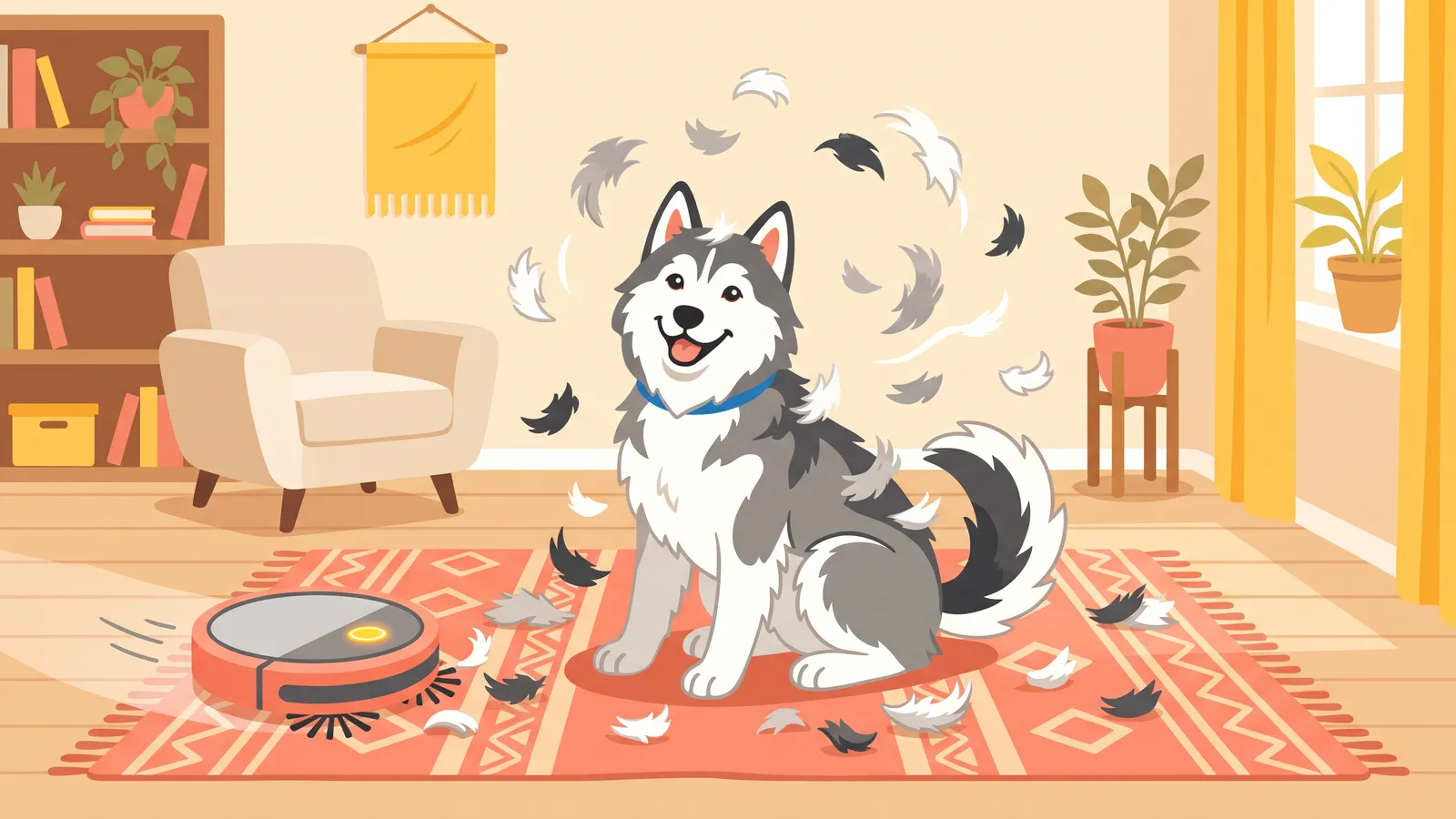
Not more often than usual. A bath does loosen dead undercoat, which is why the AKC suggests one during a Corgi's shedding season. But groomer Monica Handy told the AKC that overbathing a double coat can strip too much oil from the skin, and suggests a shampoo made for shedding instead. One bath at the start of the coat blow, a thorough dry, then daily brushing does more than weekly baths. Our shedding season guide has the timing by breed.
How often should you bathe a double-coated dog?
Occasionally, and only when they're dirty or smelly, per groomer Dale Martins in the AKC's double-coat guide. Brushing a double coat at least weekly does more for it than baths do. When you do bathe, rinse until you're sure, then rinse again, and dry right down to the skin. A damp undercoat packed against the skin is what you want to avoid.
How often should you bathe a dog in the summer?
The coat doesn't change the rule, but summer lives do: swimming, mud, sprinklers, rolling in things. Rinse with plain water after a pool or beach swim (the Labrador club suggests a bath after a pool swim to remove chlorine), and save the shampoo for when your dog is actually dirty.
Can I bathe my golden retriever once a week?
You can, but most goldens don't need it, and the AKC says goldens need only occasional baths. If yours swims or rolls in the mud weekly, a plain-water rinse and a thorough dry is gentler than a weekly shampoo. Brushing once or twice a week does more to keep a golden clean and the hair off your floor.
How to bathe your dog, step by step
- Brush first. The AKC's bath guide starts here: brush out loose hair and tangles before the coat gets wet, because water tightens tangles into mats. On a double coat, use an undercoat rake.
- Set up before the dog comes in. Shampoo, washcloth, several towels, cotton balls for the ears, and treats. A handheld sprayer helps a lot; a pitcher works too.
- Warm, not hot, water. Fill the tub to about knee height on your dog.
- Use dog shampoo. The AKC says not to use shampoo made for people, because its pH isn't right for dog skin. Work it through to the skin, in the direction the hair grows on long coats.
- Wash everywhere: belly, under the tail, legs and paws, under the neck, around the ears. Keep water and soap out of the eyes and ears.
- Rinse until the water runs clear, then once more.
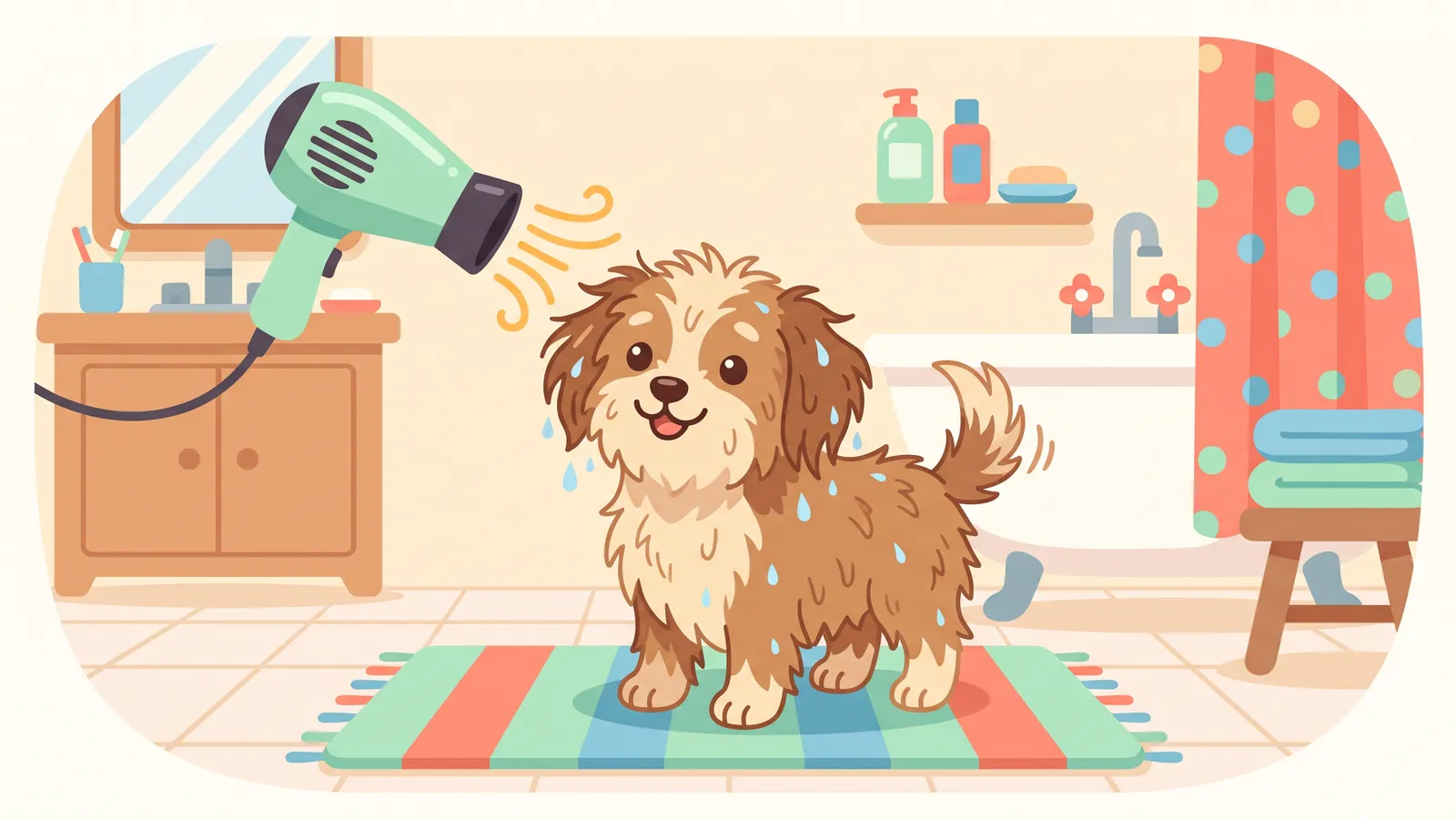
- Towel off hard, then dry fully. If you use a dryer, the AKC says skip the hottest setting and hold it at least a foot away. Golden and Corgi owners: the AKC says the dog must be completely dry before you brush.
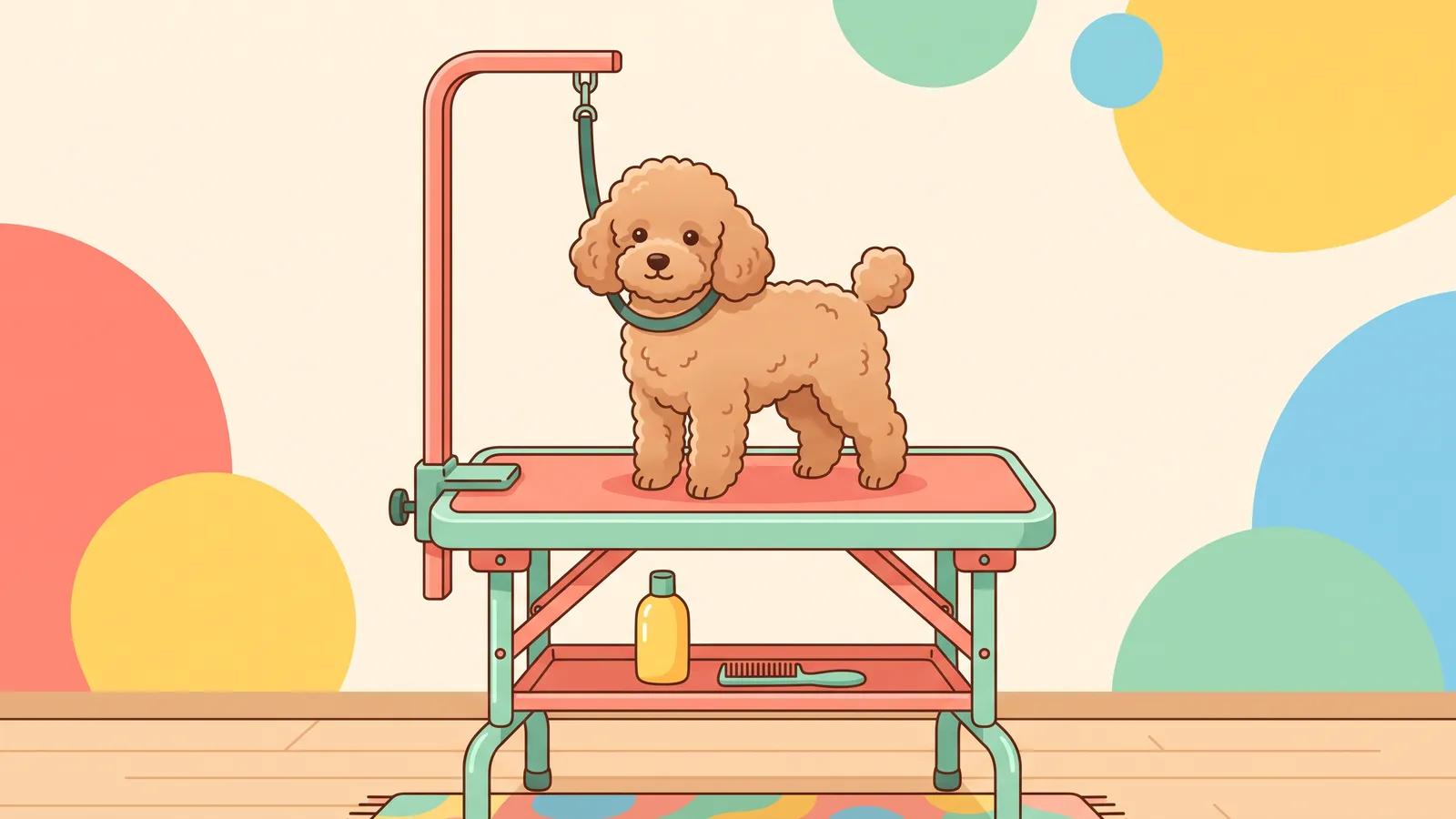
A grooming table puts a medium or large dog at a height where drying and brushing don't wreck your back.
How to bathe a dog who hates baths
- Go slower than you think you need to. Let your dog explore the empty tub with treats for a few days before any water.
- Add water in steps: a little in the tub, then the sprayer on low at the back legs, then a full bath.
- Use a non-slip mat. Sliding on an enamel tub is one of the scariest parts for many dogs.
- Keep it short. A quick, calm bath beats a long one that ends in a fight. Stop on a good moment and finish another day.
- Introduce the dryer separately, on the lowest setting from across the room. Our dog dryer guide has a day-by-day plan.
If your dog is truly panicked, a professional groomer can take over while you work on it at home.
Gear that helps
SHELANDY Dog Grooming Dryer
Best budget dryer. Evidence level: tested by Whole Dog Journal, which named it its best budget dog dryer. Variable speeds let you start barely above a whisper with a nervous dog, and the heater is optional. On a double coat, it also blows loose undercoat out after the bath. WDJ notes users report it's loud.
Master Equipment Grooming Table with 36" Arm
Best folding table. Evidence level: specs only. PetEdge lists a non-slip pebbled rubber top, folding steel legs and a 36" arm with an 18" loop. It's a fixed height of about 32½". Never leave your dog alone on the table or in the loop.
Natural Dog Company Sensitive Skin Oatmeal Shampoo
Gentle everyday shampoo. Evidence level: tested by BetterPet, whose tester found it easy to apply and quick to rinse with no residue, in a review checked by a vet. The maker lists oatmeal extract, manuka honey and aloe and calls it fragrance-free, though BetterPet's tester noted a lavender scent, so check the current label.
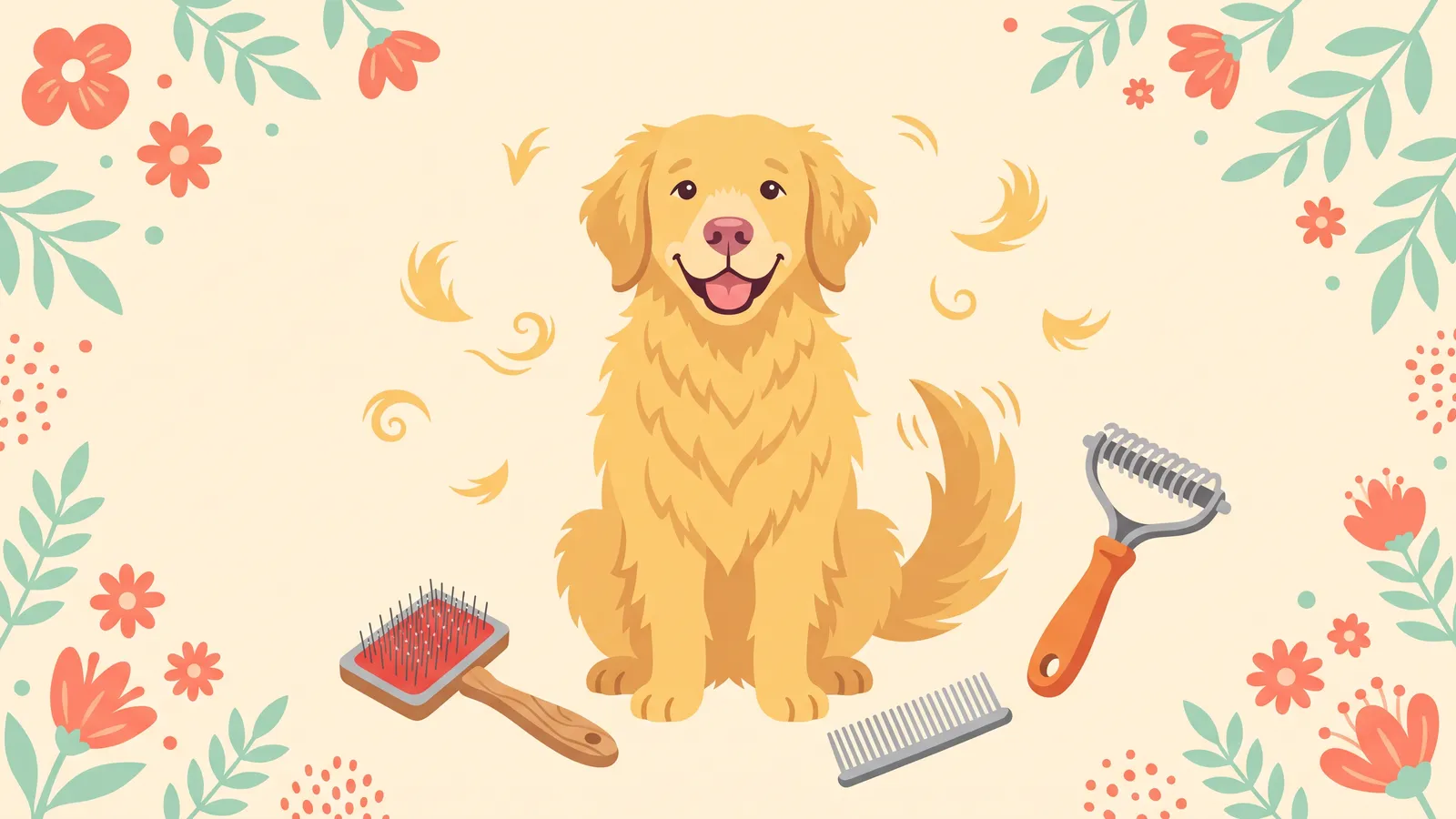
Before the bath, brush out with the Maxpower Planet Undercoat Rake on a double coat (specs only; Canine Journal's pick for thick coats), and check for tangles with an Andis steel comb. More brushes are in our golden retriever brush roundup.
This guide is general information, not veterinary advice. If you're worried about your dog, talk to your vet. If your dog has itchy, red, flaky, greasy or smelly skin, sores or bald patches, ask your vet before changing how often you bathe or which shampoo you use. Medicated shampoos and bathing schedules for skin conditions are your vet's call.
After the bath, see how to dry a dog without stress.
FAQs
How often can I bathe my dog?
For most healthy dogs, every few weeks is fine, and more often isn't usually needed. The AKC says experts suggest bathing as rarely as you can to protect natural oils. Oily-coated breeds may need a weekly bath; ask your vet if you think yours needs more.
How often do I bathe my French bulldog?
The AKC doesn't give an interval for Frenchies. It suggests weekly brushing and keeping the facial folds clean and dry. Bathe when your dog is dirty or smelly, and dry the folds well afterward.
Should you brush your dog every day?
For curly coats like Poodles and doodles, yes, unless they're kept short. For double coats, daily during shedding season and weekly the rest of the year. Short, smooth coats are fine with weekly.
Do I need to brush my dog before a bath?
Yes. The AKC's bath guide starts with brushing to remove loose hair and debris. Water tightens existing tangles into mats, especially on long and curly coats.
Can I use human shampoo on my dog?
The AKC advises against it: shampoo for people doesn't have the right pH for a dog's skin. Use a shampoo made for dogs.
Brush weekly, bathe when your dog stops being huggable, and dry them all the way down. That covers most dogs.