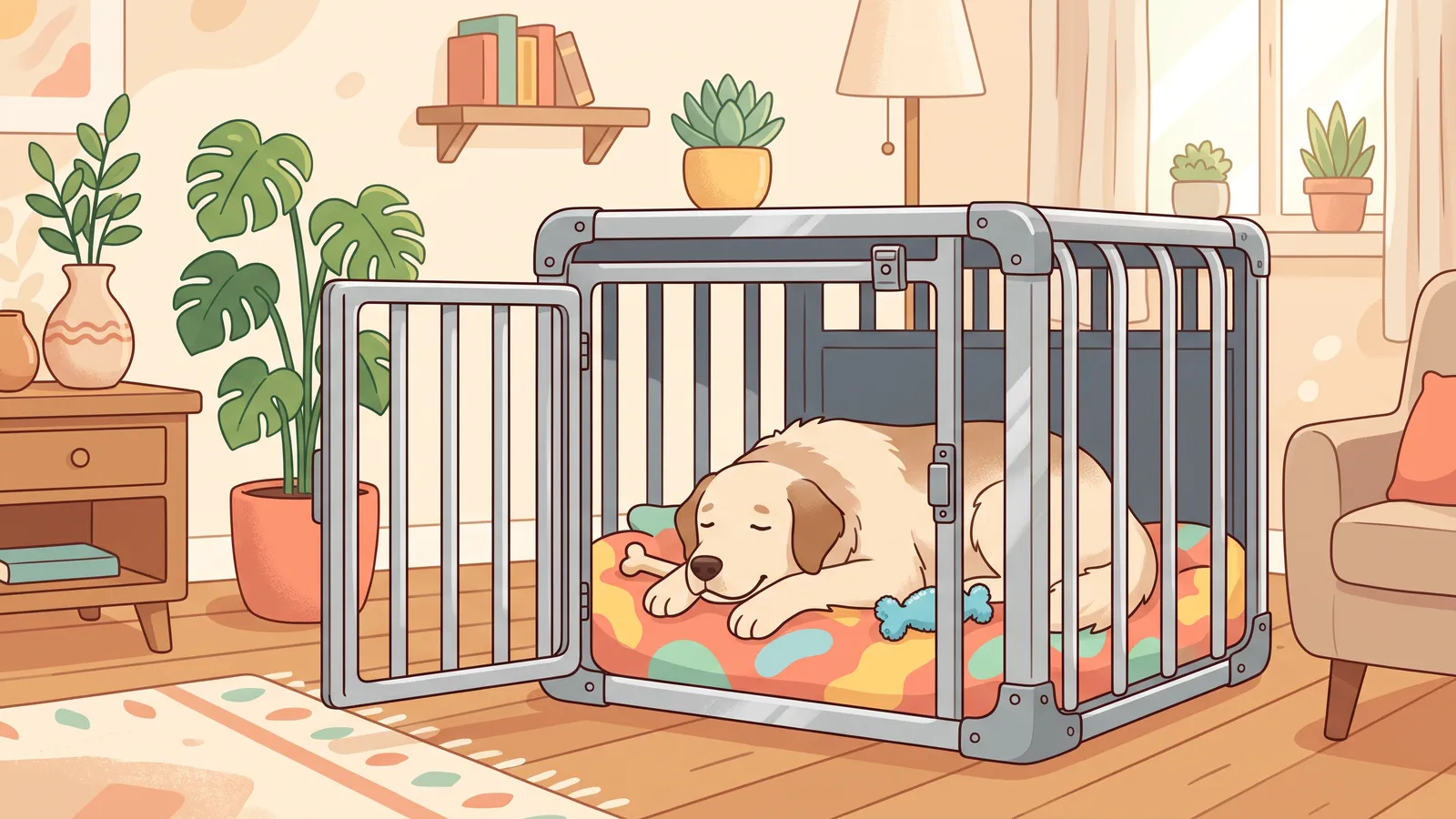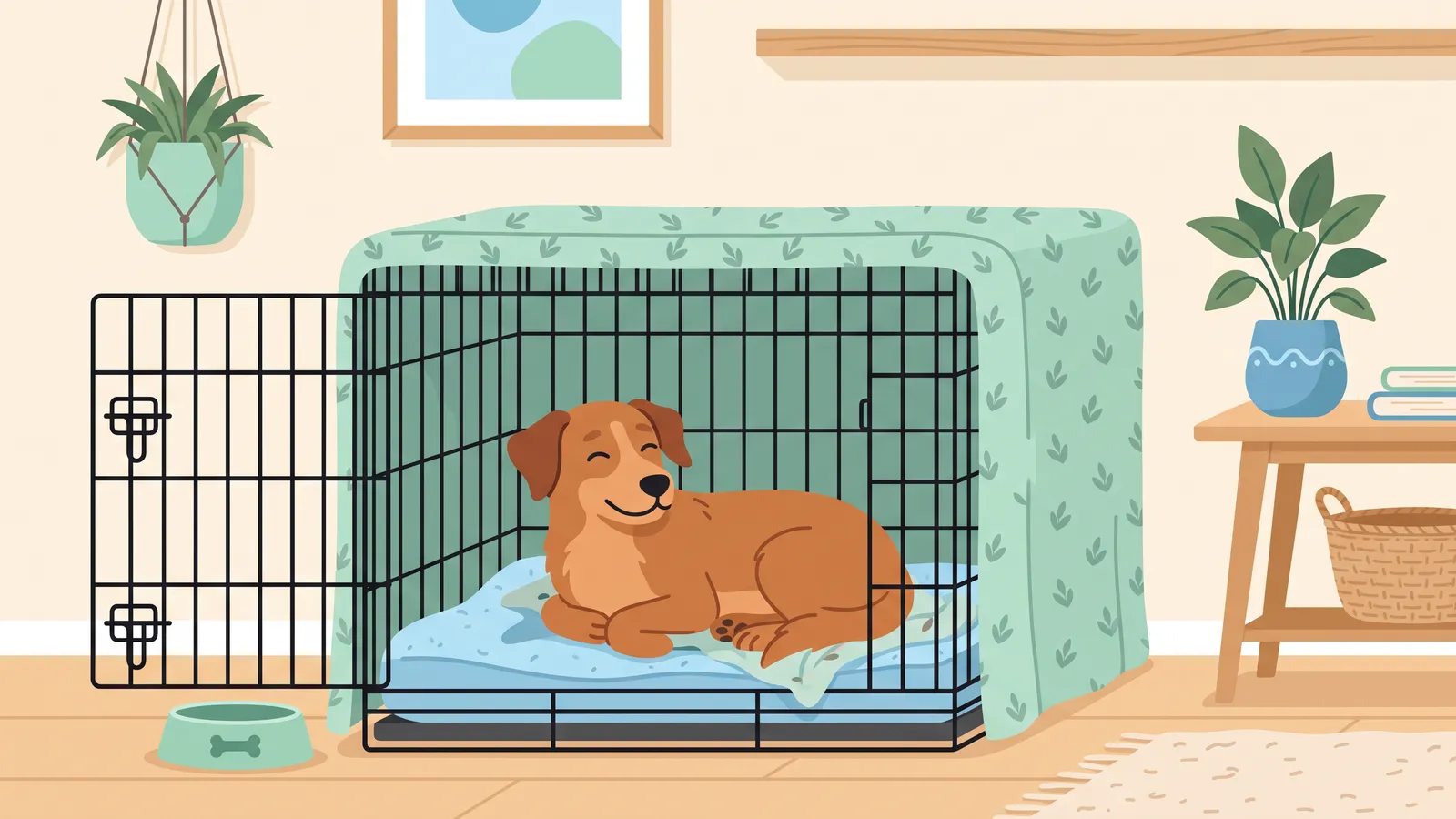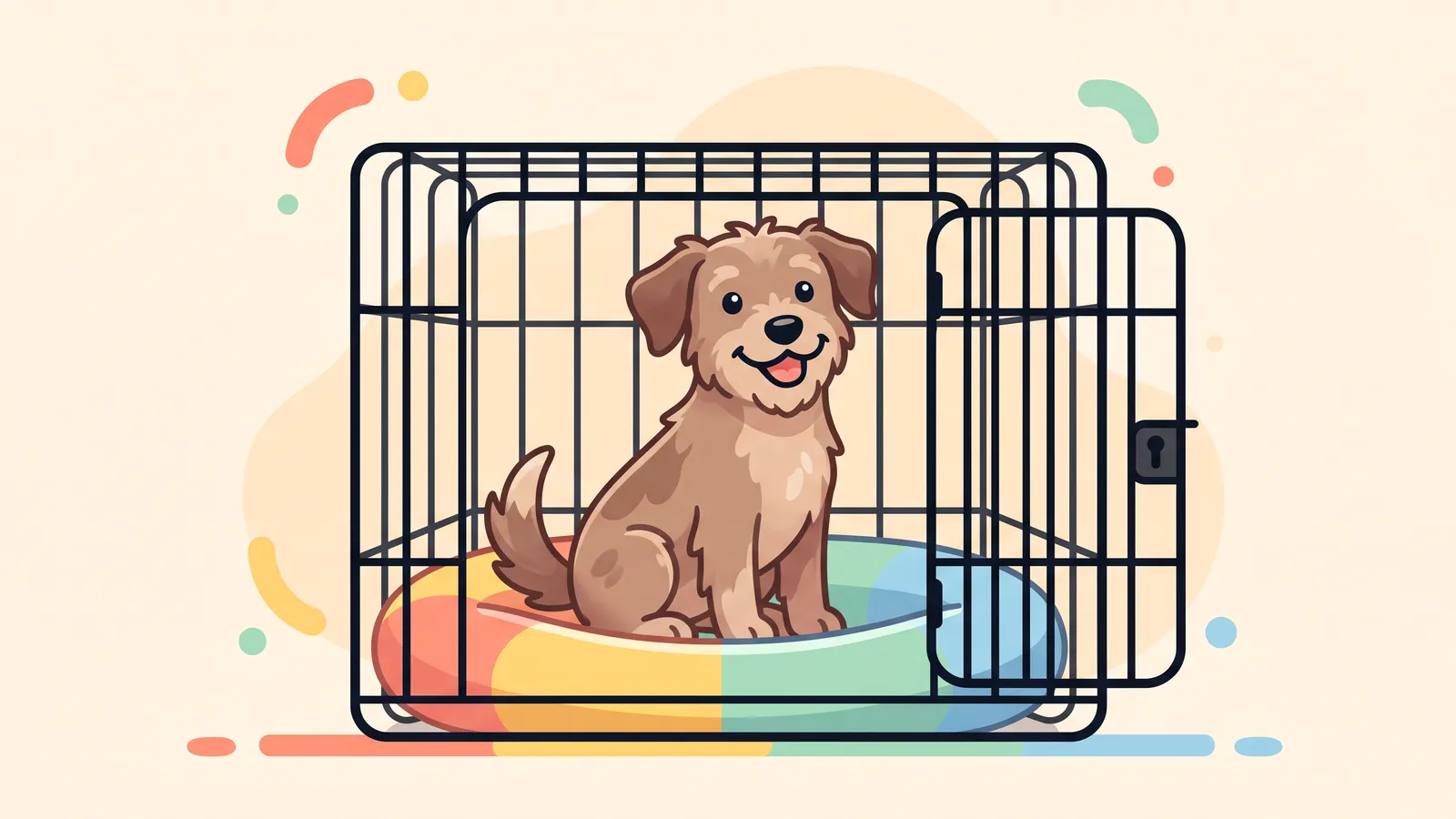
Your dog's crate should let them stand up, turn around and lie down comfortably, and not much more. Measure from nose to the base of the tail and from the floor to the top of the head while standing, then add 2 to 4 inches to each. As a rough guide, most dogs under 20 lb fit a 24-inch crate, 21–40 lb dogs a 30-inch, 41–70 lb dogs a 36-inch, and 71–90 lb dogs a 42-inch.
Weight charts are a starting point, not the answer: a 25 lb corgi and a 25 lb beagle are built very differently. Measure first, then check your number against the charts below.
How to measure your dog for a crate
You need a soft tape measure, a helper if your dog wiggles, and a few treats. MidWest Homes for Pets, which publishes one of the most-used crate charts, uses these two measurements.
- Length. With your dog standing, measure from the tip of the nose to the base of the tail. Not the tip of the tail: the tail can curl or tuck.
- Height. Still standing, measure from the floor to the top of the head. For a dog with upright ears, like a German shepherd or corgi, measure to the ear tips: they'll brush the roof otherwise.
- Add 2 to 4 inches to each. MidWest says to add "a few inches" for comfortable movement. We use 2 inches for small dogs and up to 4 for big ones.
- Compare with the crate's interior size. The size on the label is usually the outside length. Thick steel tube and rotomolded walls eat into the space, so check the inside measurements before you order.
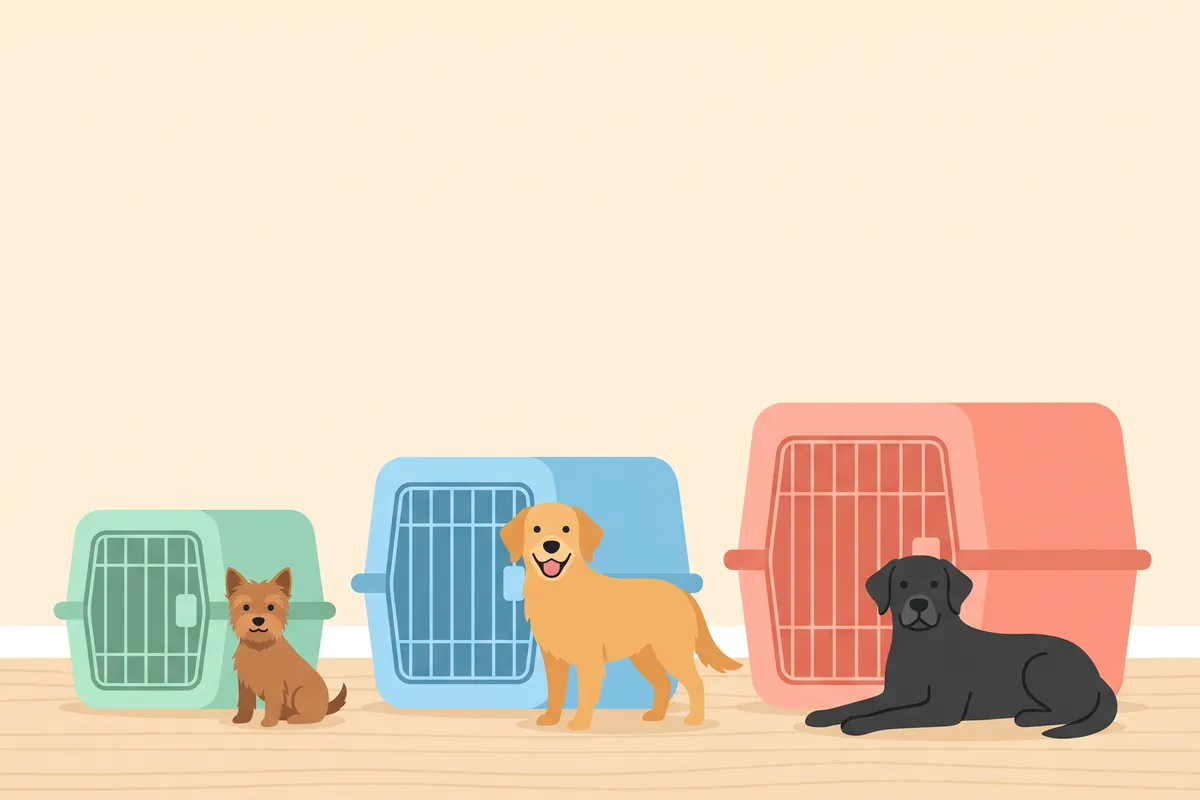
If your two numbers point to different sizes, go with the bigger one. A dog who can't stand up straight or stretch out will never settle; a crate a couple of inches roomier is fine.
Dog crate size chart by weight, height and length
This is MidWest's published chart for its folding wire crates. "Max dog height" and "max dog length" are your dog's measurements before you add the extra inches.
| Crate length | Max dog height | Max dog length | Dog weight |
|---|---|---|---|
| 18 in | 12 in | 17 in | 1–6 lb |
| 22 in | 14 in | 20 in | 7–11 lb |
| 24 in | 18 in | 22 in | 12–20 lb |
| 30 in | 20 in | 30 in | 21–40 lb |
| 36 in | 23 in | 34 in | 41–70 lb |
| 42 in | 28 in | 40 in | 71–90 lb |
| 48 in | 30 in | 46 in | 91–110 lb |
| 54 in | 36 in | 54 in | 110+ lb |
Two common searches, answered from the chart:
- What size crate for a 50 lb dog? A 36-inch crate, if your dog's measurements fit (up to 23 inches tall and 34 inches long). A tall, leggy 50 lb dog may need a 42.
- What size crate for a 60 lb dog? Also a 36-inch by weight, but 60 lb dogs are often tall enough to need a 42. Measure the head height; that usually decides it.
Crate sizes for 10 popular breeds
| Breed | AKC weight | By weight (MidWest chart) | MidWest's breed list | Our suggestion |
|---|---|---|---|---|
| Chihuahua | Up to 6 lb | 18 in | 24 in | 22–24 in |
| Dachshund, miniature | 11 lb and under | 22 in | 24 in | 24 in |
| Dachshund, standard | 16–32 lb | 24–30 in | 30 in | 30 in (check length) |
| Poodle, toy | 4–6 lb | 18 in | Not listed | 18–22 in |
| Poodle, miniature | 10–15 lb | 22–24 in | 24 in | 24 in |
| Poodle, standard | 40–70 lb | 30–36 in | 42 in | 42 in |
| French bulldog | Under 28 lb | 30 in | 30 in | 30 in |
| Beagle | Under 20 lb (13-inch) or 20–30 lb (15-inch) | 24–30 in | 36 in | 30 in; 36 if long |
| Corgi (Pembroke) | Up to 30 lb | 30 in | 36 in (Welsh Corgi) | 36 in (length decides) |
| Golden retriever | 55–75 lb | 36–42 in | 42 in | 42 in |
| Labrador retriever | 55–80 lb | 36–42 in | 42 in | 42 in |
| German shepherd | 50–90 lb | 36–42 in | 48 in | 48 in for most males |
| Goldendoodle | Petite to Standard, 25 lb to 51+ lb | 24–42 in | Not listed | Petite 24–30, Mini 30, Medium 36, Standard 42 |
Our data. Method: AKC weight ranges come from our own breed gear guides, which cite each breed's AKC page; goldendoodle sizes follow the GANA size groups on our goldendoodle page. We read each weight against MidWest's size chart, then checked MidWest's breed reference sheet, both read on October 10, 2026. Where the two disagree, our suggestion follows body shape: the breed sheet allows for length and height, which weight can't. These are starting points; your tape measure wins.
What the table shows:
- Weight undersizes long and tall dogs. Beagles and corgis are light for their length, and German shepherds are tall for their weight, so MidWest's breed sheet puts all three a size up.
- Toy breeds round up. A Chihuahua weighs as much as an 18-inch dog, but MidWest lists it under 24 inches. A 22–24 inch crate gives a tiny dog room for a bed and water without being cavernous.
- Doodles vary most. A "goldendoodle" can be 25 lb or 75 lb. Measure, and if your puppy's parents are known, size for them.
What size crate for a puppy?
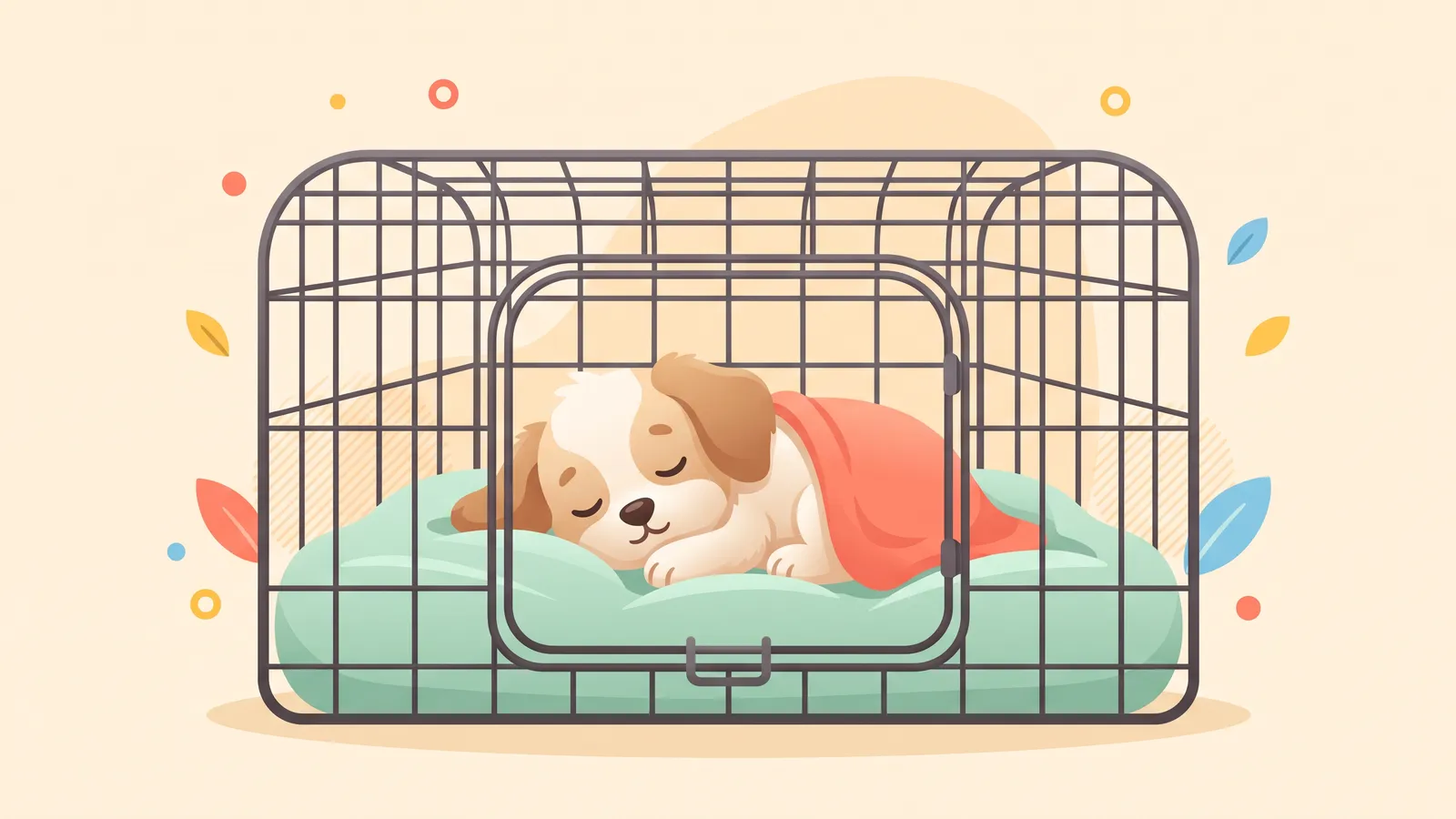
Buy for the adult size, then shrink it with a divider panel. The AKC recommends a crate that fits your puppy's adult size with a divider, so it can "grow" with your dog. The reason: if a crate is too big, the AKC says, a puppy can toilet at one end and sleep at the other.
- Find the adult size from the breed chart above, or from the puppy's parents.
- Set the divider so your puppy can stand, turn and lie down, and no more.
- Move it back every week or two as your puppy grows. MidWest notes the divider should fit snugly across the width of the crate.
For the first nights in a new crate, our crate training at night guide covers where to put it and how to handle crying.
Home, car and airline crates are sized differently
At home
A folding wire crate sized to the chart above suits most dogs. For dogs who bend wire or work latches loose, step up to a heavy-duty crate. Check its interior size: the Impact High Anxiety Crate, for example, comes in 30, 34, 40, 40-plus and 48-inch sizes, and its 30-inch model measures 30.5 × 20.5 × 26 inches outside. K9 of Mine ranks it first on its heavy-duty list, citing welded aluminum and four extra latches. For a big dog that needs 48 inches in steel, the SmithBuilt comes in 36, 42 and 48-inch sizes with a steel tray. Our heavy duty dog crate guide compares them all.
In the car
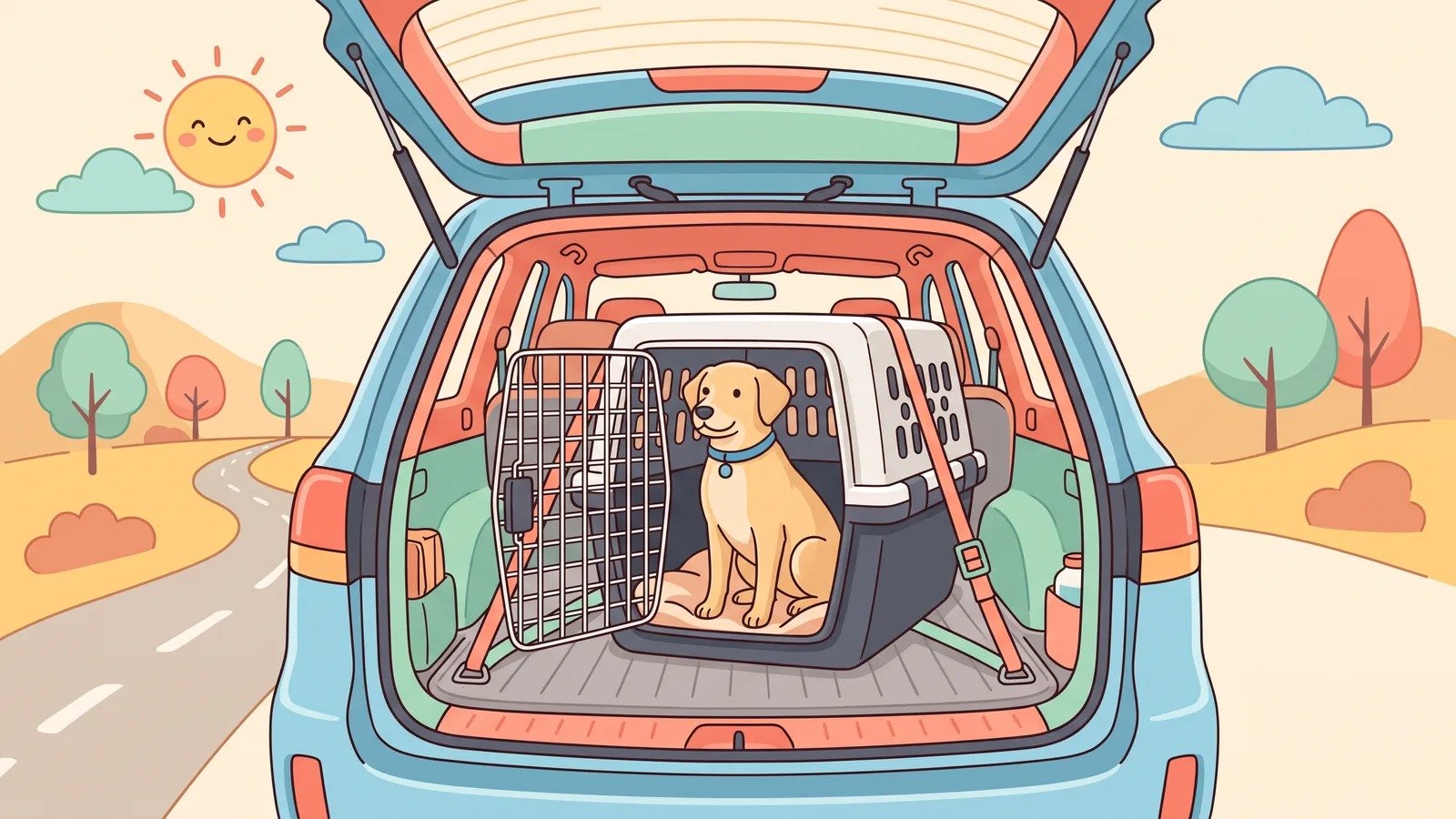
In a car, a snug crate is safer than a roomy one: there's less space for your dog to be thrown around. Size by your dog's measurements and your cargo area, and buy a crate that has been crash tested in that size. The Center for Pet Safety (CPS) lists the Gunner G1 Kennel as CPS Certified, 5 Star, in Small, Medium and Intermediate, with test dogs of 30, 45 and 75 lb. Gunner's interior sizes are Small 21.75 × 14.5 × 15.5 inches, Medium 25 × 18 × 19.75 inches and Intermediate 30 × 18 × 25 inches. The Gunner Large isn't on the list. For bigger dogs, CPS certified the Lucky Kennel Large with a 110 lb test dog.
One buying note: Gunner says gunner.com is its only authorized retailer unless it states otherwise, so on Amazon check that the seller is Gunner itself. Our travel dog crate guide explains the certifications size by size.
On a plane
Airlines set their own crate rules, including size, so check yours before you buy. The Petmate Sky Kennel is the classic airline crate; our travel crate guide covers it, and why it isn't a crash-tested car crate.
Signs the crate is the wrong size
Too small:
- Your dog ducks their head or can't sit up straight.
- They lie curled tight and can't stretch out on their side.
- Their tail or nose presses on the bars.
Too big:
- A puppy toilets in one corner and sleeps in another.
- Your dog seems unsettled, as if the crate doesn't feel like a den. Humane World for Animals says the crate only needs to be large enough to stand up and turn around in.
Then size the pad to the tray
A crate pad should fill the floor edge to edge. A pad that's too small bunches up and gives a puppy an edge to chew. Measure the inside of the tray, not the crate label. The Big Barker Orthopedic Crate Bed is cut to sit inside the tray: its Large is 39 × 25.5 inches, made for 42 × 28-inch crates, with 4 inches of foam for big or older dogs. It isn't chew-resistant, so it's for dogs who leave bedding alone. Our dog crate pad guide has picks for chewers and puppies with accidents.
If your dog panics in the crate rather than just being restless, size isn't the issue. Our crate for separation anxiety guide explains what a crate can and can't do.
FAQs
What size crate does a Labrador need?
Most adult Labs need a 42-inch crate. MidWest's breed sheet lists Labs under 42 inches, and the AKC weight range of 55–80 lb sits across the 36 and 42-inch bands. Measure your dog's head height while standing: if it's over 23 inches, the 36 is too short.
What size crate for an adult goldendoodle?
It depends on the doodle. Petite goldendoodles usually fit a 24 or 30-inch crate, Miniatures a 30-inch, Mediums a 36-inch, and Standards a 42-inch. Doodles vary more than any breed on our list, so measure length and head height and add 2 to 4 inches.
Is a bigger crate better?
No. A crate much bigger than your dog loses the den feeling many dogs like, and a puppy will often toilet at the far end. In the car, extra room lets your dog be thrown around. Size it to stand, turn and lie down, then stop.
Is there a crate size calculator?
The two-measurement method above is the calculator: nose to base of tail plus 2–4 inches gives the length, floor to top of head plus 2–4 inches gives the height. Match both to the crate's interior size.
What size crate should I buy for a puppy?
The size your puppy will need as an adult, with a divider panel. Set the divider so there's just room to stand, turn and lie down, and move it back as your puppy grows.
Measure twice, compare with the interior size, and pick the larger of two sizes if you're unsure. That's all it takes to get the crate right first time.