If your dog panics when you leave, chewing through wire, bending bars or scratching at the door, you need a crate that holds up. But let's be honest from the first line: a crate only contains your dog. It doesn't fix separation anxiety. The best anxiety dog crate (the best crate for dogs with separation anxiety) is a strong, escape-resistant one used as part of a training plan, ideally with your vet involved.
This guide is general information, not veterinary advice. If you're worried about your dog, talk to your vet. Separation anxiety is a real panic response, not bad behavior. Your vet can rule out other causes, and for moderate or severe cases they can refer you to a veterinary behaviorist or certified trainer and talk through every option.
Quick picks
| Badge | Pick | Why we like it |
|---|---|---|
| Top pick | Impact High Anxiety Crate | Welded aluminum, paddle latch, 10-year warranty |
| Best value heavy-duty | ProSelect Empire Dog Cage | 20-gauge reinforced steel bars and locking casters |
| Best for car and home | Gunner G1 Kennel | Double-walled rotomolded shell, CPS Certified in three sizes |
| Best door | Lucky Duck Lucky Kennel | One-hand paddle latch, one-piece rotomolded body |
| Best budget enclosed crate | Petmate Sky Kennel | Solid plastic sides for a darker, den-like feel |
| Best crate cover | MidWest QuietTime Defender | Turns a wire crate into a covered den for mild cases |
First: is a crate right for your dog?
A crate can be a calm, safe den for a dog that already likes it. For other dogs, being shut in is part of the panic. The ASPCA notes that for some dogs, crate confinement adds stress, and says that if your dog shows signs like heavy panting, drooling, frantic escape attempts, or nonstop howling or barking in the crate, a crate isn't the best option. A room behind a baby gate may suit them better.
So before you buy:
- Watch your dog in the crate while you're home. Do they settle, or try to get out?
- Record a short absence on your phone or a camera. A dog that sleeps is in a very different place from a dog that claws at the door.
- If your dog injures their mouth or paws trying to escape, stop crating and call your vet. A stronger crate makes escape harder; it doesn't make your dog less afraid.
Why the heavy-duty crates below, then? K9 of Mine points out that a panicking dog can hurt itself biting or pushing through a standard wire crate. That's why welded aluminum, heavy steel and rotomolded crates are the usual category for these dogs.
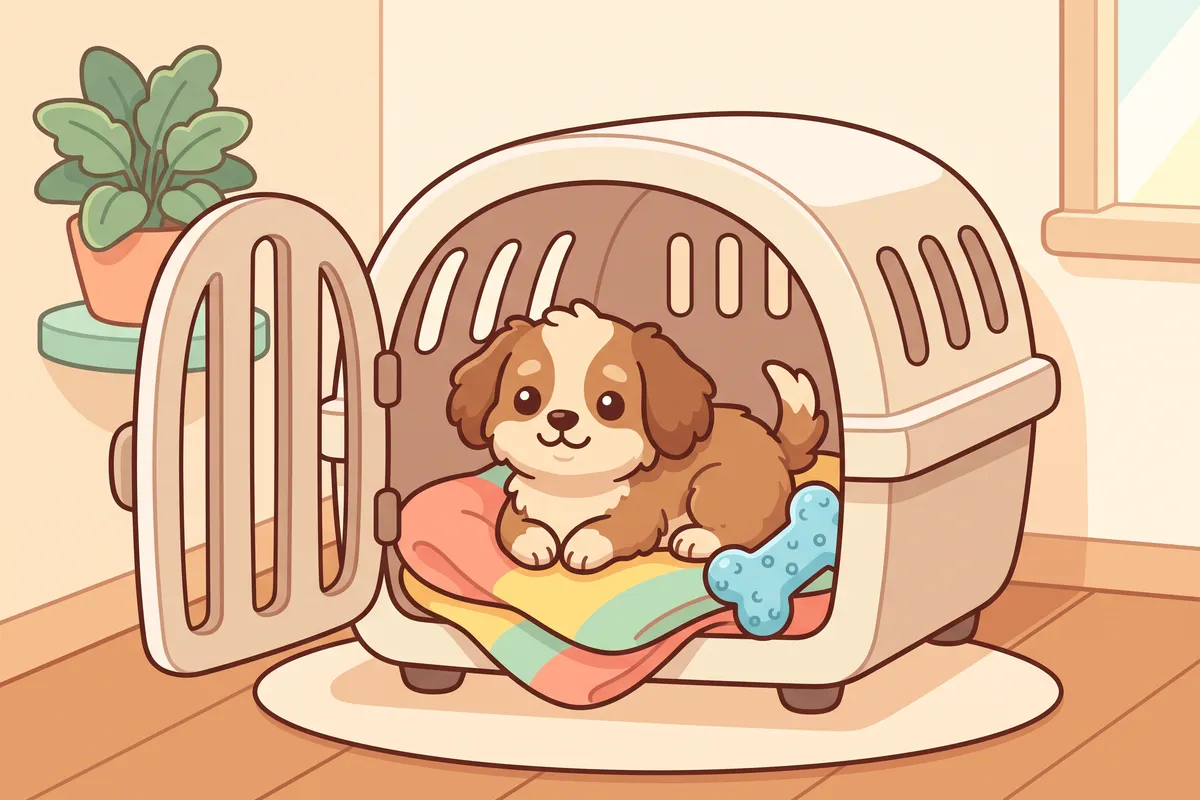
Impact Dog Crates High Anxiety Crate
Best for: strong, determined escape artists who've already beaten a wire crate.
K9 of Mine names this its "Most Secure Crate for Separation Anxiety". It's built from welded aluminum with military-grade hardware and a paddle-slam latch that closes as you shut the door.
What we like
- Welded aluminum body, no wire to bend or bite
- Paddle-slam latch is quick to close
- 10-year warranty
- Stackable if you have more than one dog
Keep in mind
- One of the most expensive crates you can buy, and heavy
- Impact also sells direct from its own site, so compare before you order
Key specs: 30", 34", 40" and 48" sizes on Amazon (the 30" is about 30.5"L × 20.5"W × 26"H)
ProSelect Empire Dog Cage
Best for: medium and large dogs who need a heavy-duty crate for home use.
K9 of Mine's "Best Value" heavy-duty pick. The Empire uses 20-gauge reinforced steel bars, a removable steel tray for easy cleaning, and four locking casters so you can roll it to a quieter spot.
What we like
- Reinforced 20-gauge steel bars
- Removable steel tray
- Locking casters for moving it around the house
Keep in mind
- Still a big purchase, even as the value pick
- Only two sizes, Medium and Large
Key specs: Medium outer 37" × 25.1" × 33.75" · Large 42.25" × 30.75" × 41.25"
Gunner G1 Kennel
Best for: dogs who need the same secure crate at home and in the car.
K9 of Mine picks the G1 as its "Best Separation Anxiety Crate for Car Travel". It's a double-walled rotomolded kennel with a lifetime warranty, and the Center for Pet Safety lists it as CPS Certified with a 5 Star rating in Small, Medium and Intermediate (not Large), with Gunner's anchor straps. So one crate can do double duty.
What we like
- Double-walled rotomolded shell
- CPS Certified (5 Star) in Small, Medium and Intermediate, useful if your dog travels with you
- Lifetime warranty
- Four sizes (the Large isn't CPS Certified)
Keep in mind
- A premium crate
- Where to buy: Gunner says gunner.com is its only authorized retailer unless it states otherwise. There is a Gunner storefront on Amazon; if you buy there, check the listing is sold by Gunner itself, not a third party, so your warranty is covered
Key specs: double-walled rotomolded · 4 sizes · lifetime warranty
Lucky Duck Lucky Kennel
Best for: owners who want a rotomolded crate with an easy, one-hand door.
K9 of Mine calls the Lucky Kennel its "Best Door" pick. The one-hand paddle latch is handy when you're holding a leash, and the one-piece rotomolded body is CPS Certified by the Center for Pet Safety with a 5 Star rating in Medium, Intermediate and Large, with the Lucky Ratchet Strap Kit.
What we like
- One-hand paddle latch
- One-piece rotomolded body
- CPS Certified, 5 Star, in all three sizes
- Lifetime warranty
Keep in mind
- The dark color absorbs heat outdoors, so keep it out of the sun
- May be short for tall dogs: check interior height against your dog standing
Key specs: Medium, Intermediate and Large sizes
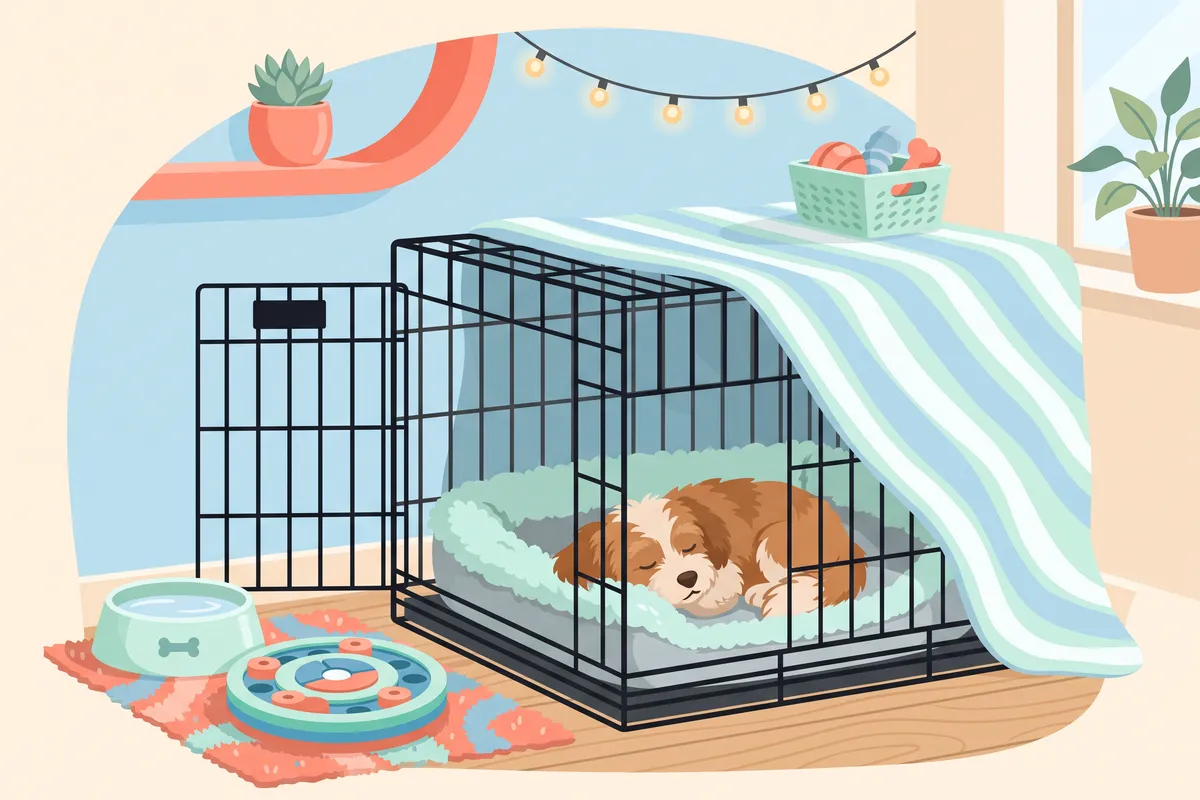
Petmate Sky Kennel
Best for: dogs with mild anxiety who settle better in an enclosed, darker space.
K9 of Mine lists the Sky Kennel as its pick for traveling dogs. The solid plastic sides give a more enclosed, den-like feel than a wire crate, and 4-way vault latches hold the door shut. It's sold as airline-approved, though each airline sets its own rules, so check before you fly.
What we like
- Enclosed sides for a darker den
- 4-way vault latches
- Comes apart for storage
- Budget-friendly next to the heavy-duty crates
Keep in mind
- Less secure than metal or rotomolded crates: not for a dog that chews its way out
Key specs: plastic shell · 4-way vault latches · disassembles for storage
MidWest QuietTime Defender Crate Cover
Best for: mild cases where a dog already uses a MidWest wire crate calmly and does better with fewer things to watch.
This cover slips over a MidWest wire crate to turn it into a den. The fabric is Teflon-treated to repel stains, and you can open it at the front, side or rear door.
What we like
- Quick way to make a wire crate feel enclosed
- Stain-repellent fabric
- Access at front, side and rear doors
- Sizes to match crates from 22" to 48"
Keep in mind
- A dog that chews fabric can pull a cover into the crate. Never leave a panicking dog with a cover in reach
- The fabric is thin, and one reviewer noted it doesn't reach the floor
- No opening for a top door
Key specs: sized to crate length, 22"–48"
How to choose
Match the crate to what your dog actually does
- Settles fine, just restless: a covered wire crate or the Sky Kennel may be enough.
- Chews or bends wire: go to welded aluminum (Impact) or heavy steel (ProSelect).
- Needs a crate in the car too: a CPS Certified rotomolded kennel (Gunner or Lucky Kennel) in a certified size.
Get the size right
Your dog should be able to stand up without ducking, turn around and lie flat on their side. Measure your dog from nose to base of tail and add a few inches; measure height from the floor to the top of the head while standing. Too big, and it stops feeling like a den.
Make it comfortable
A firm, washable pad and a spot away from the front door both help. If you're choosing a pad for an older dog, our best dog beds for senior dogs list has flat options that fit in a crate.
Pair it with a training plan
This is the part that matters most. The ASPCA describes the core approach: build up time alone in tiny steps your dog can handle.
- Make the crate great while you're home. Feed meals in it and leave a long-lasting food puzzle inside. Leave the door open.
- Practice short closed-door stretches while you're in the room, then in the next room. Start with seconds.
- Take the sting out of departure cues. Pick up your keys or put on your shoes, then sit back down. Repeat until your dog stops reacting.
- Build absences slowly. Step outside for 10 seconds, then 30, then a minute. Only move up when your dog stays relaxed.
- Keep comings and goings low-key. A calm "back soon" and a calm hello.
- Watch the camera. If your dog shows distress, go back a step.
If progress stalls, or your dog panics at every step, that's the moment to bring in your vet and a qualified behavior professional.
Comparison table
| Pick | Material | Security | Sizes | Car use | Best for |
|---|---|---|---|---|---|
| Impact High Anxiety | Welded aluminum | Highest | 30", 34", 40", 48" | — | Determined escape artists |
| ProSelect Empire | 20-gauge steel | Very high | Medium, Large | — | Heavy-duty home crate |
| Gunner G1 | Rotomolded, double-walled | Very high | 4 sizes | CPS Certified, 5 Star (S, M, Intermediate) | Home and car |
| Lucky Kennel | Rotomolded, one-piece | High | Medium, Intermediate, Large | CPS Certified, 5 Star (all three) | Easy one-hand door |
| Petmate Sky Kennel | Plastic | Moderate | — | Airline travel (check airline) | Mild cases, den feel |
| MidWest QuietTime | Fabric cover | Low (cover only) | 22"–48" | — | Calm crate users |
For road trips with a big dog who rides loose on the back seat, see our best dog car seat covers for large dogs.
A thick, washable dog crate pad and a breathable cover make any crate feel more like a den.
Many dogs like to curl up in a raised-rim donut dog bed inside or next to the crate.
For car trips, use a CPS Certified carrier or harness instead: see our dog car seat guide.
New to the crate? Start with our crate training at night plan.
FAQs
Will a crate fix my dog's separation anxiety?
No. A crate keeps your dog contained and can feel like a safe den to a dog that already likes it. The anxiety itself needs a gradual training plan, and for moderate or severe cases, help from your vet or a behavior professional.
Is it cruel to crate a dog with separation anxiety?
It depends on the dog. Some dogs relax in a den. Others panic when confined. If your dog pants heavily, drools, howls or tries frantically to escape, the ASPCA suggests a gated room instead of a crate.
Why not just use a regular wire crate?
A determined dog can bend wire, and K9 of Mine notes a panicking dog can hurt itself biting or pushing through it. Welded aluminum, heavy steel and rotomolded crates are much harder to get out of.
Should I cover my dog's crate?
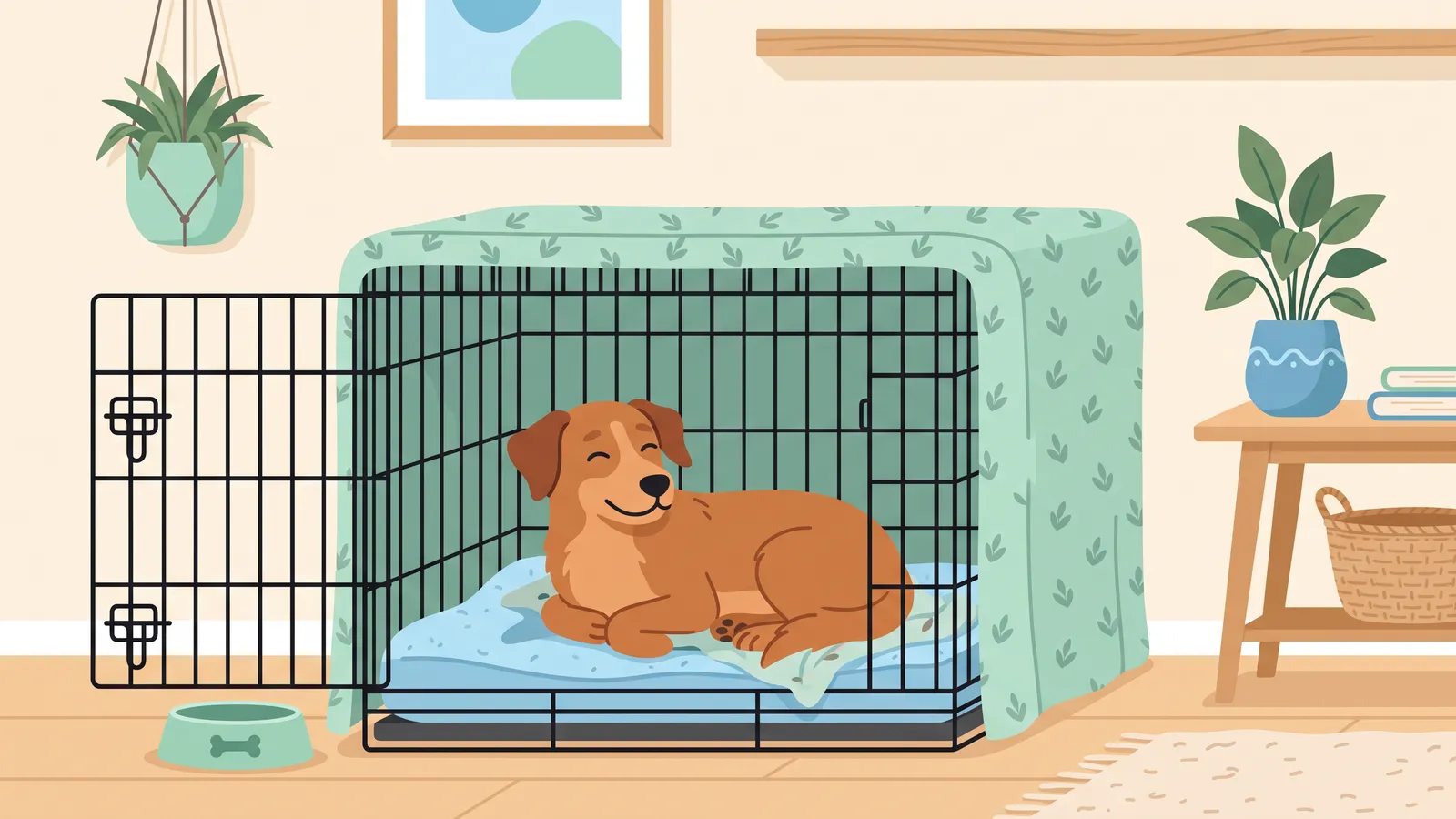
A cover can help some calm dogs settle by blocking what they can see. Never use one with a dog that chews fabric or is panicking, because they can pull it into the crate.
How long can a dog with separation anxiety stay in a crate?
Only as long as they stay relaxed, which you build up slowly in training. Watch on a camera, and talk to your vet about a plan for longer workdays. If you're thinking of an automatic feeder to cover meals on those days, read what a feeder can and can't do while you're away first.
Choose the crate that matches what your dog really does, build alone-time up gently, and bring your vet in early. That combination gives your dog the best shot at feeling safe when you're out.