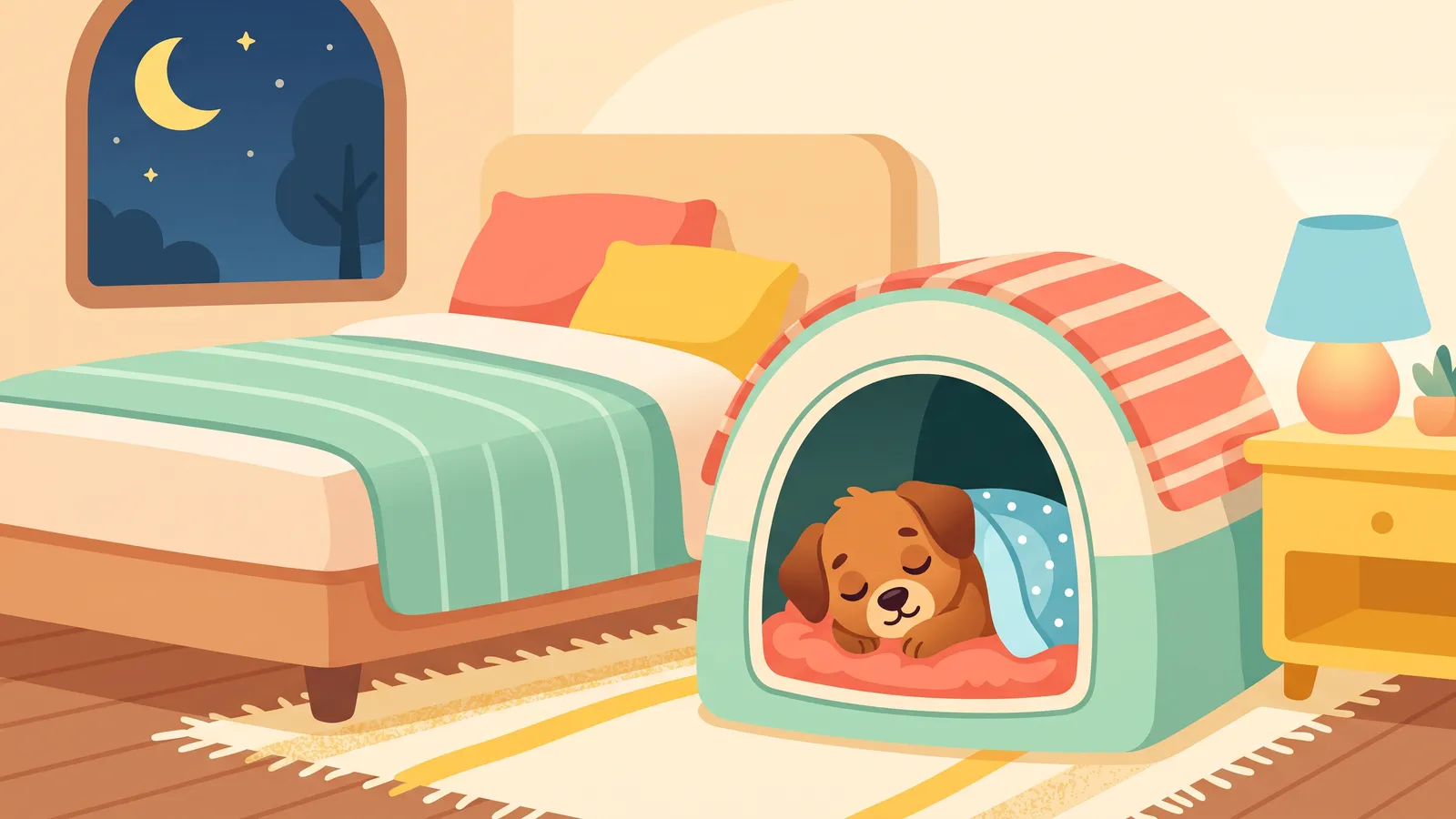
For the first weeks, put the crate in your bedroom or just outside it, so your puppy can hear you and you can hear them. Do a calm bedtime routine with a last toilet trip, and plan on a night-time potty break: the AKC's rule of thumb is that a puppy can hold it for about as many hours as they are months old. If your puppy cries, wait a few minutes; if it continues, take them out for a quick, boring toilet trip, then straight back to bed.
The first few nights are the hardest, for both of you. A puppy who has always slept in a pile of littermates is suddenly alone in a box. The goal is to make the crate feel safe, meet your puppy's real needs quickly and quietly, and never let the crate feel like a punishment.
Where to put the dog crate at night
In or near your bedroom, at first. Humane World for Animals suggests putting the crate in your bedroom or nearby in a hallway at first, "especially if you have a puppy". Two reasons:
- Your puppy can hear and smell you, which helps them settle.
- You'll hear them when they need to go out. Humane World notes puppies often need to go outside during the night.
Where in the bedroom:
- Beside your bed, at first. Some puppies settle faster if you can rest a hand near the door.
- Away from radiators, heat vents, drafty windows and outside doors.
- On a hard, level floor, so the crate doesn't rock.
During the day, Humane World suggests keeping the crate where the family spends time, like the living room. Some owners keep two crates; others carry one between rooms.
Where to put a dog crate in a small apartment
In a studio or one-bedroom, the crate goes beside your bed. Pick the quietest wall, away from the front door (hallway noise and footsteps can set a puppy off) and away from the AC or heater. Pushing it against a wall or into a corner gives it a more enclosed, den-like feel.
Moving the crate out of the bedroom later
Once your puppy sleeps through the night calmly, you can move the crate a little farther each few nights: the doorway, the hallway, then its daytime spot, if that's what you want. Plenty of dogs sleep in the bedroom for life, and that's fine too.
Step by step: a calm first night
1. Make the crate inviting before bedtime
Introduce the crate in the day first. Feed meals near it, then inside it, and toss treats in for your puppy to find. The AKC's crate training steps start the same way. Never shut a puppy in for the first time at bedtime.
2. Get the size right
The AKC says the crate should be just large enough for your puppy to stand up, turn around and lie down comfortably. Too large, and they can toilet at one end and sleep at the other. Buy for adult size and use a divider. Our crate size guide has a chart by weight and breed.
3. Make it comfortable, and safe
Humane World suggests a soft blanket or bed in the crate. Match it to your puppy:
- Chews everything? Start with a bare tray or a chew-resistant crate bed. The AKC warns that swallowed fabric can be a choking or intestinal blockage hazard.
- Has accidents on soft bedding? Take the bedding out for a while; a bare or wipe-clean floor helps.
- Cold house? A self-warming pad adds warmth with no cord.
The K&H Self-Warming Crate Pad has no plug: K&H says it holds your puppy's own body heat. It has corner slits to lie flat in a crate and comes in six sizes. The AKC calls self-warming beds a safer low-tech choice for dogs who chew, and warns that a heated bed in a crate is a concern if your dog can't move away from the heat.
For a puppy who shreds bedding, the K9 Ballistics Chew Proof Armored Padded Crate Bed has an aluminum frame that hides the fabric edges. Whole Dog Journal picked it among the chew-proof beds it tested, with a caveat: the padding may tempt some dogs more than the unpadded version. Our dog crate pad guide compares more options.
4. Tire them out, then wind down
An hour or two before bed: play, a short sniffy walk if they're vaccinated enough to go out, then calm time.
5. Last toilet trip, then straight to the crate
The AKC's puppy potty schedule includes "last thing at night". Go out, wait, praise, then walk calmly to the crate. Toss in a treat, say a cue like "bedtime", and close the door.
6. Lights low, stay close
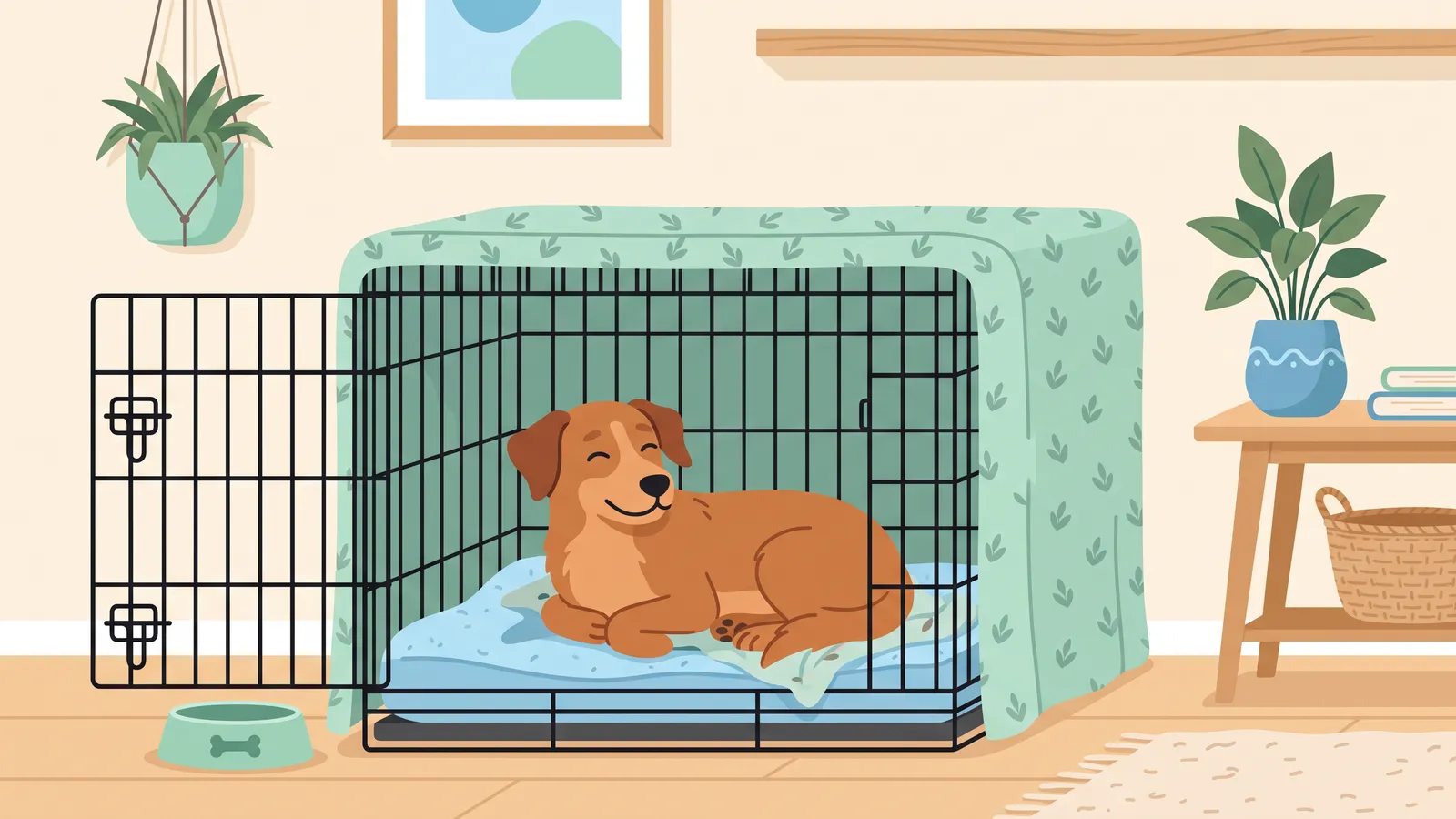
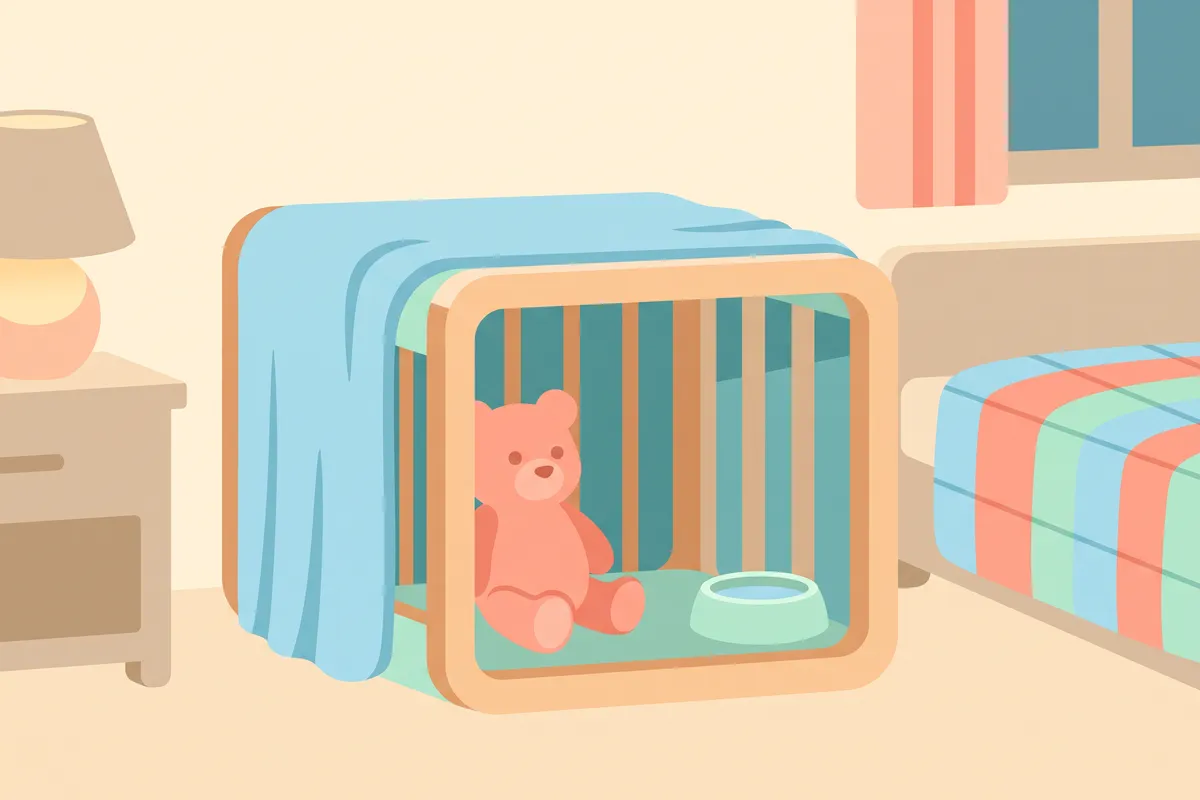
Turn the lights down and get into bed. A blanket over part of the crate can make it more den-like; leave the front open for air, and take it away if your puppy pulls fabric through the bars.
How long can a puppy stay in a crate at night?
The AKC's rule of thumb: puppies can generally hold their bladder for about as many hours as their age in months, up to about 9 months to a year. A 6-month-old may manage around six hours.
| Puppy's age | Roughly how long they can hold it | What that means overnight |
|---|---|---|
| 8 weeks (2 months) | About 2 hours | Expect 2 or more night trips |
| 3 months | About 3 hours | Plan 1–2 night trips |
| 4 months | About 4 hours | Usually 1 night trip |
| 6 months | About 6 hours | Maybe one early-morning trip |
| 9–12 months | The AKC's rule tops out here | Night trips should be ending; ask your vet if not |
Our data. Method: hours from the AKC's age-in-months rule of thumb; the overnight column assumes about 8 hours in bed. Every puppy is different, so treat this as a plan for your alarm, not a rule.
During the day, Humane World says puppies under 6 months shouldn't stay in a crate for more than three or four hours at a time, and adult dogs no more than 4–5 hours during the day.
For very young puppies, set an alarm and take them out before they wake and cry. Your puppy learns that night trips are quiet and routine, not a reward for crying.
How to stop a puppy crying in the crate at night
Some crying in the first few nights is normal. Your job is to tell the difference between "I need to go" and "I'd rather be out".
- Wait a few minutes. Humane World suggests trying to ignore the whining at first: if your puppy is just testing you, they'll probably stop soon.
- If it continues, offer a toilet trip. Humane World suggests using the phrase your puppy links with going outside. If they get excited, take them out.
- Keep it boring. Humane World calls it "a trip with a purpose, not playtime". Carry or lead your puppy to the toilet spot, wait, praise quietly, and go straight back to the crate. No games, no lights, no chat.
- Back in, door closed, lights off. A treat for going in is fine.
- Never scold or punish. Humane World is clear that a crate should never be used for punishment. A puppy who's scared of the crate cries more, not less.
Also check the simple things. The AKC notes that barking or whining after your dog has settled for a while is more likely to mean boredom, hunger or a need to go out. Is the room too hot or cold? Is the puppy too far from you? Was there enough play earlier in the evening?
Crate training an adult or rescue dog at night
The same steps work, just slower. Start with the crate beside your bed and the door open, so it's a choice. An adult dog who is house-trained usually needs no night trips, but a new dog in a new home may still be unsettled for a while.
When the crying is more than crying
If your dog panics, drools heavily, scratches or bites the bars, or tries to break out, that's not a training phase. Humane World says using a crate to fix separation anxiety "won't solve the problem", and that a dog may hurt itself trying to escape. Open the crate, keep your dog safe in a small puppy-proofed room, and get help. Our crate for separation anxiety guide explains what a crate can and can't do.
This guide is general information, not veterinary advice. If you're worried about your dog, talk to your vet. If your dog is in extreme distress in the crate (panicking, drooling, hurting their mouth or paws trying to get out) stop crating and call your vet, who can check for health problems and refer you to a veterinary behaviorist or certified trainer. A puppy who suddenly needs to pee far more often than usual at night also needs a vet check.
Enclosed crate or wire crate at night?
Some puppies settle faster in a darker, more enclosed space. You can cover a wire crate with a blanket, or use a plastic crate. The Petmate Sky Kennel has solid plastic sides that feel more like a den, and 4-way vault latches. It's less secure than a metal crate, so not for a dog that chews its way out. For a big or older dog in a wire crate, the Big Barker Orthopedic Crate Bed has 4 inches of foam cut to sit inside the tray.
Starting from scratch? Our step-by-step plan for how to crate train a puppy covers the daytime part.
FAQs
Should I put my puppy's crate in my bedroom?
At first, yes, or in a hallway close by. Humane World suggests it, especially for puppies, so you can hear them when they need to go out. You can move the crate later once they sleep through calmly.
How long will my puppy cry in the crate at night?
There's no set timeline; it varies by puppy. A steady routine, quick and boring toilet trips, and never letting crying lead to play all shorten it.
Should I cover my dog's crate at night?
If it helps your dog settle, cover the top and three sides with a breathable blanket and leave the front open. Remove it if your dog pulls fabric into the crate.
How do I keep my dog warm in the crate at night?
Put the crate away from drafts, pad the tray, and add a self-warming pad. More in our guide to keeping a dog warm in winter.
Should I let my puppy out of the crate when they cry at night?
Wait a few minutes first. If the crying continues, take them out for a quiet toilet trip only, then straight back in. Letting them out to play teaches them that crying works.
Stay close, keep night trips boring and the mornings cheerful, and the crate soon becomes the place your puppy chooses to sleep.