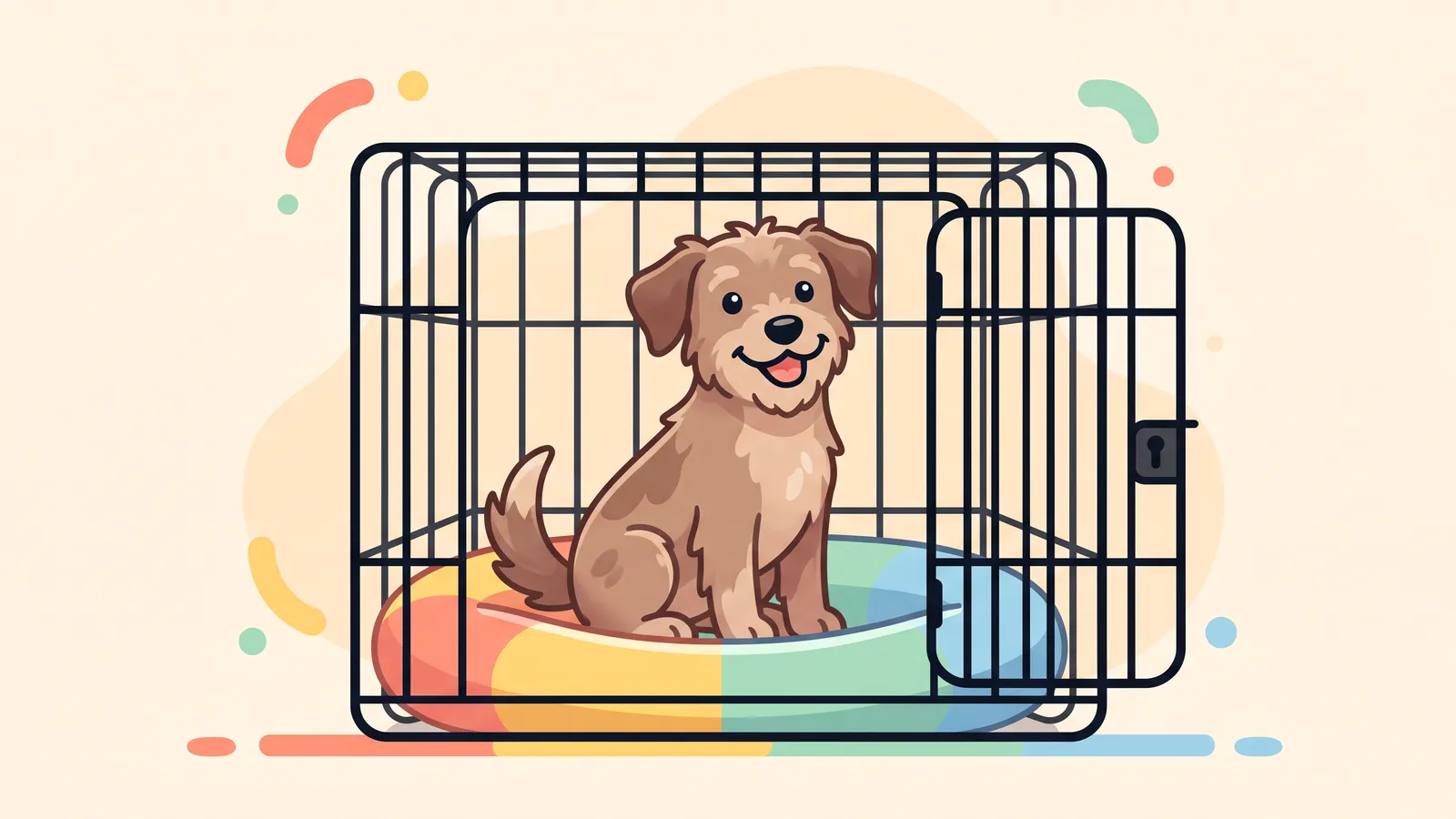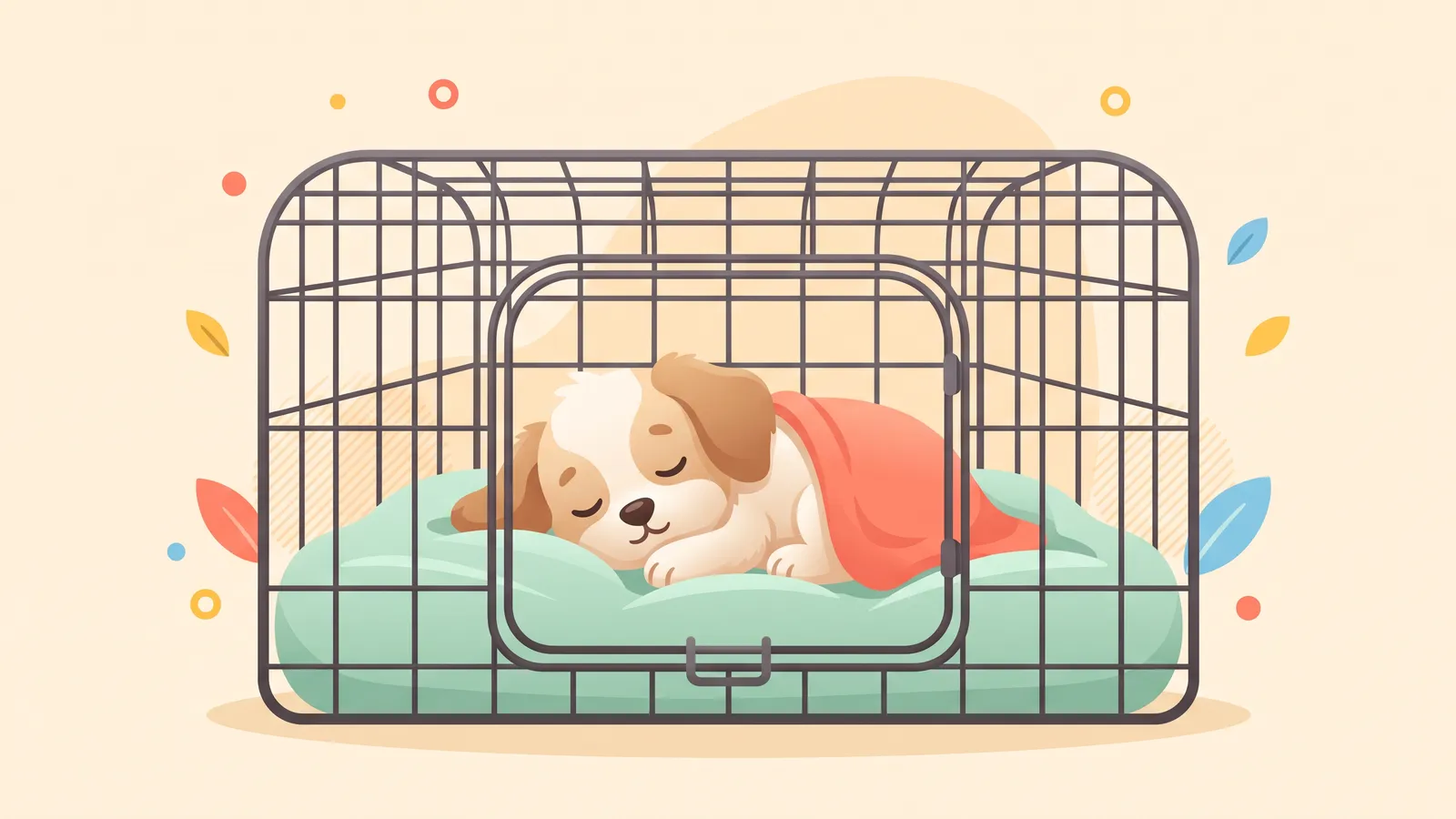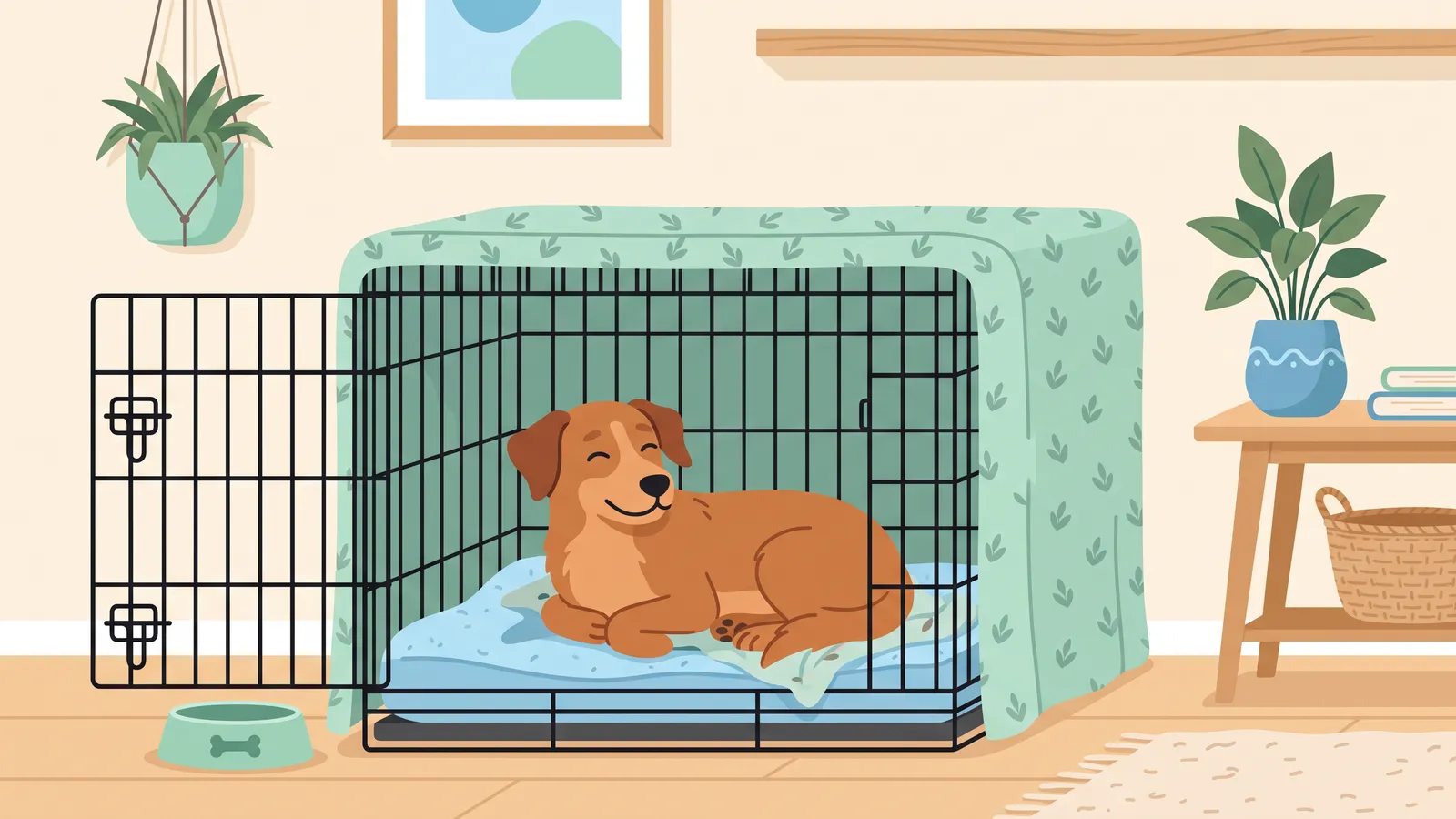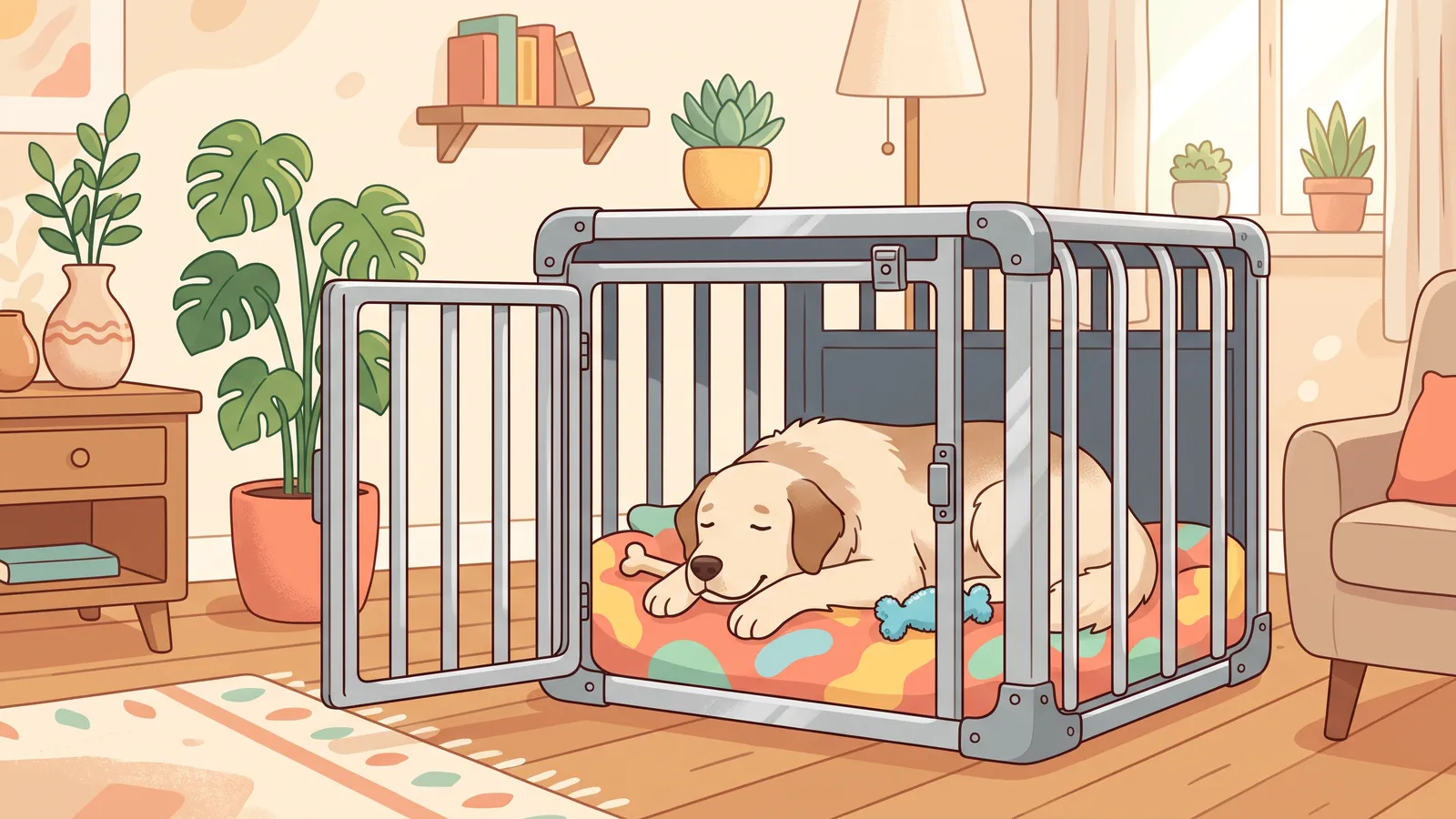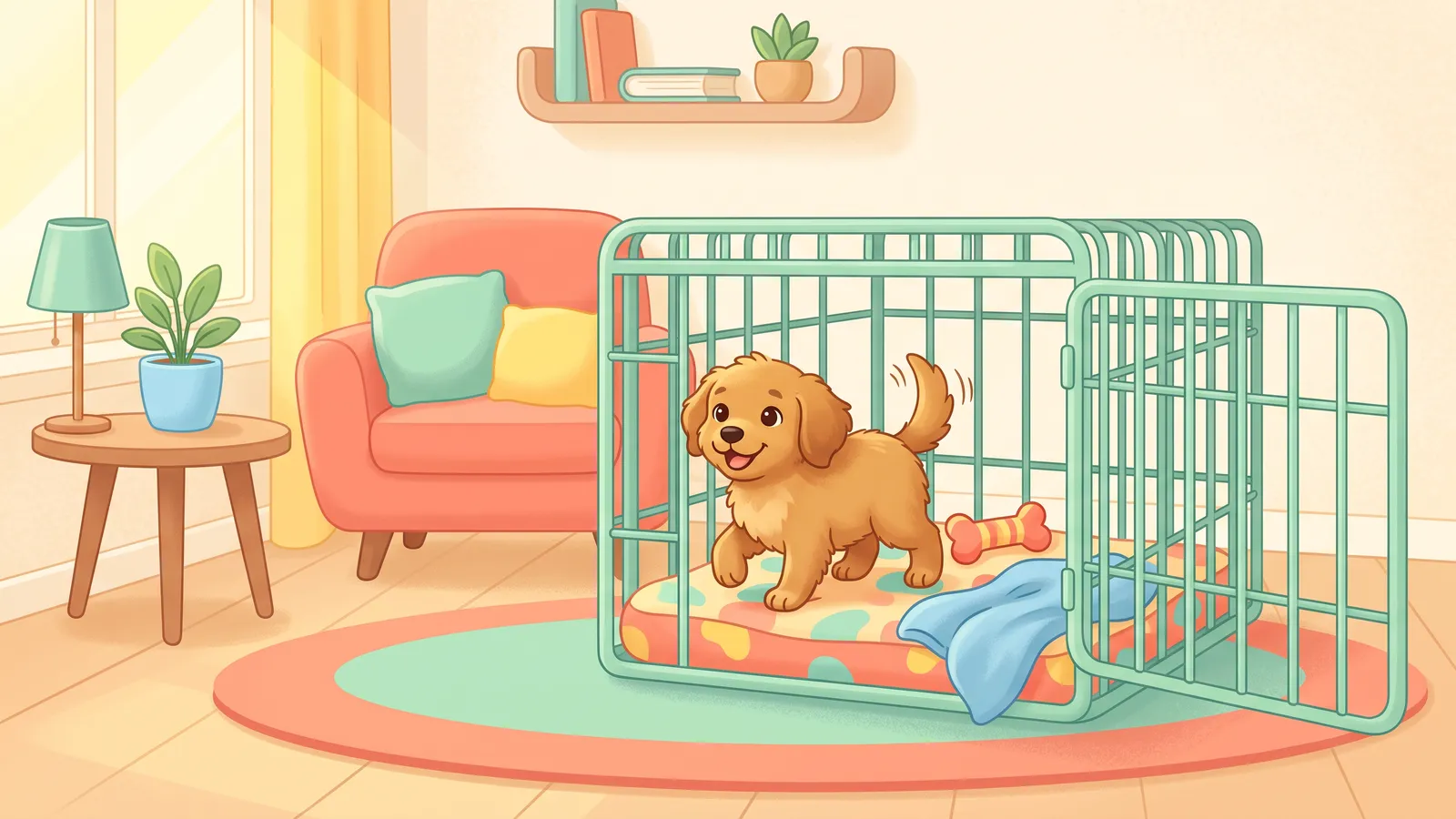
Crate training a puppy works best in small, happy steps: let your puppy find treats in the open crate, feed meals inside it, then close the door for a few minutes while you sit nearby, and build up slowly. Most puppies get there in a few days to a few weeks. Keep crate time short (Humane World says no more than three or four hours at a time for puppies under 6 months), never use the crate as punishment, and stop if your puppy panics.
A crate isn't a cage you put a puppy in. Done well, it's a bedroom they choose: somewhere quiet to nap, a big help with potty training, and practice for the vet, the groomer and car trips later. Trainer Rachel Lane, writing for the AKC, calls crate comfort an important life skill, because almost every dog ends up in a crate at some point. The plan below follows the four-step method from Humane World for Animals and the AKC's crate training advice, laid out day by day.
Before day one: get the setup right
Size. The crate should let your puppy stand up, turn around and lie down comfortably, and no more. Buy for the adult size and block off the extra space with a divider panel: the AKC notes that in a crate that's too big, a puppy can toilet at one end and sleep at the other. Our crate size guide has a chart by weight and breed.
Place. In the day, put the crate where the family spends time, such as the living room (Humane World's advice). At night, put it in your bedroom or just outside it. Lane suggests a relatively quiet spot: it's hard for a puppy to settle in the middle of the action.
Bedding. Go easy here. The AKC's crate guide warns that many puppies like to pee on soft, absorbent surfaces, and its blanket guide says to take bedding away from a puppy who chews it, because swallowed fabric can be a choking or blockage hazard. Start with a wipe-clean mat or a bare tray, and add something cozy once your puppy has no accidents and leaves fabric alone.
Treats and a chew. Small, smelly treats, plus a stuffable food toy. Lane suggests freezing it so it lasts longer.
The day-by-day crate training plan
This is a schedule built from Humane World's four steps. Every puppy moves at their own speed; Humane World says crate training can take "days or weeks". Only move on when your puppy is relaxed at the current step. If they whine, you went too fast: go back a step.
| Days | What you do | Move on when |
|---|---|---|
| 1–2 | Door open (or propped so it can't swing). Toss treats near, then inside the crate. Hide a few for your puppy to find on their own. | Your puppy walks all the way in calmly |
| 2–4 | Feed every meal in the crate, dish at the back. Close the door while they eat; open it as soon as they finish. | They eat with the door closed, no fuss |
| 4–6 | Leave the door closed a few minutes longer after each meal, up to about 10 minutes. | 10 calm minutes after a meal |
| 6–10 | Add a cue ("crate" or "bed"), a treat, door closed. Sit nearby 5–10 minutes, then step into another room for a few minutes. Several short sessions a day. | About 30 calm minutes, with you mostly out of sight |
| 10–14 | Short absences: crate your puppy 5–20 minutes before you leave, vary when, and leave and return without fuss. Keep crating sometimes while you're home too. | Short absences are uneventful |
| From night 1 | Sleep in the crate beside your bed, with planned toilet trips. See below. | Sleeping through without crying |
Our plan. Method: steps, times and the 30-minute milestone come from Humane World's crate training guide; the day ranges are our own estimate for a typical young puppy and are a guide, not a deadline.
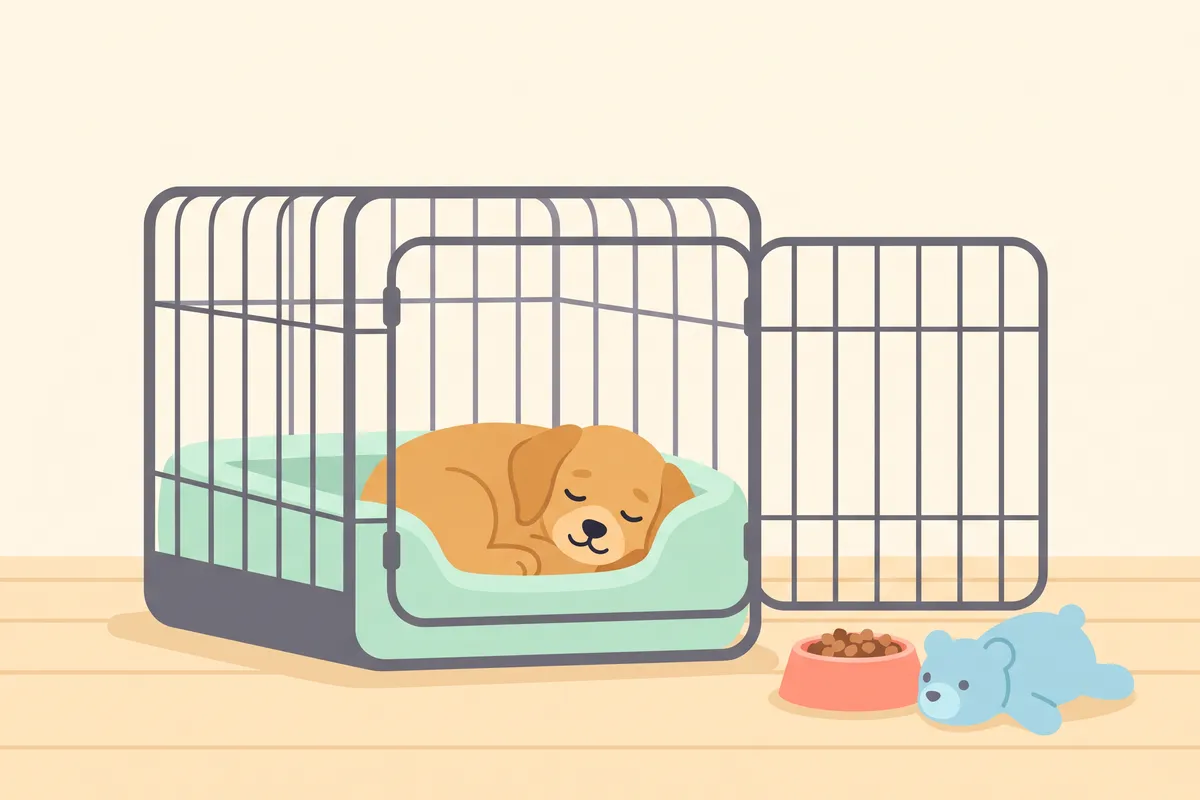
Humane World suggests crating your puppy for short spells while you're home, not only when you leave. If the crate only ever means "you're going out", your puppy learns to dread it.
How long can a puppy stay in a crate?
| Situation | Guideline | Source |
|---|---|---|
| Puppy under 6 months, daytime | No more than 3–4 hours at a time | Humane World |
| Overnight | About as many hours as your puppy is months old, then a toilet trip | AKC rule of thumb |
| Any age | Never longer than they're comfortable or can hold their bladder | Rachel Lane, via the AKC |
If your day is longer than that, Lane suggests a dog walker or sitter for a midday break, or a puppy-proofed pen where your puppy has room to sleep and a spot to toilet. Humane World adds that a dog crated all day and night doesn't get enough exercise or company.
How to crate train a puppy the first night
Night one starts after a play session, a calm wind-down and a last toilet trip. Then a treat into the crate, your cue, door closed, lights low, and you in bed right beside them.
- Expect to get up. The AKC's rule of thumb means an 8-week-old puppy can hold it for about 2 hours. Set an alarm and go out before they wake and cry.
- Keep night trips boring. Humane World calls it "a trip with a purpose, not playtime": out to the spot, wait, quiet praise, back to bed.
- If they cry, wait a few minutes first. If it continues, offer a toilet trip. Never punish whining.
Our full guide to crate training at night covers where to put the crate, a bedtime routine and an age-by-age table of night trips.
How to crate train a puppy during the day
Daytime naps are your best practice. Puppies sleep a lot, so when yours gets drowsy after play and a toilet trip, guide them into the crate with a treat or a frozen food toy. Lane suggests crate training when your dog is already calm or sleepy, not bouncing off the walls. Short, frequent sessions beat one long one, and the crate door should stay open whenever you're home and not actively training, so your puppy can wander in for a nap.
Common crate training problems and fixes
Whining as soon as the door closes. The AKC says crying within minutes of going in is likely stress or frustration: your puppy hasn't learned to relax there yet. Go back a step and make it easier.
Whining after a long, quiet spell. That's more likely boredom, hunger or needing the toilet, per the AKC. Take them out, then think about more exercise before crate time.
Won't go in at all. Lane says a noisy door, or one that once swung shut on the dog, can cause it. Stop closing the crate for a while, sit beside it and toss treats in, then rebuild slowly. Some puppies prefer a different style: a wire crate to see out, or a darker, more enclosed one.
Accidents in the crate. Check the size first: too much room invites it, so move the divider in. Remove soft bedding for a while and use a wipe-clean mat. And check the timing against the table above: a puppy left too long can't help it.
Chewing the bedding or cover. Take it out. Bare tray now; a chew-resistant crate bed later.
Barking at night after a good few nights. Rule out the simple things: too hot, too cold, too far from you, not enough play earlier.
Crate training an older dog or rescue
The same four steps work for an adult dog, just more slowly and with more patience for a dog who may have bad memories of crates. Leave the door off or propped open for days if needed. Lane points out that senior dogs with aches and pains may be uncomfortable crated for long, and suggests a larger area where they can move between several comfy spots. Humane World suggests keeping older dogs near you at night at first too, so the crate doesn't feel like being sent away.
Crate training a puppy with separation anxiety
A crate can't fix separation anxiety. Humane World says using it as a remedy "won't solve the problem", and a dog may get hurt trying to escape. The AKC lists the warning signs to watch for: pacing, shaking, scratching or biting at the door, long bouts of howling or barking, and drooling. If you see these, stop crating, use a puppy-proofed room or pen instead, and get professional help. Our crate for separation anxiety guide explains what a crate can and can't do.
This guide is general information, not veterinary advice. If you're worried about your dog, talk to your vet. If your puppy is in extreme distress in the crate (panicking, drooling heavily, hurting their mouth or paws trying to get out, or soiling the crate in panic), stop crate training and call your vet. They can check for health problems and refer you to a veterinary behaviorist or certified trainer. A puppy who suddenly needs to pee far more often than usual also needs a vet check.
Gear that helps
You don't need much. These are the picks we'd start with; our dog crate pad guide compares more.
MidWest QuietTime Cushioned Antimicrobial Crate Mat (for accidents)
A thin, firm crate mat rather than a bed. MidWest says it's waterproof and antimicrobial, and that it can stand in for the crate pan. It wipes clean, which is what you want in the first weeks. Sizes 24, 36, 42 and 48 inches.
K9 Ballistics Chew Proof Armored Padded Crate Bed (for chewers)
An aluminum frame hides the fabric edges, so there's less to grab. Whole Dog Journal picked it among the chew-proof beds it tested, with a caveat: the padding may tempt some dogs more than the unpadded version. It fits 30 to 54-inch wire crates.
MidWest QuietTime Crate Cover (for a den feel)
Lane notes that some dogs settle better in a darker, den-like crate. This cover fits 1-, 2- and 3-door MidWest crates, and each side rolls up for light and air. Skip it for a puppy who pulls fabric through the bars; a plain blanket over the top works too.
For a cold house, the K&H Self-Warming Crate Pad holds your puppy's own body heat with no cord, once they've stopped chewing bedding. For a puppy who settles better fully enclosed, the plastic Petmate Sky Kennel is den-like by design, though it's less secure than metal. If your puppy bends wire or breaks latches, look at our heavy-duty dog crate picks.
FAQs
How long does it take to crate train a puppy?
Humane World says crate training can take days or weeks, depending on age, temperament and past experiences. Our plan above spreads it over about two weeks for a young puppy, but that's an estimate: go at your puppy's pace, not the calendar's.
Should I let my puppy cry it out in the crate?
No. The AKC's trainer advice is never to force a dog in or leave them to cry it out. Wait a few minutes, then offer a quiet toilet trip. If crying starts the moment the door closes, go back a training step.
Should I put a puppy pad in the crate?
Usually not. A pad tells your puppy the crate is a fine place to toilet, which is the opposite of what you want. Use a wipe-clean mat or bare tray, size the crate snugly with a divider, and take your puppy out on schedule.
Should I put water in the crate?
The AKC's crate guide says to provide water in the crate. If night-time accidents are a problem, ask your vet whether and when to adjust your puppy's evening water; don't cut it back on your own.
Is crate training cruel?
Not when it's done gradually, kindly and for sensible lengths of time. Both Humane World and the AKC describe the crate as a safe, den-like space. It becomes unkind when it's used for punishment, for too many hours, or for a dog who panics in it.
Go slow, keep it rewarding, and keep crate time short. Most puppies come round to the crate faster than you expect, and once they do, they'll often head there on their own for a nap.