If your dog can't jump on the bed anymore, get them checked by your vet first, because a change like this is often a sign of pain or stiffness. Then give them an easy way up, like a long ramp or low stairs, or make a comfortable low bed on the floor next to yours. Stop lifting and jumping until you know what's going on.
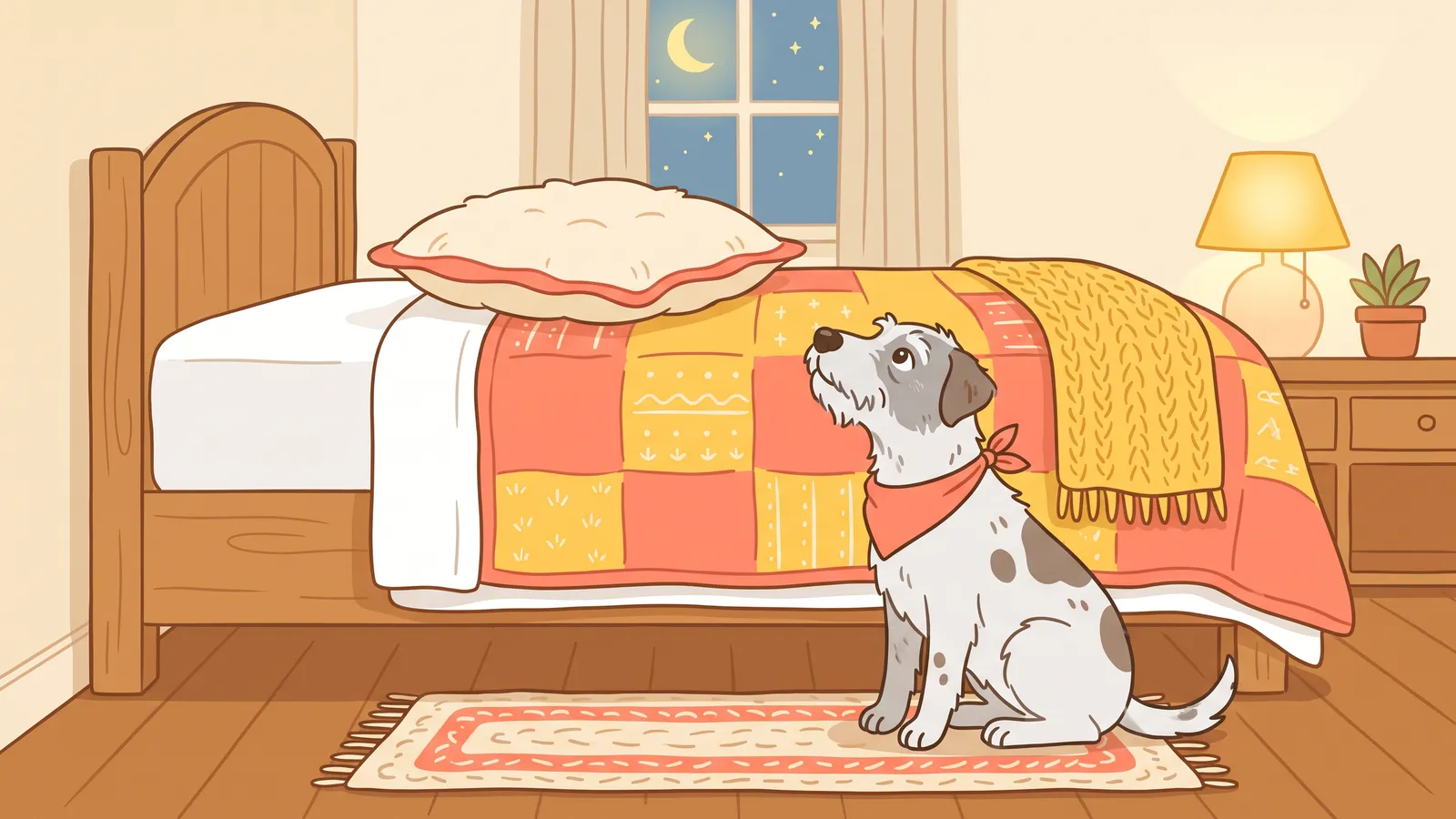
It's hard to watch: your dog stands at the side of the bed, looks at you, and doesn't jump. Or they try, slip back, and give up. The good news is there's a lot you can do. Here's the plan, step by step.
This guide is general information, not veterinary advice. If you're worried about your dog, talk to your vet. The American Kennel Club lists reluctance to jump, run or climb stairs among the common signs of arthritis, and a sudden change can also point to a back or spine problem, especially in long-backed breeds. If your dog yelps, wobbles, drags a paw, or stops wanting to move at all, call your vet the same day.
Step-by-step: what to do when your dog can't jump on the bed
1. Book a vet visit and take notes
Before you buy anything, find out why. Jot down:
- When it started. Overnight, or slowly over weeks?
- What else has changed. Stiffness after naps, slower on walks, trouble with stairs or getting into the car, licking at a joint, a change in mood.
- A short video. Film your dog trying to get up and walking across the room. Vets find this very useful, since many dogs act normal in the clinic.
A slow decline in an older dog is common. A sudden change in a dog of any age needs checking sooner.
2. Stop the jumping for now
Until you've seen your vet, don't let your dog keep trying to leap up, and don't encourage them with a "come on, up!" Jumping down can be just as tough as jumping up. Close the bedroom door at first, or block the side of the bed with pillows, so they don't try it on their own.
3. Measure your bed
Measure from the floor to the top of the mattress on the side your dog uses. This one number decides whether a ramp or stairs will work:
- Up to about 20 inches: short ramps or folding stairs work.
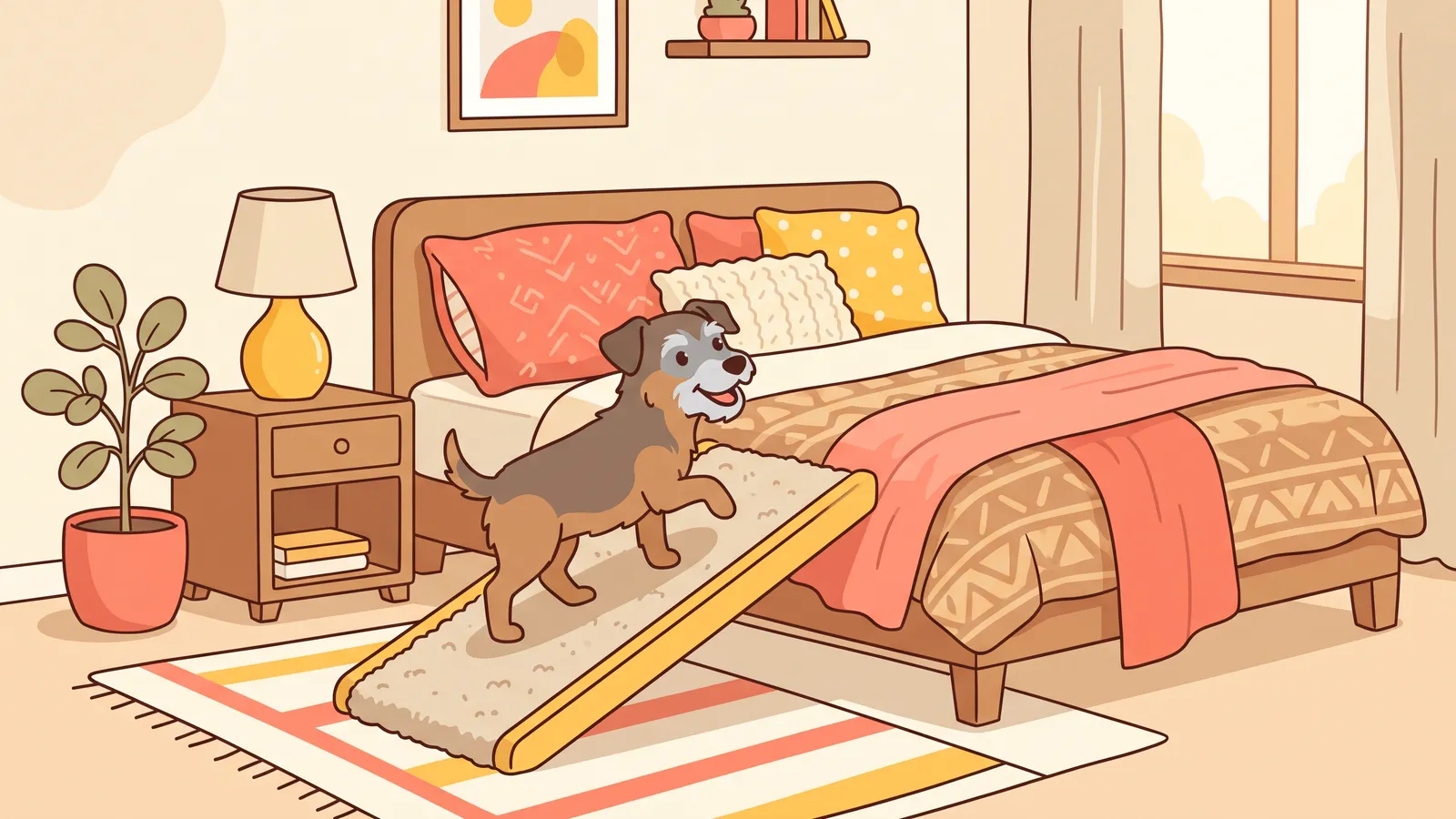
- Around 25 inches: a long, fixed ramp like the PetSafe CozyUp.
- Taller than that: an adjustable ramp with a long run.
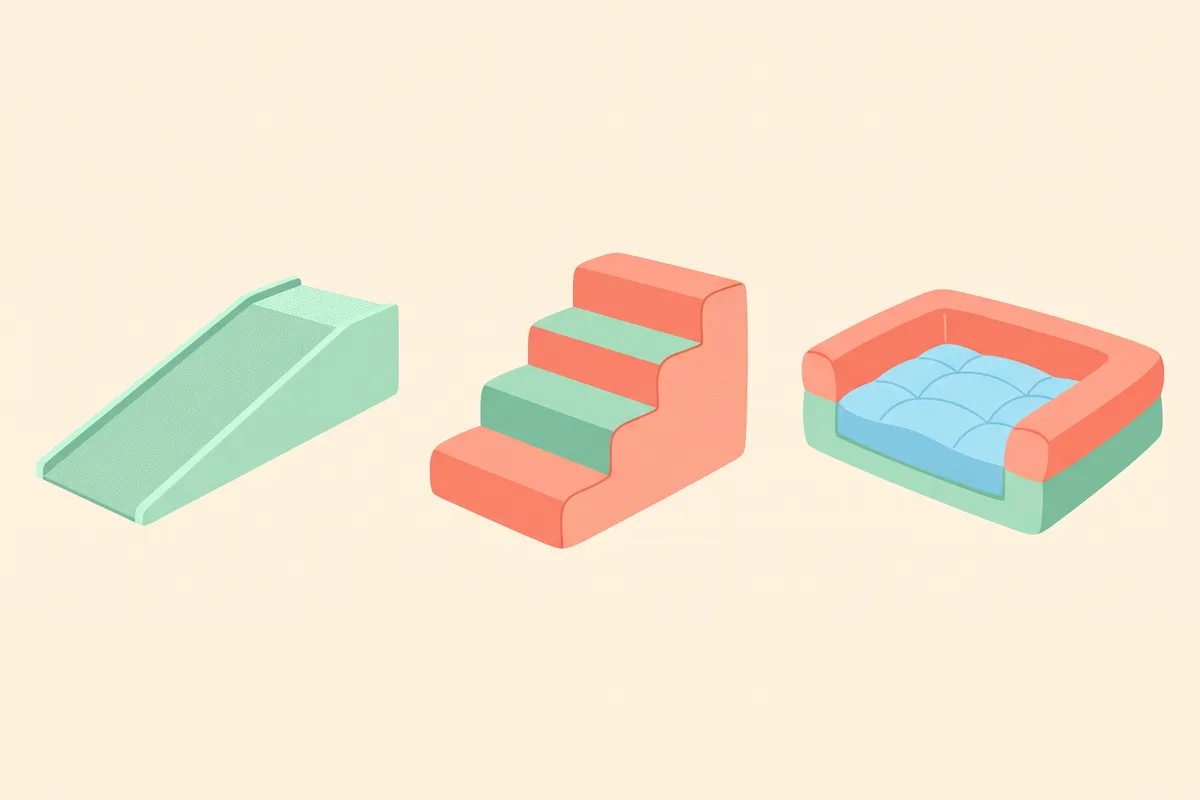
4. Choose a ramp or stairs
Both give your dog their own way up. The difference is how they move:
- A ramp is one smooth climb with no step-ups. It's usually the easier choice for stiff seniors, small dogs and long-backed breeds like dachshunds and corgis. Whole Dog Journal notes that steep slopes make dogs splay their toes, so the longer the ramp, the better.
- Stairs take less floor space and fold away. They suit small and medium dogs who are still fairly agile. Each step is a small hop, so they're harder than a ramp for dogs with back problems.
5. Train your dog to use it
Most dogs don't use a ramp or stairs straight away. Give it a week of short, happy sessions:
- Set the ramp flat on the floor or at its lowest setting. Reward your dog for stepping on it.
- Lure them a little further each time with a favorite snack held just ahead of their nose.
- Raise the height over a few days.
- Teach them to come down the ramp too, not to jump off the other side.
- Keep each session to 2–3 minutes and end on a win.
6. Make the floor just as good
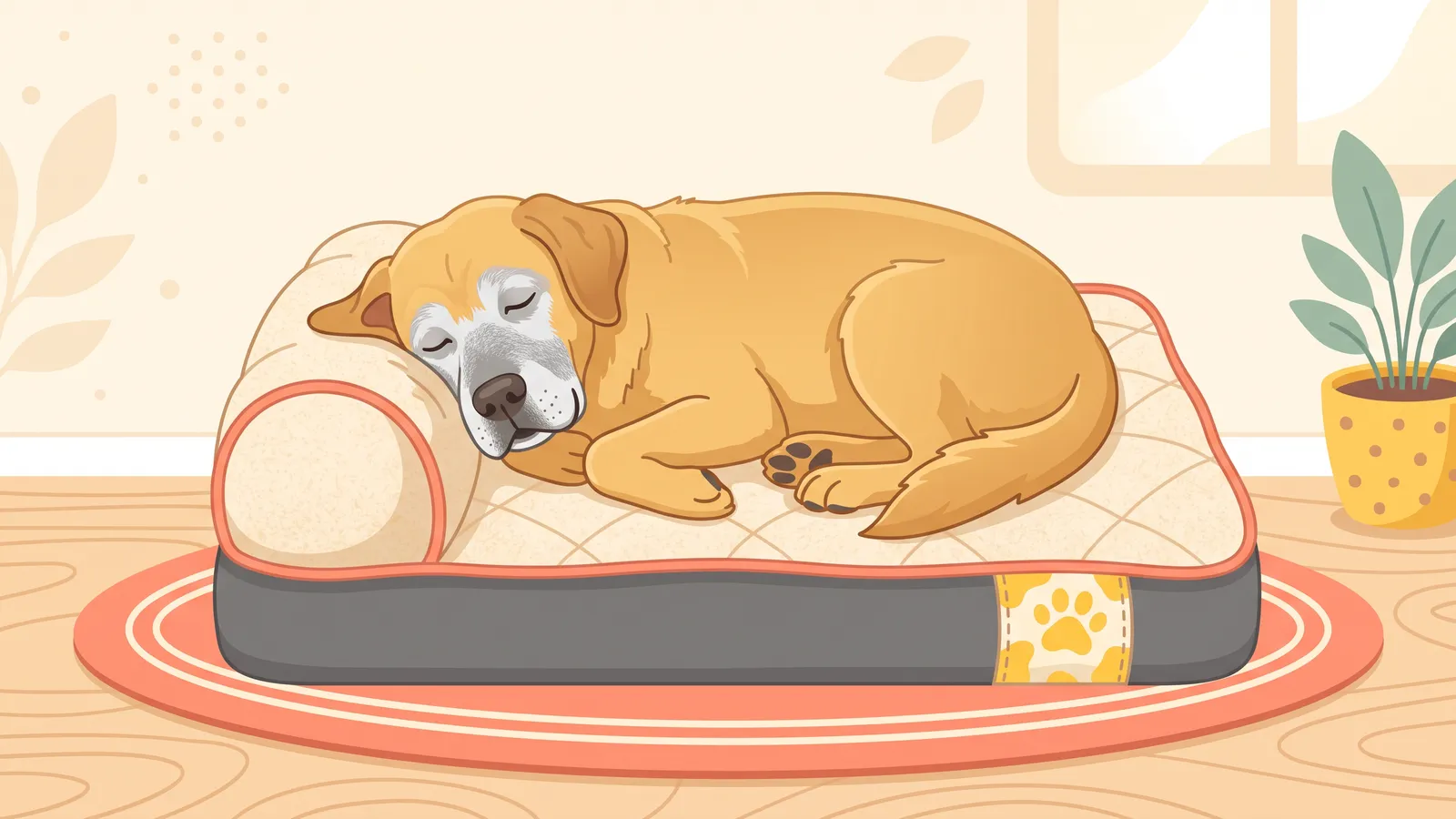
Not every dog needs to be on your bed. Many are just as happy on a thick, comfortable bed on the floor right next to yours, where they can still see and smell you. Pick one with solid foam and a low, open side, put it on a rug so it doesn't slide, and give it a spot your dog already likes. This also suits dogs who can't manage a ramp at all.
7. If you have to lift, lift safely
For a small dog, scoop with one arm under the chest and the other under the rear, so the whole body stays level. Never lift by the front legs or under the belly alone. For a big dog, lifting is hard on both of you. If your vet suggests support for weak back legs, a proper lift harness gives you handles to help without straining your back or theirs.
8. Fix slippery floors
Wood and tile floors make it hard for a stiff dog to push off. Put rugs or runners at the foot of the ramp and on the path to the bed, and keep nails trimmed and the fur between the toe pads short.
Gear that helps
These are the picks we'd start with. For full details and more options, see our roundups of the best dog ramps for beds and the best dog beds for senior dogs.
PetSafe CozyUp Bed Ramp (best ramp)
A long 70-inch wooden ramp with ribbed carpet tread that rises to a fixed 25 inches, rated up to 120 lb. The long run gives a gentle climb for medium and large dogs on standard beds. It's heavy (about 22 lb) and needs floor space. For taller beds, the adjustable DoggoRamps Large Bed Ramp goes from 20 to 35 inches.
PetSafe CozyUp Folding Dog Stairs (best stairs)
Formerly sold as the Solvit PupSTEP Plus. These stairs weigh about 5 lb, fold flat, need no assembly, and have side rails and non-skid feet. They stand 20 inches tall (24"L × 16"W) and hold 120+ lb. Best for small to medium dogs on lower beds and sofas.
KOPEKS 7" Orthopedic Pillow Dog Bed (best low floor bed)
Dogster's best overall pick for older dogs. A 7-inch memory foam mattress with a pillow at one end, a removable cover and a waterproof liner included. There's no bolster to climb over, so it's easy to step onto. Want something lower and more budget-friendly? The flat Bedsure orthopedic bed in our senior bed roundup is about 4 inches tall.
Help 'Em Up Harness (lift aid)
A mobility harness with front and rear lift modules you can use together or apart, in 5 sizes. It's specialist gear, not a walking harness, so use it if your vet suggests rear support. Many look-alikes borrow the name, so buy from the brand's own listing. For everyday walks with a long-backed dog, see the best harness for dachshunds.
| Option | Best for | Height | Watch out for |
|---|---|---|---|
| CozyUp Bed Ramp | Medium–large dogs, standard beds | 25" fixed | Needs about 6 ft of floor |
| CozyUp Folding Stairs | Small–medium, agile dogs | 20" | Harder for long backs |
| KOPEKS floor bed | Dogs who can't manage a ramp | Floor level | Takes floor space by your bed |
| Help 'Em Up Harness | Dogs with weak back legs (vet-advised) | — | Look-alike listings |
If walks are getting hard too, our dog stroller for large dogs guide covers rear-entry models for older dogs.
If a floor bed is the answer, our orthopedic dog bed guide compares the foam inside each one.
If they're also slipping on floors, see senior dog slipping on the floor.
FAQs
Why can't my dog jump on the bed anymore?
Common reasons include joint stiffness, arthritis, a back problem, an injury, or simply less muscle as dogs age. Weight gain and slippery floors can play a part too. Your vet can tell you which it is, so book a check first.
Is it normal for an old dog to stop jumping?
Many older dogs slow down, and the AKC lists reluctance to jump as a common sign of arthritis. Common doesn't mean you should ignore it: tell your vet, because there may be ways to keep your dog more comfortable.
Is a ramp or stairs better for a dog that can't jump?
A ramp is usually easier, especially for stiff seniors and long-backed breeds, because there's no stepping up. Stairs save space and suit small, agile dogs.
Should I just lift my dog onto the bed?
For a small dog, lifting carefully with the whole body supported is fine short-term. For a large dog it's hard on your back and theirs. A ramp gives your dog independence, and a lift harness helps if your vet suggests it.
My dog won't use the ramp. What now?
Go back a step. Lay the ramp flat, reward every paw on it, and raise it slowly over a few days. Make sure the surface isn't slippery and the slope isn't too steep. If your dog still refuses, a comfortable floor bed next to yours is a perfectly good answer.
A vet check, an easy way up and a great spot on the floor: put those together and your dog can stay close to you at night, without the leap.