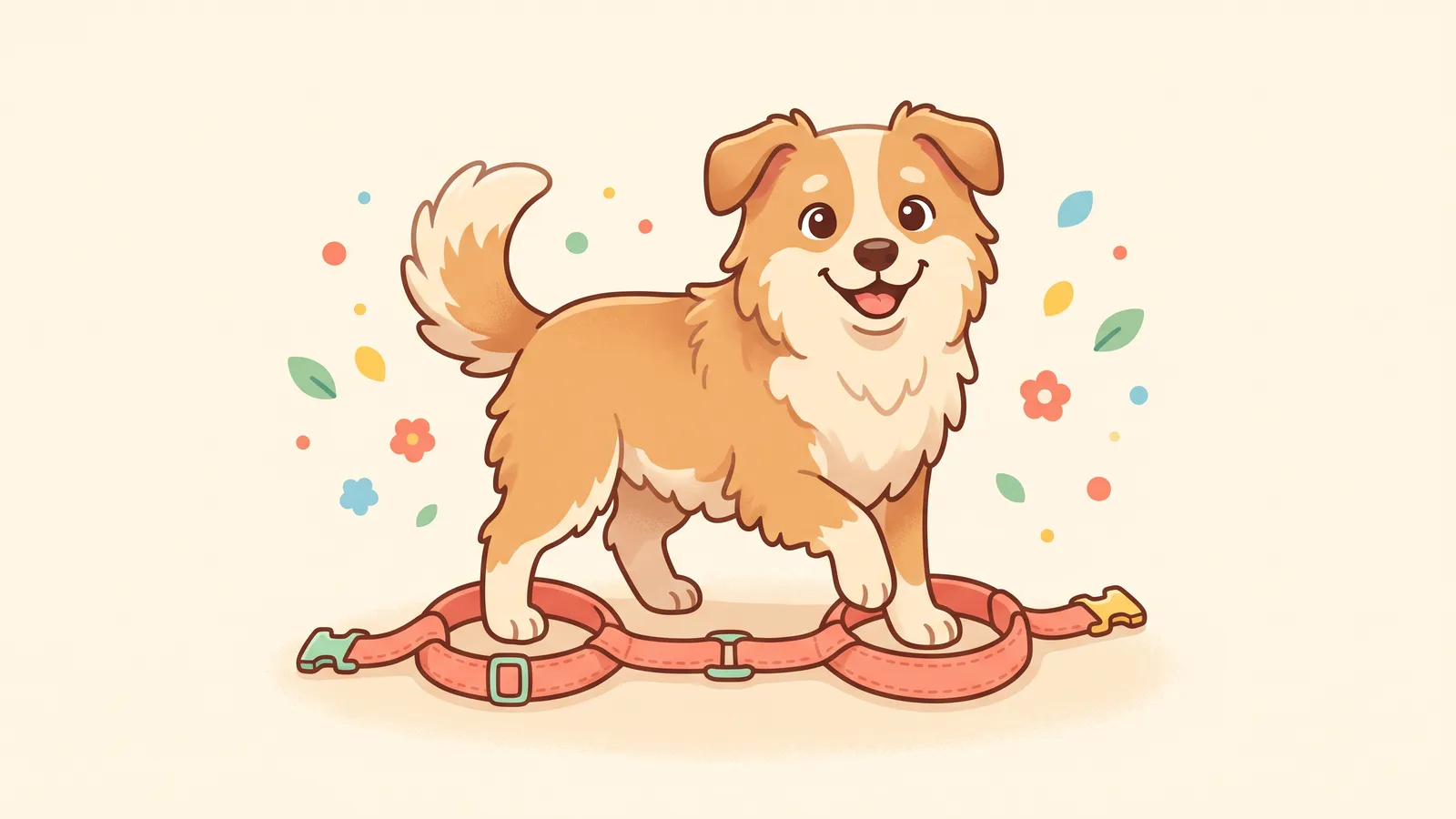
Lay the harness out flat first so you can see which loop goes where. For an overhead harness, slip the neck loop over your dog's head, then bring the belly strap under the chest and click the buckle on the side. For a step-in harness, have your dog step their front paws into the two leg holes, lift it up and clip it over the back. Then adjust until two flat fingers fit under every strap.
Most harness struggles come from holding it upside down or back to front. Get the layout right once and every style takes under a minute. First, find your style below, then do the fit check at the end.
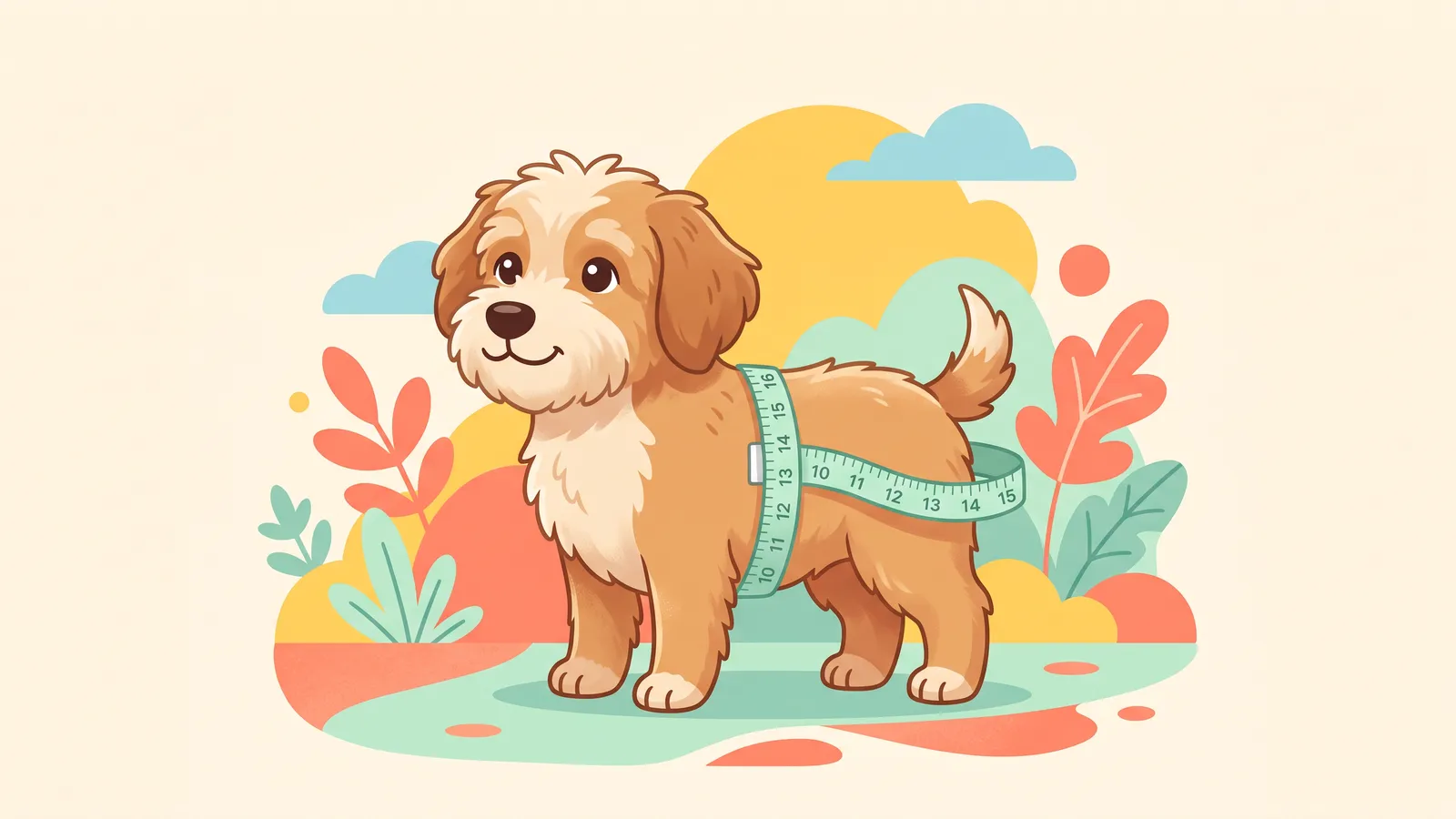
Not sure your harness is the right size? Start with our guide on how to measure a dog for a harness. No amount of adjusting fixes the wrong size.
Before you start: find the parts
Lay the harness flat on the floor, buckles open, and identify:
- The neck loop: the smaller opening, which goes around the neck.
- The chest piece: the strap or panel that sits on your dog's breastbone. A front leash ring sits here if there is one.
- The belly or girth strap: goes around the ribcage behind the front legs, usually with a side-release buckle.
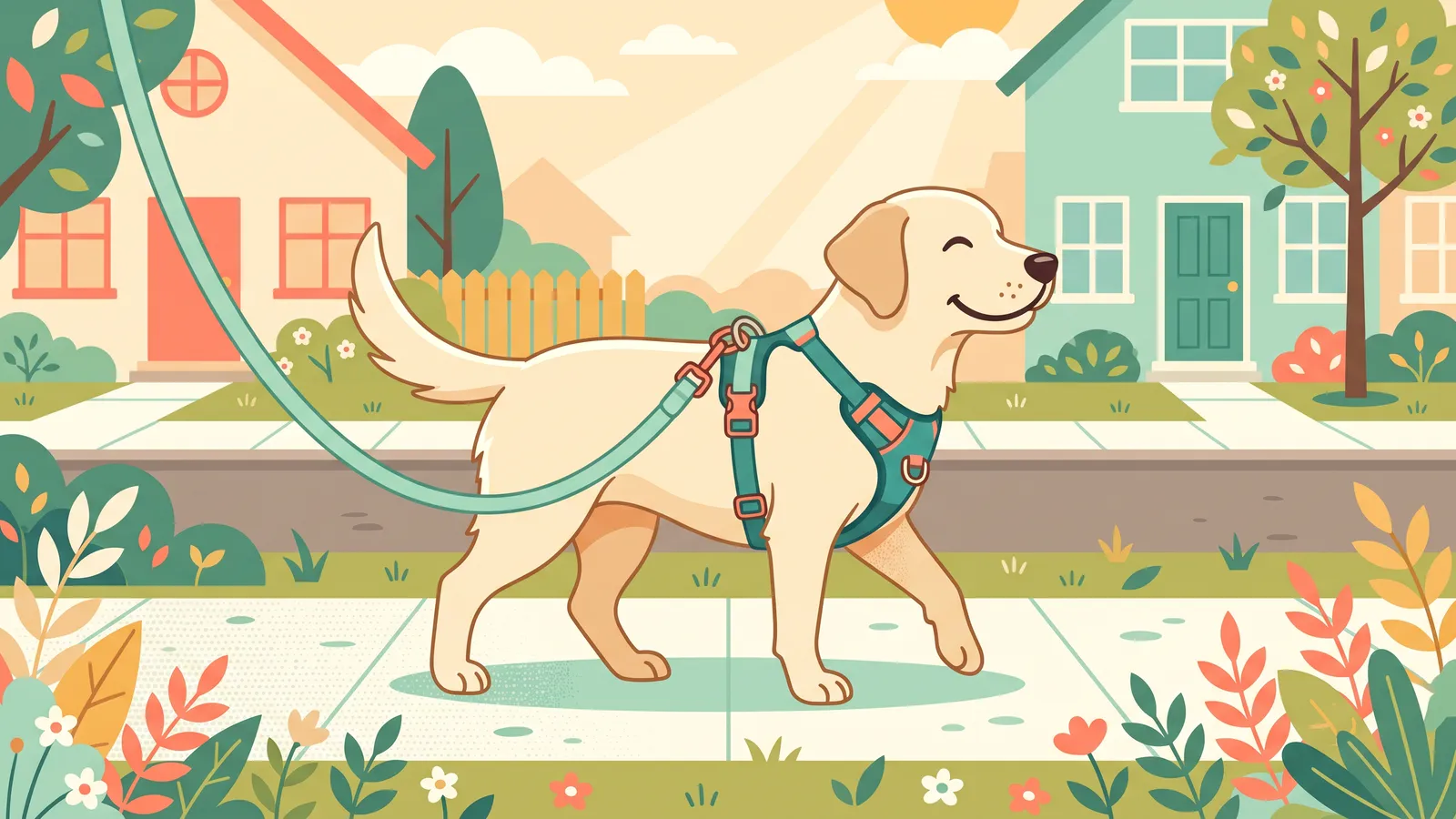
- The back ring: a D-ring or V-ring that sits on the back, between the shoulder blades.
Rings and buckles almost always face out, and the back ring sits on top. If yours has a padded side, the padding goes against the dog.
How to put on an overhead harness (one or two clips)
This is the most common style. The Ruffwear Front Range, rabbitgoo and Julius-K9 IDC all go over the head.
- Loosen the straps a little so the neck loop slides on easily.
- Hold the neck loop open in front of your dog's face, with the back ring on top. A treat held through the loop helps: your dog pushes their head in to get it.
- Slide it over the head so the chest piece sits on the breastbone, low on the chest.
- Bring the belly strap under the chest, just behind the front legs.
- Click the buckle closed. With two clips, it's one on each side. With one clip, like the IDC, it's a single buckle under or beside the belly. The Frenchie Life's owner calls the IDC a one-move fit: over the head, one buckle.
- Adjust: tighten the girth first, then the neck, keeping the chest piece centered.
The Ruffwear Front Range has four adjustment points and side-release buckles. Treeline Review's trainer found it had good shoulder clearance and didn't ride into the armpits, and named it the best harness for small dogs.
How to put on a step-in harness
A step-in harness keeps everything away from the head, which suits dogs who hate things pulled over their face.
- Lay it flat on the floor with the buckle open and the two leg holes facing up.
- Stand or kneel behind or beside your dog.
- Place one front paw in one leg hole, then the other paw in the other. Lift gently from behind the elbow rather than tugging the foot.
- Lift both sides up over the shoulders and bring the ends together over the back.
- Clip the buckle between the shoulder blades and attach the leash to the ring there.
- Adjust so the straps sit behind the elbows without rubbing.
The Curli Belka Comfort is a step-in with a click-lock buckle and air-mesh body; The Frenchie Life's owner says it cleared up their dog's harness rubbing. Keep in mind what Treeline Review's trainer notes: many step-in harnesses limit shoulder extension, and some dogs resist lifting their paws.
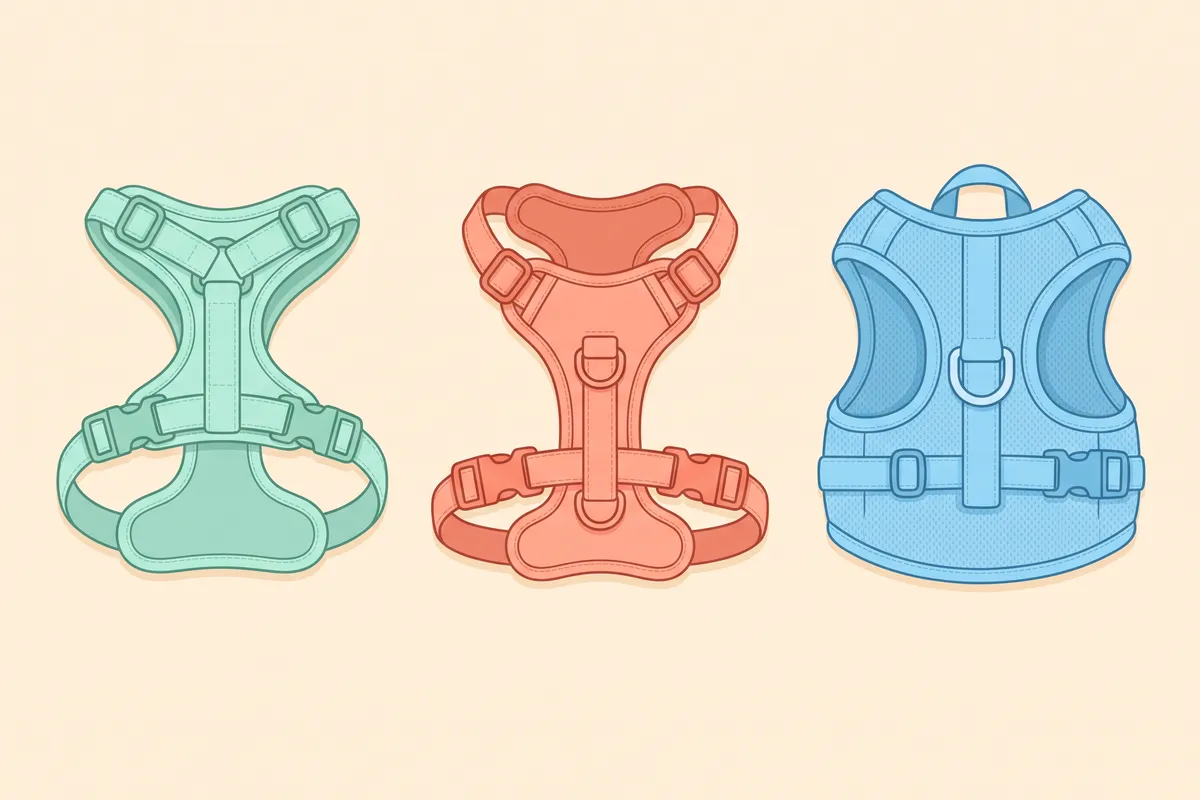
How to put on a buckle-neck harness
A buckle at the neck means nothing goes over the head and your dog doesn't have to lift a paw, which makes it the easiest style for head-shy and older dogs.
- Open the neck buckle and the belly buckle.
- Drape the harness over your dog's back with the back ring on top, behind the shoulders.
- Wrap the neck strap around the base of the neck and clip it.
- Bring the belly strap under the chest and clip it.
- Adjust each strap. The Blue-9 Balance has six adjustment points, including the strap along the back, so the first fitting takes a few rounds. Once it's set, you only open the buckles.
How to put on a vest harness
A vest harness, like the rabbitgoo, has a padded panel instead of thin straps. It goes on like an overhead harness: head through the neck opening, panel on the chest, buckles on the sides. Two things to watch:
- Line up the center seam with your dog's breastbone, or the vest twists.
- Check the armpits. A vest covers more of the body, so it's more likely to rub there, and it's warmer in summer.
How to put on an Easy Walk harness
The PetSafe Easy Walk confuses people because the leash clips at the chest. PetSafe's own steps:
- Shoulder strap over the head, so the connector rings sit "above and behind the dog's shoulder".
- Snap the belly strap closed and adjust it so the harness is snug around the girth.
- Check that the straps form a vertical line and stay out of the armpits.
- Adjust the chest strap so it sits horizontally, changing both adjusters evenly so the martingale loop stays centered. From the side, the straps make a sideways T.
- Clip the leash to the martingale loop on the chest.
- PetSafe says you should only fit 1–2 fingers between strap and dog.
Treeline Review's trainer warns that a strap straight across the shoulders can restrict movement, so treat the Easy Walk as a training aid for a puller, not an all-day harness.
Front-clip vs back-clip: which ring do I use?
| Front clip (chest) | Back clip (between the shoulders) | |
|---|---|---|
| What it does | Turns your dog back toward you when they pull | Lets your dog walk out in front |
| Best for | Training a dog who pulls | Calm walkers, hiking, long-backed dogs |
| Watch for | A dog who keeps pulling can twist the harness sideways | A strong puller can lean into it |
- Front clip for training. It gives you steering. Treeline's trainer says that when dogs keep pulling on a front clip, the harness often rotates, so use it while you train, alongside the method in our stop pulling guide.
- Back clip for easy walks. It's simpler and keeps the leash away from your dog's legs.
- Both at once. Treeline's trainer suggests a double-ended leash on the front and back clips for steering a dog that pulls on and off.
- Dachshunds and long backs usually do best on a harness that spreads the load evenly; see our dachshund harness guide.
How to put a harness on a dog for the first time
Don't wrestle a new harness onto a worried dog. Spread it over three or four short sessions:
- Show it, treat. Let your dog sniff the harness, then reward.
- Touch, treat. Touch it to their shoulders, reward, take it away.
- Halfway on. Head through the loop (or one paw in), reward, take it off.
- All the way on for a minute indoors, with treats, then off.
- Wear it for a meal or a game, then for a short walk.
Keep sessions short and stop before your dog gets fed up. Click the buckles near them a few times first; the sound startles some dogs.
Fit check: every style
- Two flat fingers under every strap, and no more.
- The chest piece sits on the breastbone, not the throat. Watch it while your dog sits and sniffs the ground.
- The belly strap sits behind the elbows, not in the armpits. Check for redness after the first few walks.
- Backing-out test: stand in front, hold the back ring and pull gently toward you. If the harness slides over the shoulders, tighten the girth.
- Re-check after a few walks. Straps loosen, and puppies grow.
Once the fit is right, mark each slider's position with a dab of nail polish or a pen. After washing, you can set it back in seconds.
Which ring should the leash go on? See front-clip vs back-clip harness.
FAQs
Which way does a dog harness go on?
The back ring goes on top, between the shoulder blades, and the chest piece or front ring sits low on the breastbone. Buckles usually close on the sides or under the belly.
How do you put on a harness with 2 clips?
Slide the neck loop over your dog's head, bring the belly strap under the chest, and click one buckle on each side. Then tighten the girth first and the neck second.
How do you put on a harness with one clip?
Over the head, then the single belly buckle. With a one-clip harness like the Julius-K9 IDC, check the chest strap sits below the points of the shoulders, then adjust the girth.
Should my dog wear a harness all the time?
No. Take it off at home. Straps can rub, collect moisture and catch on things. Leave the collar on for ID tags.
Why does my dog's harness keep twisting?
Usually it's too loose, or the leash is on the front clip and your dog is pulling. Tighten the girth strap, center the chest piece, and train loose-leash walking.
Lay it flat, find the back ring, and give your dog a treat at every step. Before long, the harness becomes the sign that a walk is coming.