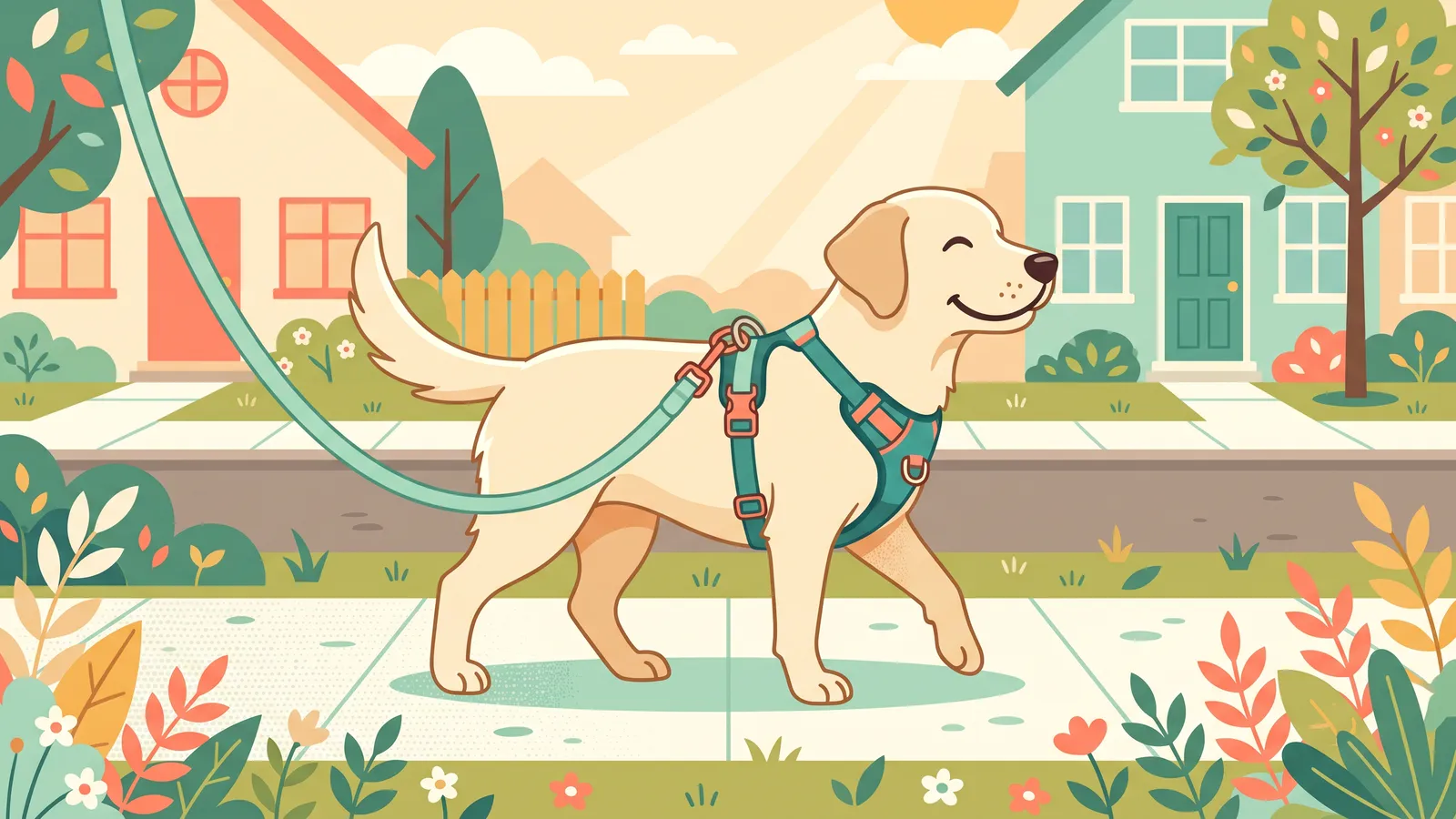
Dogs pull because pulling works: it gets them where they want to go. To stop it, make a tight leash mean the walk stops and a loose leash mean the walk goes on, and reward your dog for walking beside you within a second or two. A front-clip harness makes pulling easier to manage while you train, but the training is what changes the habit.
If every walk feels like waterskiing behind your dog, you're not alone, and it's very fixable. Below is the step-by-step plan trainers use to teach loose-leash walking, plus the gear that makes it easier.
Why dogs pull
Dogs walk faster than we do, the world smells amazing, and every time they pulled in the past, they got a little closer to the good stuff. That's a lesson learned through hundreds of repetitions. The fix is to teach a new rule just as consistently: pulling never gets your dog anywhere, and walking near you does.
Two things to know before you start:
- It takes time. Expect a couple of weeks of short daily sessions before you see a real change, and longer for a dog who has pulled for years.
- Consistency beats intensity. If pulling works even some of the time, your dog keeps trying it. Everyone who walks your dog needs to follow the same rules.
Step-by-step: teach loose-leash walking
1. Set up your gear
- A 4 to 6 foot leash. Treeline Review, written by a certified trainer (CPDT), recommends this length for teaching loose-leash walking. Skip retractable leashes for training: they teach your dog that pulling extends the leash.
- A harness that clips at the chest, so pulling turns your dog back toward you instead of letting them lean into it.
- Small, soft, tasty food rewards, about pea-size, in a pouch on your hip so you can reach them fast.
2. Start where it's boring
Begin in your living room, hallway or backyard. New skills fall apart on a busy street, so give your dog the easiest possible start. Sessions of 5 to 10 minutes are plenty.
3. Pick a side and reward the spot
Choose a side (most people use the left) and decide where "the spot" is: your dog's shoulder roughly level with your leg.
- Take a step or two.
- The moment your dog is in the spot, say a marker word like "yes".
- Deliver the reward right at your leg, at your dog's nose height, within 1 to 3 seconds of the marker.
Reward position matters. If you hand rewards out in front of you, your dog learns that the good stuff happens out front. Delivering them at your side makes that the place to be.
4. Be a tree when the leash goes tight
This is the core of the method, recommended by AKC Pet Insurance and many trainers:
- The instant the leash goes tight, stop and plant your feet. Don't pull back, don't repeat cues, don't jerk the leash.
- Wait. Sooner or later your dog will look back, step toward you, or shift their weight, and the leash will go slack.
- The moment it's slack, mark "yes", reward at your side, and walk on.
Your dog learns that a tight leash stops everything and a loose one starts it again. In the first few sessions you may stop dozens of times to cover a single block. That's normal, and it's working.
5. Turn around when stopping isn't enough
If your dog stays fixed on something ahead, cheerfully say "this way", turn, and walk in the opposite direction. Reward when your dog catches up to your side. A few turns teach your dog to keep an eye on where you're going.
6. Reward often, then fade
At first, reward every few steps your dog walks beside you. As the habit builds, stretch it out: every 10 steps, then every 20, then occasionally. You can also use real-life rewards. A loose leash earns "go sniff" at a good tree, or getting to greet a friend.
7. Add distractions slowly
Move from the living room to the backyard, then a quiet street, then a park at a quiet time. If your dog suddenly starts pulling again, the step was too big. Back up to an easier spot and add distance from the distraction.
8. Separate training walks from "just getting there" walks
Real life won't always allow a slow training walk. On those days, use the front clip on a no-pull harness to manage pulling, and keep your proper training sessions short and focused. This keeps your dog from practicing pulling while you build the new habit.
9. Burn off energy first
A dog with energy to spare finds it much harder to walk politely. A game of fetch or a sniffy, off-leash romp in a safe, fenced area before a training walk can make a big difference.
What about head halters?
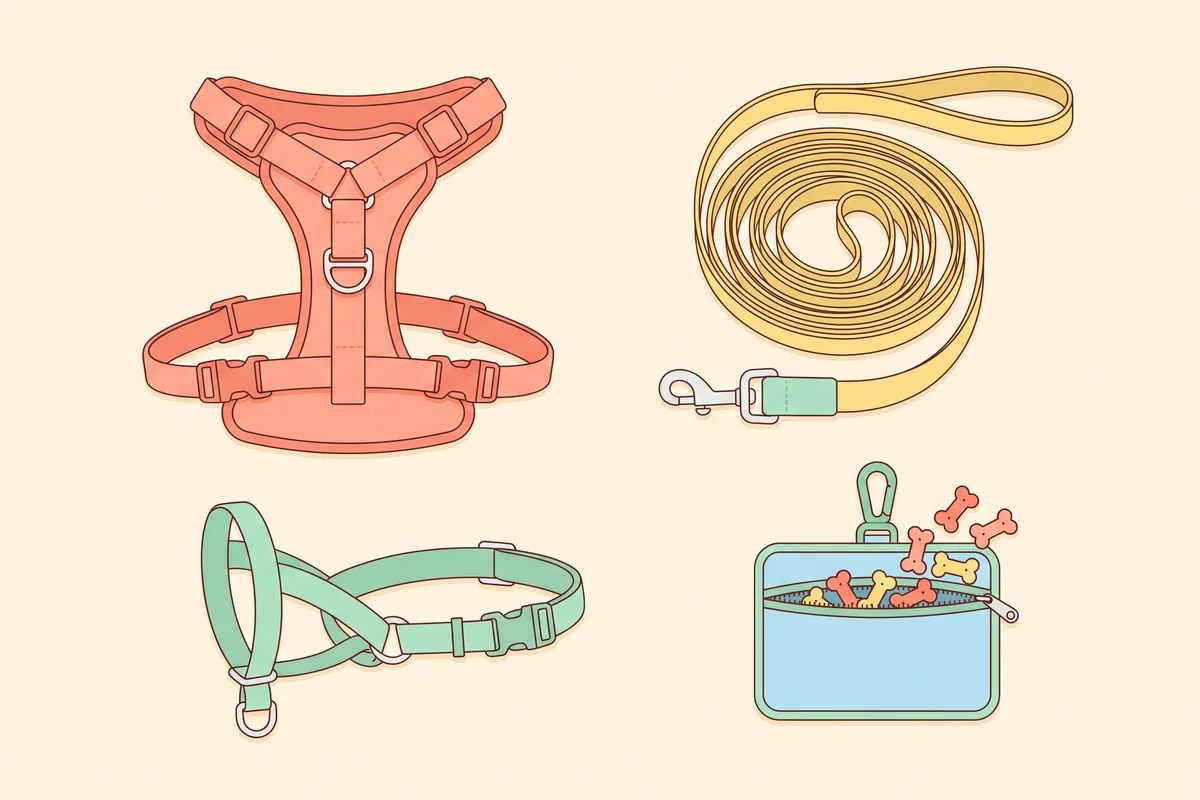
A head halter loops around your dog's muzzle and turns the head when they pull. They can help with very strong dogs, but go in with your eyes open:
- K9 of Mine notes a head halter "does not teach dogs not to pull". It manages pulling; training still does the teaching.
- Never jerk or correct on a head halter. Sudden force on the head can hurt your dog's neck and eyes.
- Dogs need time to get used to wearing one, with lots of rewards.
- Flat-faced breeds: Hepper says head halters aren't suited to them. If you have a Frenchie or pug, stick to a harness (see our best harnesses for French bulldogs) or ask your trainer.
Gear that helps
Gear supports the training, it doesn't replace it. These four cover everything you need.
Ruffwear Front Range Harness
Best front-clip harness. The Ruffwear Front Range has a front clip for training walks and a back clip for relaxed ones, with padding and sizes from XXS to XL. Its front-clip effect is milder than stronger no-pull designs, which makes it a comfortable everyday harness for moderate pullers. For long-backed dogs, see our best harness for dachshunds picks.
2 Hounds Design Freedom No-Pull Harness
Best for strong pullers. The Freedom has front and back connection points, a martingale loop at the back, and four adjustment points. It's made in the USA, comes in XS to XL in 5/8" and 1" strap widths, and has a chew replacement warranty. One tip from Treeline Review: in their experience the back martingale loop did little to stop dogs pulling, so clip the leash at the front.
Mendota Pet Snap Leash, 6 ft
Best training leash. Treeline Review's "Best Overall" leash. It's braided rope with leather, has a solid snap clip, and is the standard type used in obedience classes. At 6 feet, it gives your dog enough room to walk beside you on a loose leash. It isn't fully waterproof, so let it dry after rainy walks.
PetSafe Treat Pouch Sport
Best reward pouch. K9 of Mine's "Best Multi-Size" pick. The hinged opening stays open so you can grab a reward in under a second, which makes that 1-to-3-second timing easy. It closes with a magnet, has two inner pouches, and is machine washable. It comes in Mini (6.25 × 5") and Standard (7.75 × 6.25"); the Standard can feel bulky, and some owners report durability issues.
This guide is general information, not veterinary advice. If you're worried about your dog, talk to your vet. If your dog coughs, gags or wheezes when they pull, switch from a collar to a harness and mention it to your vet. If your dog suddenly starts pulling, lagging or limping when they didn't before, a check-up is a good idea.
New to front-clip harnesses? Here's how to put on a dog harness so it sits right.
Why front clips help with pulling: front-clip vs back-clip harness.
FAQs
How long does it take to stop a dog pulling on the leash?
Most dogs show progress within a couple of weeks of short daily sessions. A dog that has pulled for years can take longer, and every new, more exciting place is a new challenge. Consistency matters more than session length.
Do no-pull harnesses actually work?
They make pulling easier to manage by turning your dog toward you when they pull. They don't teach your dog to stop. Use one alongside the stop-and-wait method and reward walking at your side.
Should I use a collar to stop my dog from pulling?
For a dog that pulls, a harness is the better choice. A collar puts all the force on the neck. Clip the leash to a chest-clip harness and keep the collar for ID tags.
What if my dog pulls toward other dogs or people?
Add distance. Cross the street or step aside, reward your dog for looking at you, and get closer only as they stay calm. If your dog lunges, barks or seems fearful, a certified trainer can help.
How long should the leash be for loose-leash training?
Four to six feet. That's long enough for a loose leash and short enough to keep your dog close. Avoid retractable leashes while training.
Stay patient, stop when it's tight, reward when it's loose, and within a few weeks your walks will feel like a stroll instead of a tug of war.