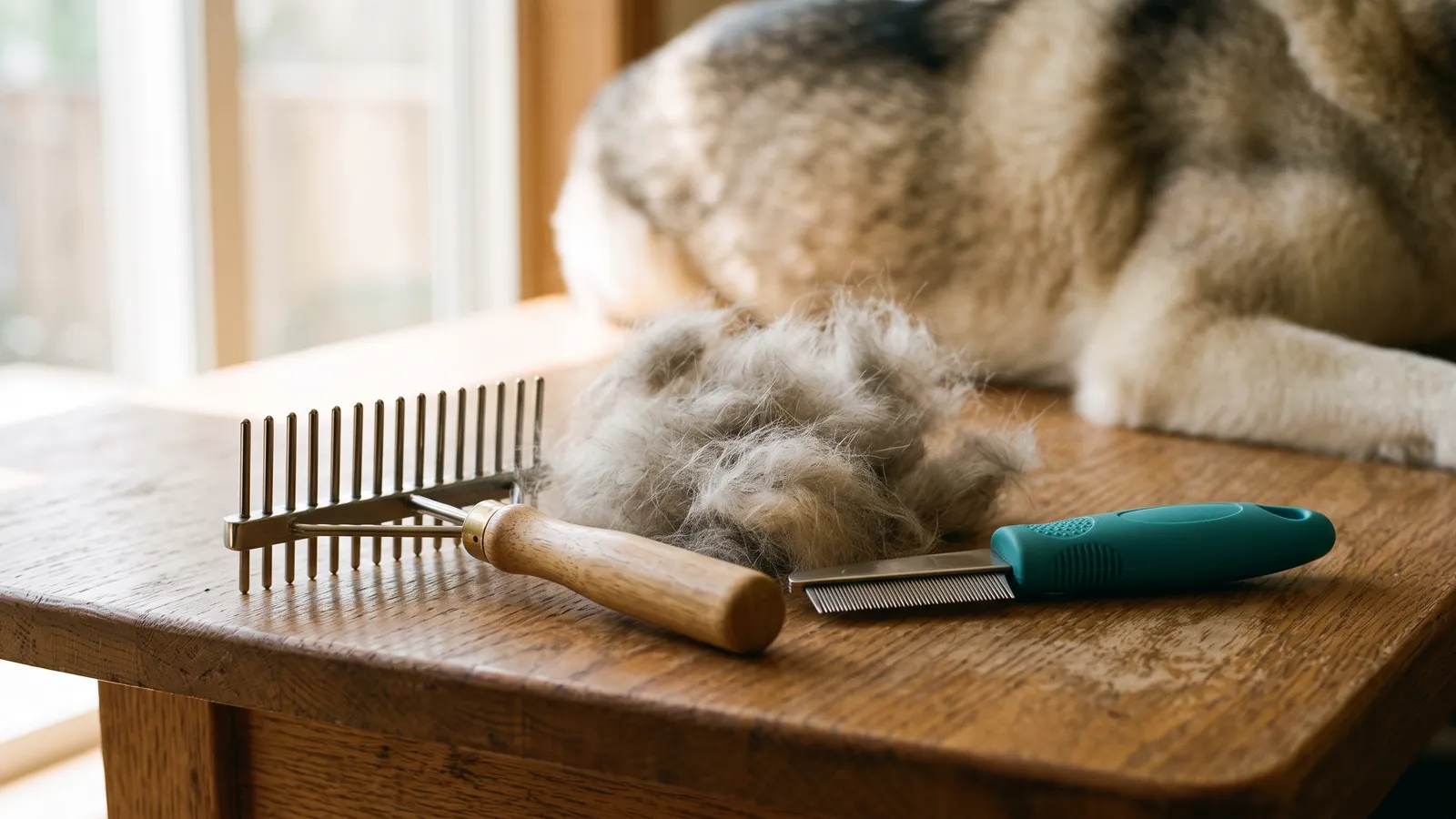
An undercoat rake has long, wide teeth that reach deep into a thick double coat and pull out bulk loose fur, so it suits Huskies, Shepherds and Goldens in heavy shedding season. A FURminator is a fine-toothed blade-style tool that takes the loose undercoat near the surface, so it suits short and medium coats and weekly upkeep. If your dog has a thick double coat, start with the rake, and add the FURminator only if loose fur remains. Use either on a dry, brushed-out coat, lightly.
Both tools are sold to do the same job, which is to remove loose undercoat before it ends up on your couch. They go about it differently, and the wrong one on the wrong coat is the usual reason owners are disappointed. The comparisons below come from pet-care blogs and groomer advice rather than lab tests, and where they disagree we say so. We haven't used both on the same dog.
FURminator vs undercoat rake at a glance
| FURminator deShedding tool | Undercoat rake | |
|---|---|---|
| What it is | A comb with a fine stainless steel edge | A handle with one or two rows of long, rounded teeth |
| Reaches | Loose undercoat near the surface, through the topcoat | Deep undercoat, in a thick coat |
| Best coat | Short to medium coats with an undercoat (Labs, Beagles, Pit Bulls) | Thick double coats (Huskies, Shepherds, Goldens) |
| Best time | Weekly upkeep | Heavy shedding seasons |
| Main risk | Cuts or thins the topcoat if overused | Scratching skin if pressed hard; can't cope with mats |
| Gentle on beginners? | Needs a light hand | Often called safer for beginners |
What a FURminator does
The FURminator has a fine-toothed stainless steel edge that the maker says reaches through the topcoat to remove loose hair and undercoat. It's sized by dog weight and comes in short-hair and long-hair versions, so choosing the right model is the first job. Groomers' blogs call it a maintenance tool: great for a weekly pass on a short-coated shedder, but easy to overdo. Overuse or a heavy hand can damage the topcoat and leave the coat ragged or frizzy.
What an undercoat rake does
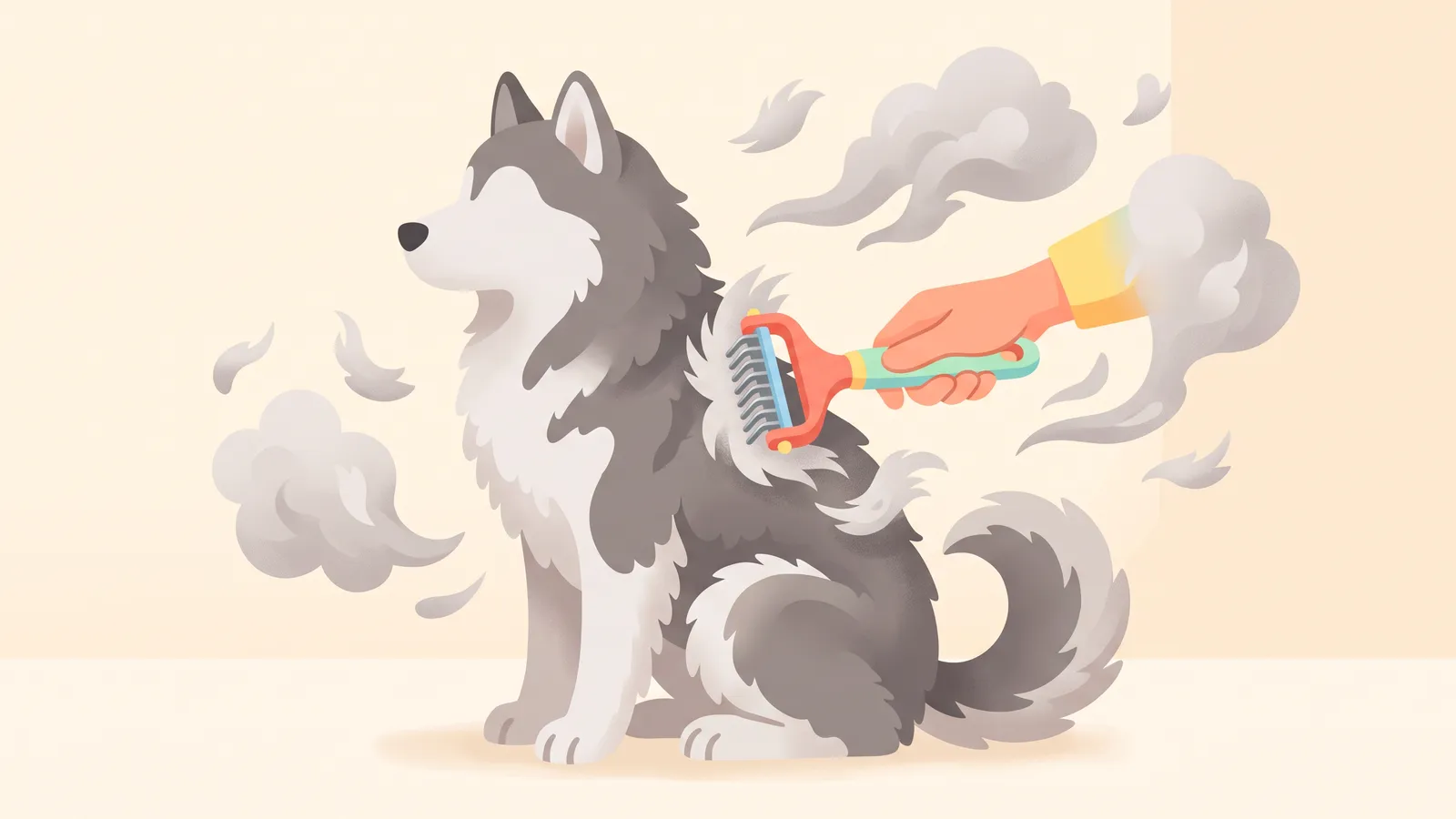
An undercoat rake has longer, wider-spaced, usually rounded teeth. It goes deep into a thick coat and pulls out bulk loose fur without cutting the guard hairs, which is why it's popular for double-coated breeds blowing their coat. It does nothing for a fine, silky coat and isn't for legs, head or tail. Our Siberian Husky brush guide has more on rake picks for blow season.
Which should you buy for your dog?
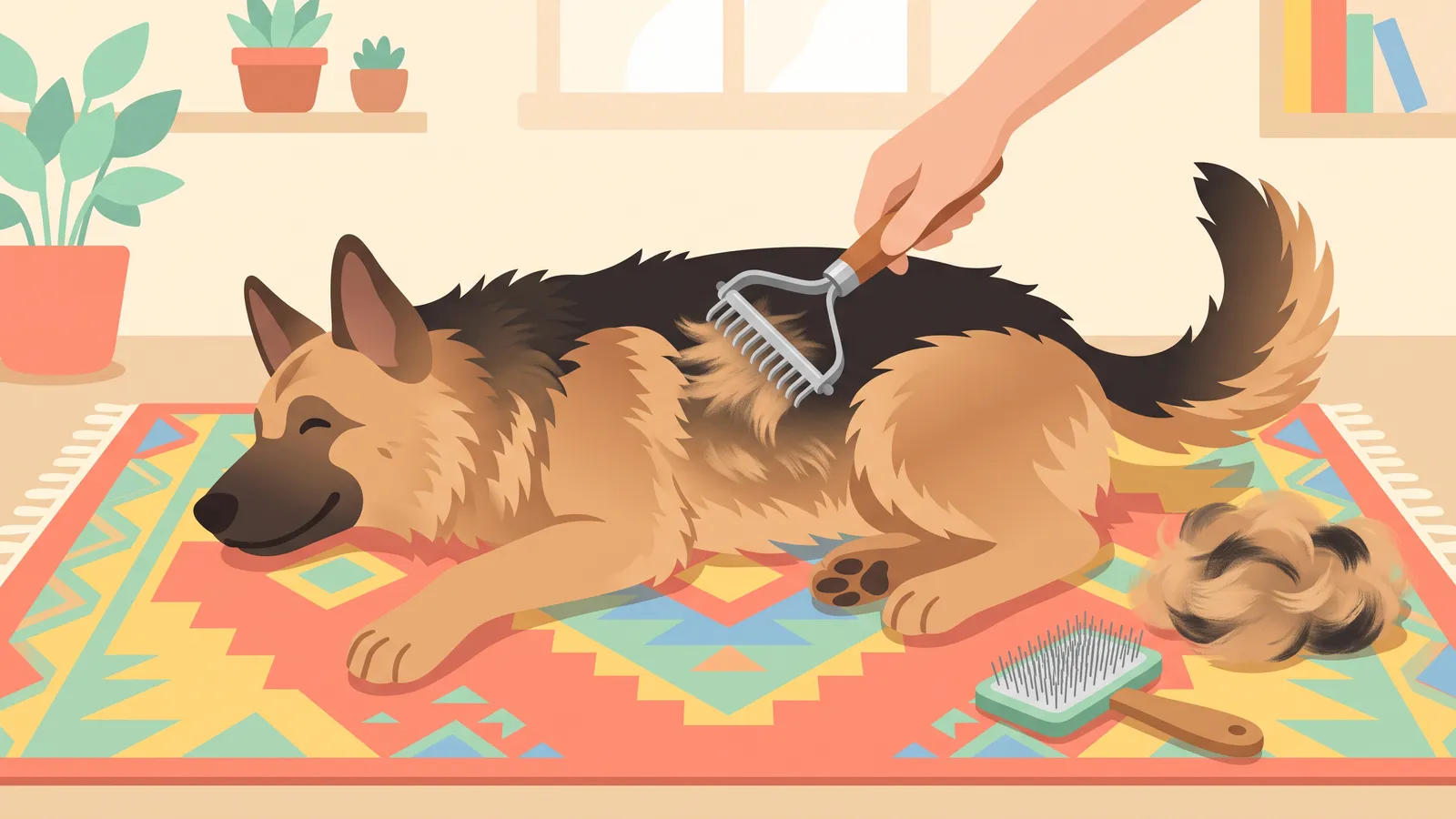
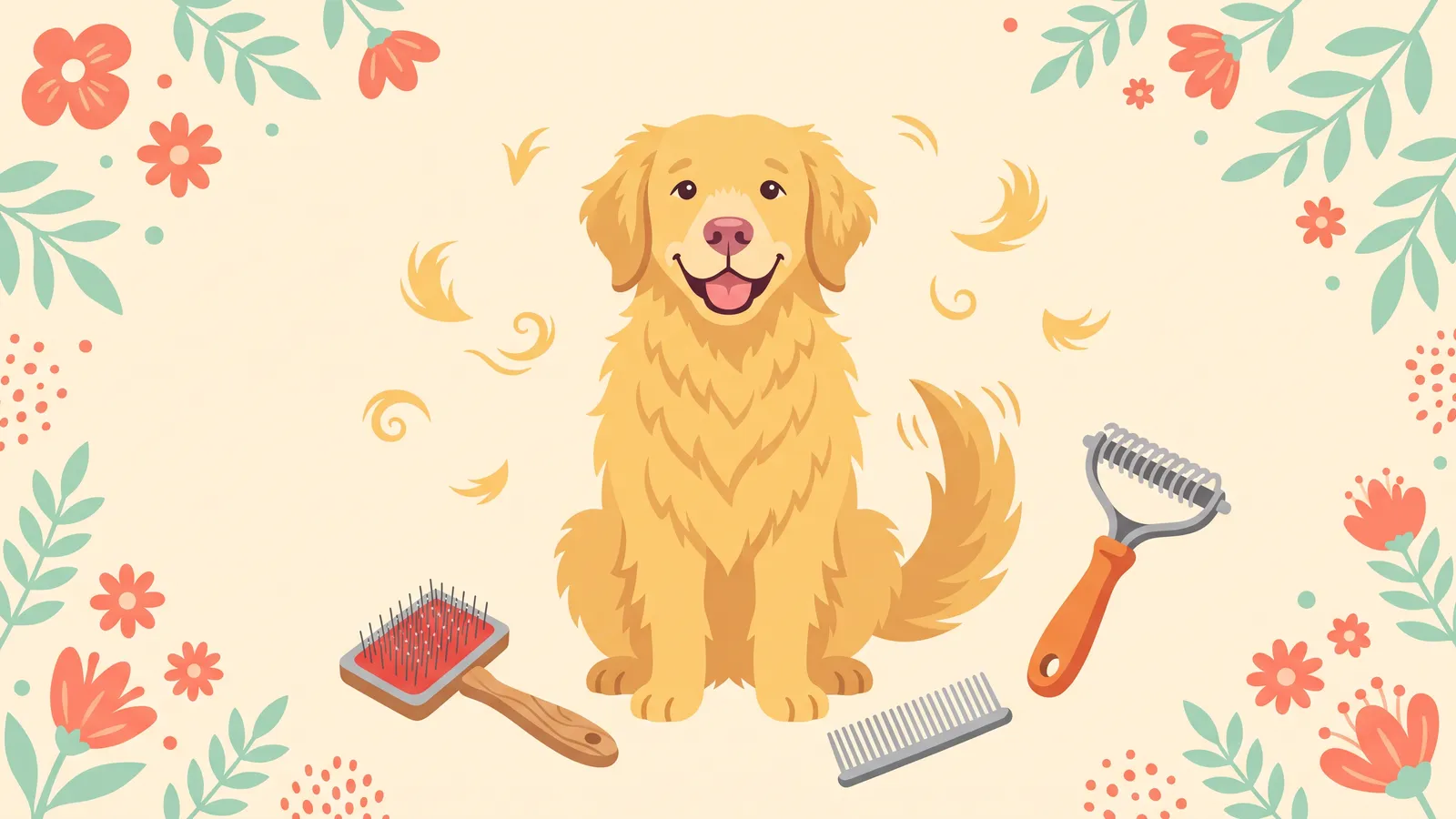
- Thick double coat (Husky, Malamute, Shepherd, Golden): an undercoat rake first. See our guides for German Shepherds and Golden Retrievers.
- Short or medium coat with an undercoat (Lab, Beagle, Pit Bull): a FURminator, used gently, once a week at most in shedding season.
- Long, wispy or silky hair: neither is ideal; sources suggest the rake is the safer choice if you have to pick.
- Curly or doodle coats: neither. Mats need a comb and clippers; see grooming a goldendoodle at home.
- Not sure: buy the rake. Most blog comparisons rate it the gentler tool, though one table disagrees.
Can you use both?
Yes, and several groomers suggest it. Start with the rake to clear the deep bulk and any small tangles, then use the FURminator for the fine, dusty undercoat that's left. If one pass with the rake leaves your dog's coat looking clear, don't add the second tool.
How to use either tool without hurting your dog
- Brush the coat out first and never use these on a wet or matted coat. They pull and can irritate skin.
- Work in the direction the hair grows, in short, light strokes.
- Don't press hard, and stop if the skin looks red.
- Keep sessions short. Don't go over the same patch again and again.
- Don't shave a double-coated dog to cut shedding; see should you shave a double-coated dog.
- If the shedding is sudden or comes with bald patches or scratching, ask your vet. See dog shedding a lot.
Our picks
We haven't tested these. The picks are the two tools our other grooming guides already recommend.
FURminator Undercoat deShedding Tool
Best for: short and medium coats, used gently. Check your dog's weight and coat length against the listing before buying.
Safari Long Tooth Undercoat Rake
Best for: thick double coats at blow season. It's the top pick in our Husky brush guide.
FAQs
Is a FURminator better than an undercoat rake?
Neither wins everywhere. A rake suits thick double coats and bulk removal; a FURminator suits short or medium coats and weekly upkeep. Many groomers use both.
Does a FURminator damage your dog's coat?
It can, if you use it too often or press hard. Blog comparisons warn it can thin or cut the topcoat. Use a light touch on a dry coat, and not every day.
Which is better for a double-coated dog?
An undercoat rake is the usual advice for thick double coats such as Huskies, Shepherds and Goldens.
Which is better for short-haired dogs?
A FURminator, sized for the dog's weight and coat length. A rake does little on a short coat.
Can you use a FURminator and a rake together?
Yes. Rake first for bulk, then a gentle pass with the FURminator for what's left.
How often should you use a deshedding tool?
Sparingly: a few minutes about once a week in shedding season is the usual guidance, and less outside it. Follow the maker's advice for your tool.
If your dog has a thick coat, rake first, and keep the FURminator for the fine-tuning.