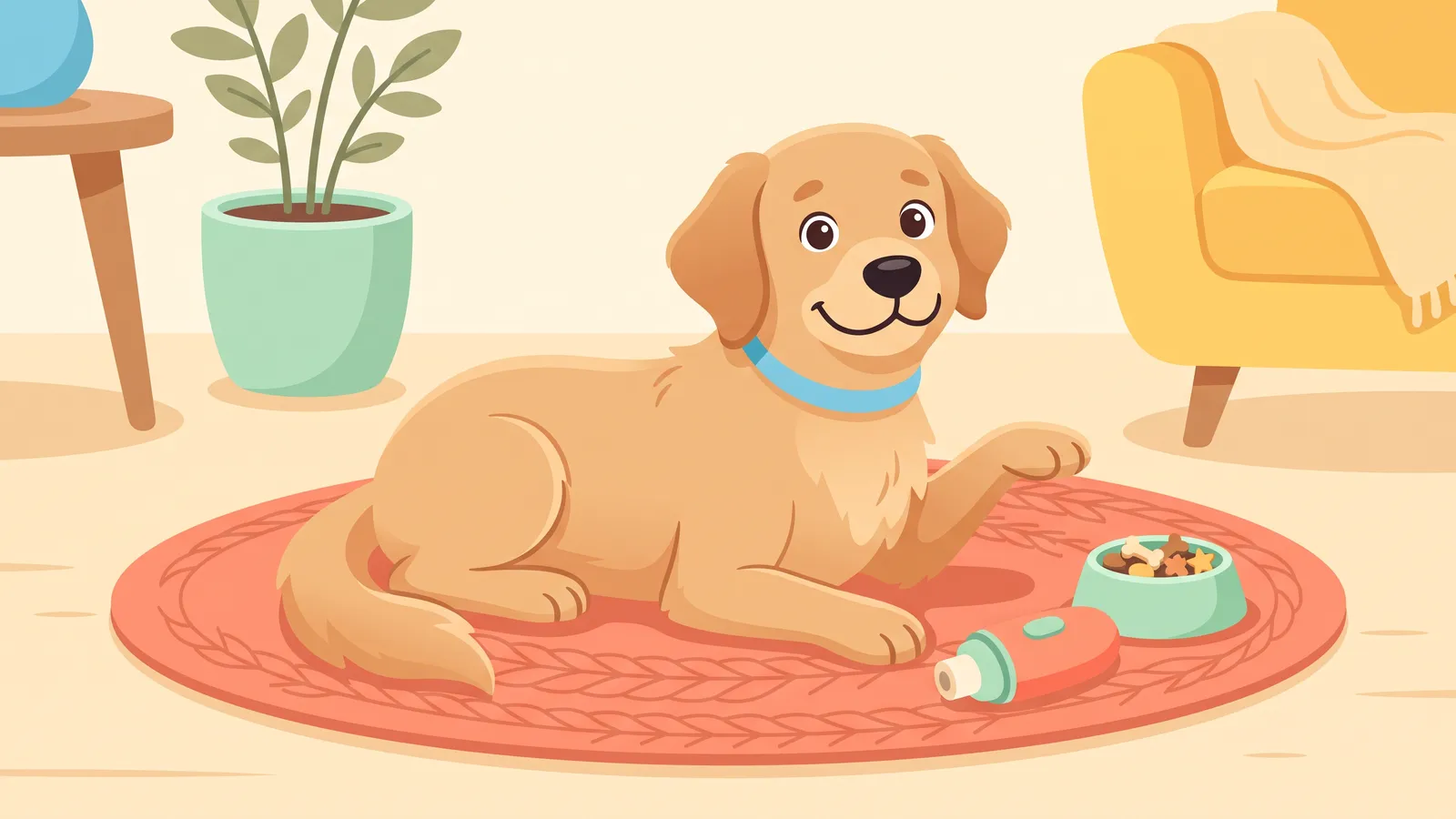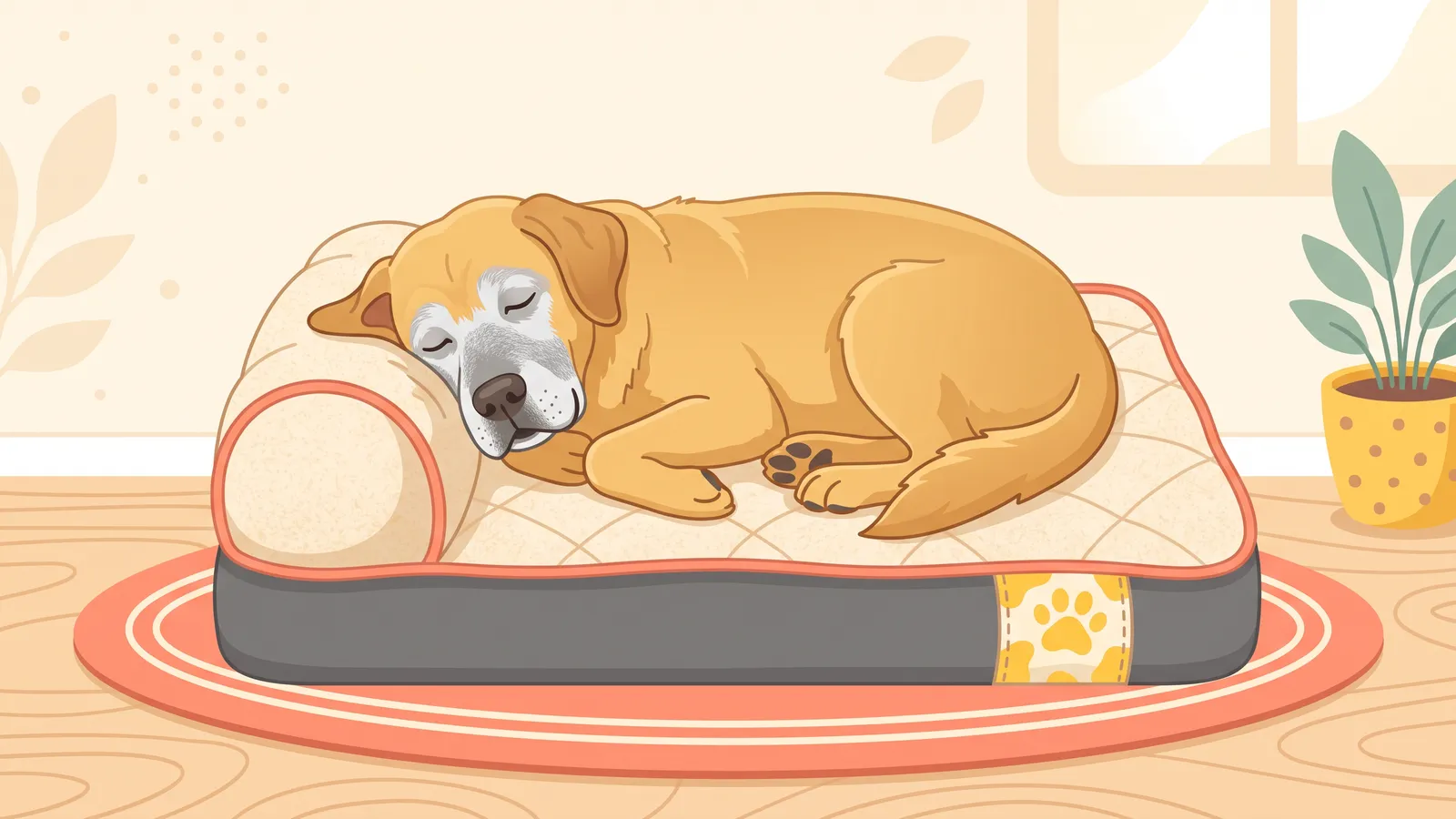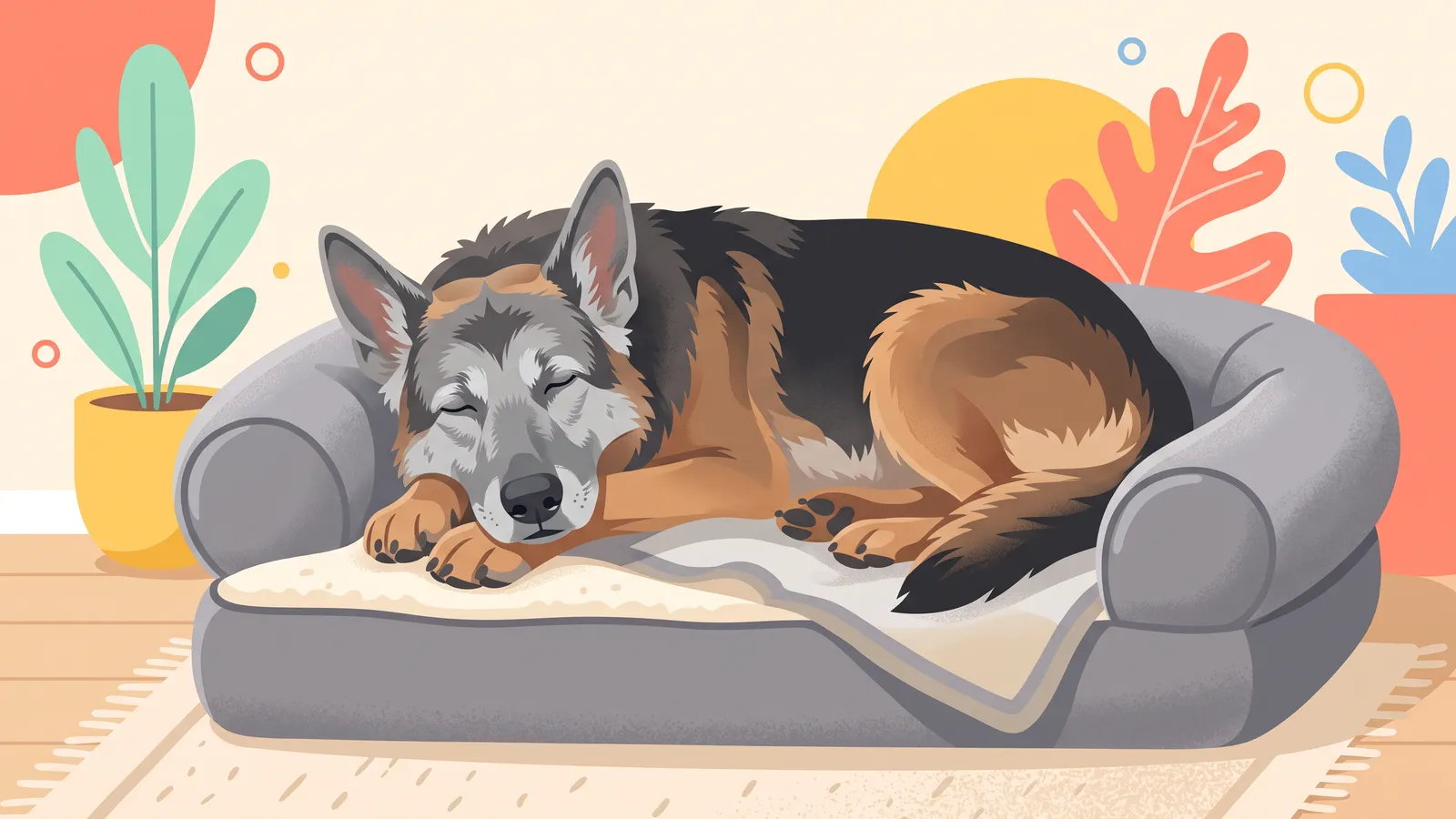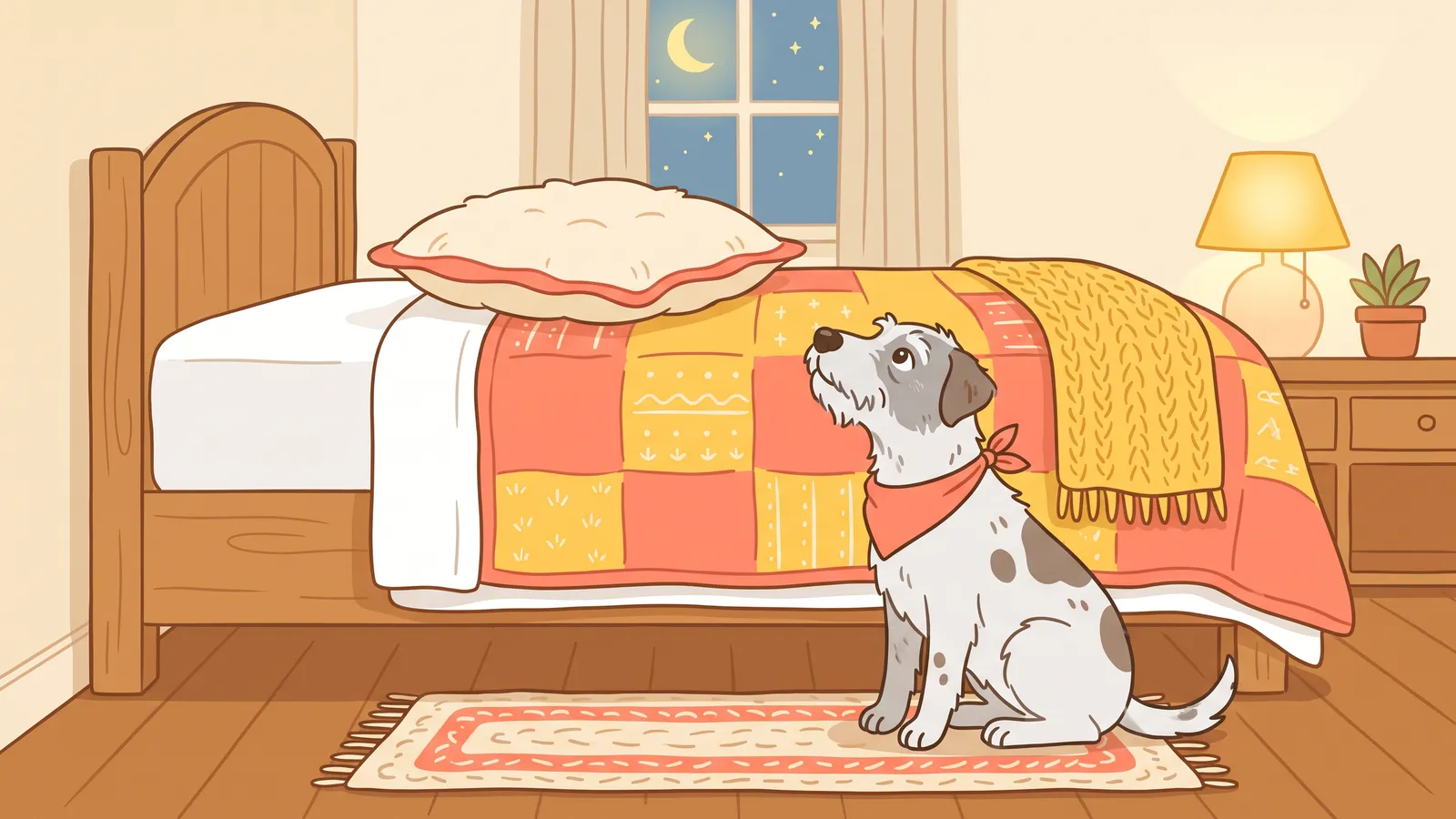
To help a senior dog slipping on the floor, cover the slippery routes with rugs or runners, keep nails short and the fur between the paw pads trimmed, and try toe grips or a harness with a handle if they still struggle. Add a ramp where they climb. But get your vet involved too: slipping often goes with stiffness or weakness, and sudden weakness or wobbling is a same-day vet call.
It's one of the saddest sights for an owner: an old dog splaying on the kitchen tile, or standing at the edge of the hallway, unsure about crossing. The good news is that most of the fixes are simple, quick and work together. Here's what to do, roughly in the order we'd try it.
Why senior dogs slip on hard floors
A few things usually stack up:
- Weaker back legs and stiff joints. The AKC's chief vet, Dr. Jerry Klein, lists difficulty standing up from lying down and a narrow stance in the back legs among the signs of arthritis.
- Long nails. When nails hit the floor first, the paw can't sit flat.
- Furry feet. Long hair between the pads acts like a slipper on smooth floors. The ToeGrips makers say the same.
- Shiny floors. Wood, laminate and tile give very little grip.
- Lost confidence. After a slip or two, many dogs start avoiding hard floors altogether.
You can fix the last four at home. The first one needs your vet.
This guide is general information, not veterinary advice. If you're worried about your dog, talk to your vet. Slipping that comes on slowly is often linked to joint or muscle changes, and your vet can check for pain and talk you through options. Sudden weakness, wobbling, dragging a paw, knuckling over, falling, or not being able to stand means call your vet the same day. Gear on this page can make floors easier to manage; it can't treat or prevent arthritis or any other condition.
7 ways to help a senior dog slipping on the floor
1. Lay rugs and runners on the main routes
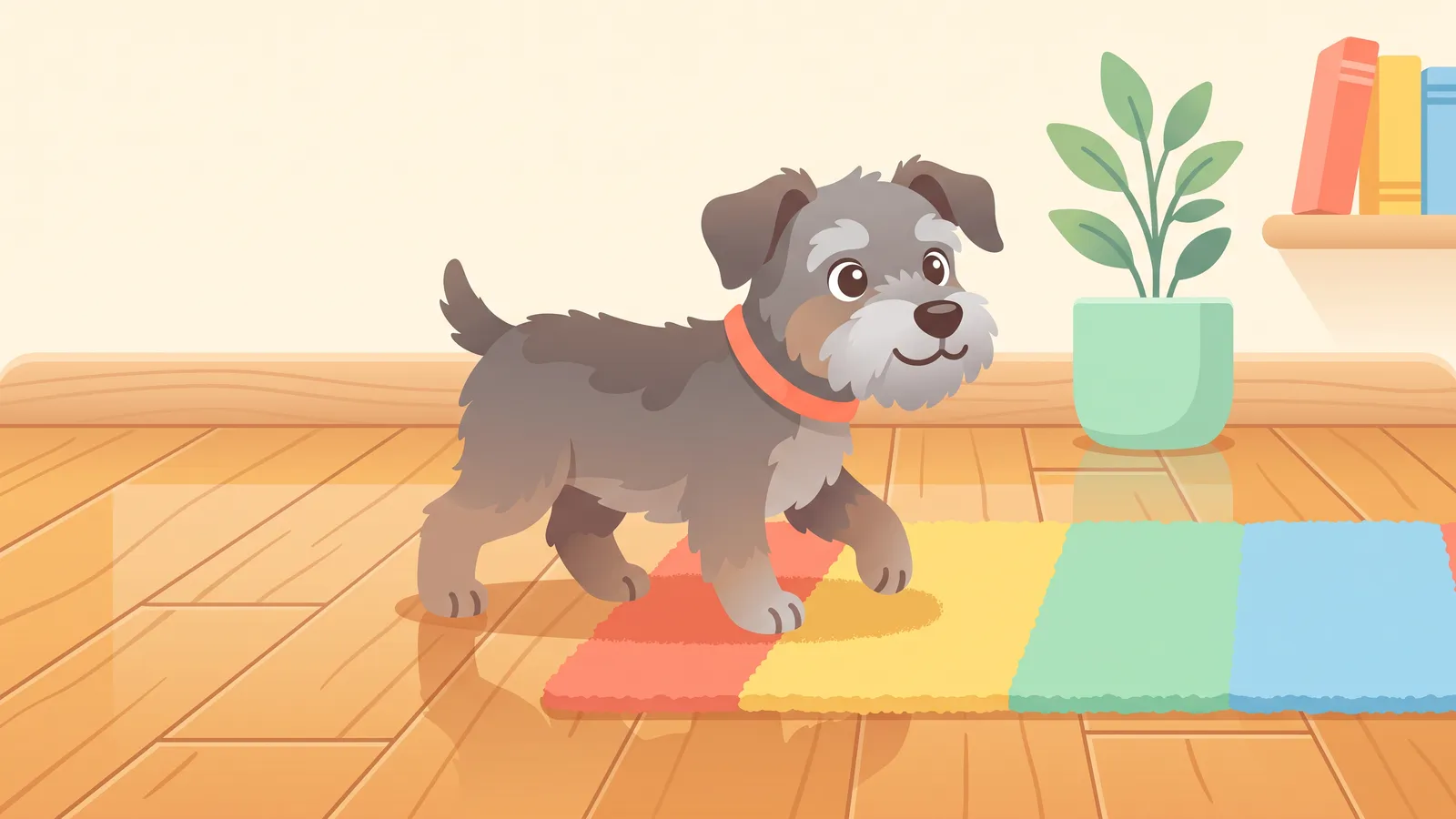
This is the fastest, most effective change for most homes. Map your dog's day: bed to water bowl, bed to the back door, the hallway, the spot where they stand up, and any turn or doorway where they've slipped before. Then:
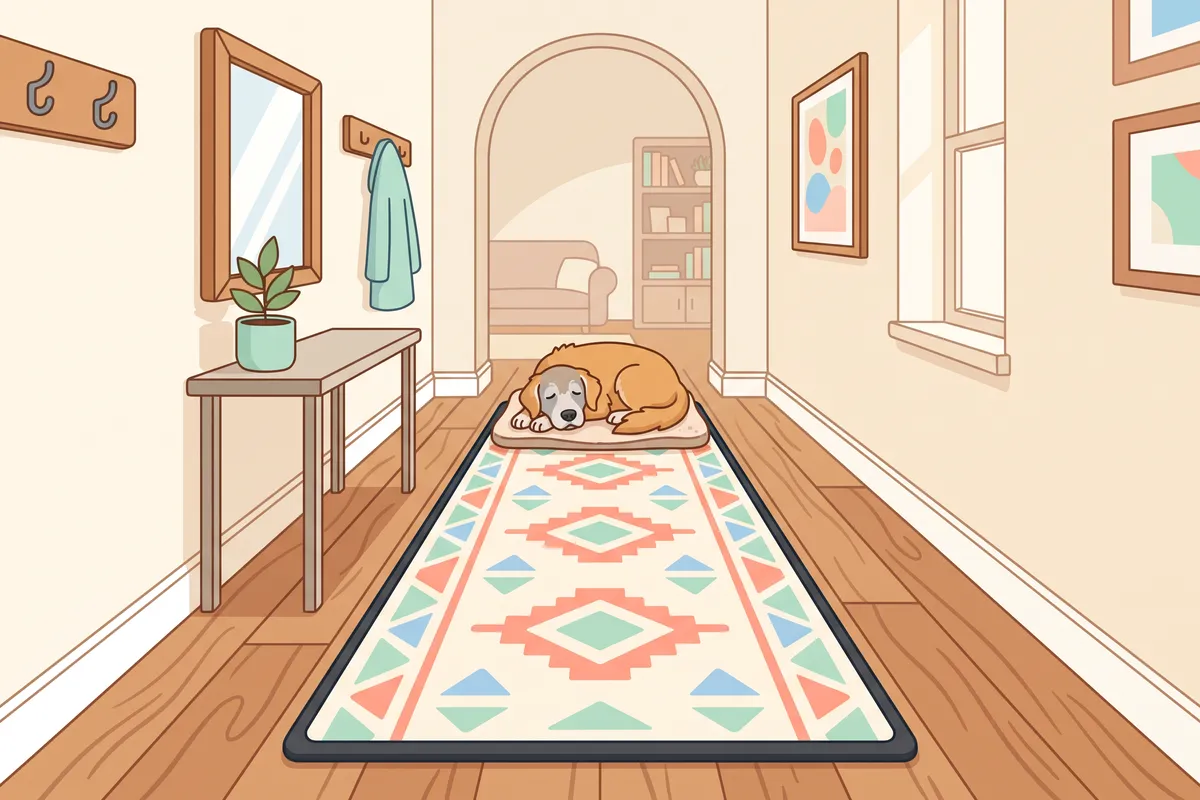
- Use rugs or runners with a rubber or non-slip backing, or put a rug gripper underneath. A rug that slides is worse than no rug.
- Cover the spot where they get up from their bed. Standing up is often the hardest moment.
- Put a rug at the bottom of ramps and stairs, and in front of the food and water bowls.
- Washable rugs are worth it for older dogs who have the odd accident.
- Interlocking foam mats or carpet tiles can fill awkward spaces.
You don't need wall-to-wall carpet. A connected "path" of rugs through the house is often enough.
2. Trim the nails
Long nails tip the foot back and stop the pads touching the floor. The AKC suggests trimming most dogs every three to four weeks, and says regular trims help the quick recede. If your dog's nails click on the floor, they're due. A grinder is often easier on a nervous older dog because it takes off a little at a time: Whole Dog Journal's favorite was the Dremel PawControl 7760-PET, with four speeds and a guard that catches the dust. Our step-by-step guide shows how to trim dog nails, including long, overgrown ones.
3. Trim the hair between the paw pads
Fur that grows past the pads covers the very part of the foot that grips. Trim it level with the pads using small round-tipped scissors or clippers. If your dog fidgets, or you're nervous about cutting skin, ask a groomer; the ToeGrips team suggests the same.
4. Try toe grips
Dr. Buzby's ToeGrips are small grips that fit onto your dog's nails, so the nail tips grip smooth floors. They were designed by veterinarian Dr. Julie Buzby, and the maker says they're for dogs who walk fine on carpet and grass but slip indoors. Some useful details from the maker's FAQ:
- They're sized by nail circumference, so you measure once after a trim. They should fit snugly.
- A pack has 20 grips: one for each of the 16 weight-bearing nails, plus 4 spares.
- They typically last 1 to 3 months, depending on your dog's size and gait.
- They're for "walkers, not runners": young, active dogs tend to wear them off.
- You need to be able to handle your dog's paws to fit them; the maker suggests asking your vet's team for help if you can't.
They're sold mainly through the maker's own shop and veterinary clinics, so if you buy on Amazon, check that the seller is Dr. Buzby's.
Grippy socks and dog boots are another option. Some dogs won't tolerate anything on their feet, so try them for short spells, and take them off if your dog walks oddly.
5. Use a harness with a handle
A harness with a handle lets you steady your dog across a slippery patch or help them up without grabbing their body. For everyday boosts, a walking harness with a top handle may be enough. For a dog with weak back legs, a full lift harness takes the strain off you both. The Help 'Em Up Harness has handles over the shoulders and hips and lifts from under the chest and pelvis. Whole Dog Journal named it a 2023 Gear of the Year and found it comfortable for long wear; the maker suggests breaks and a daily check for rubbing. Use it if your vet suggests rear support. Knock-offs use the name, so buy from the brand's own listing.
6. Add ramps where they climb
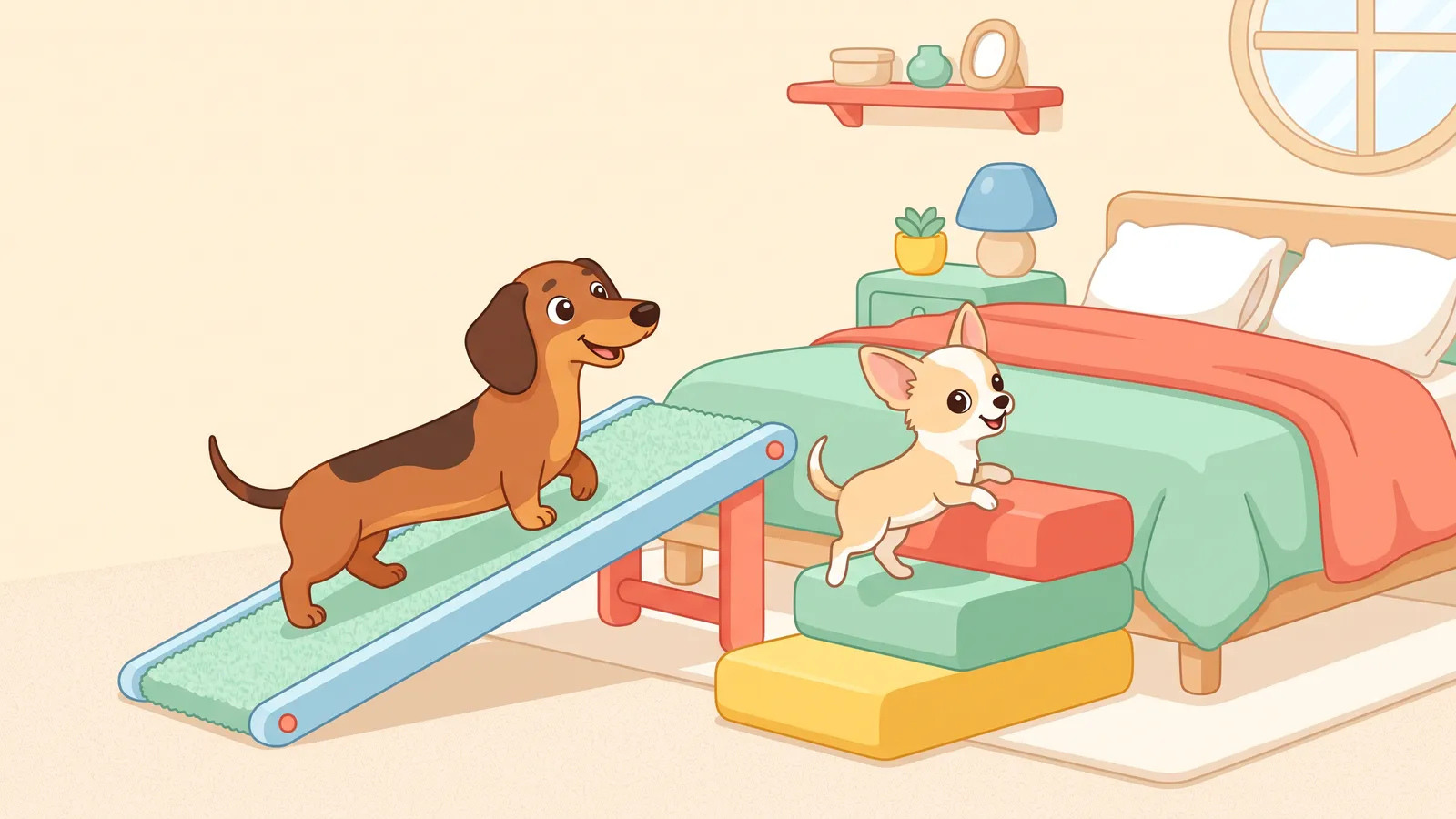
Jumping off a bed or sofa onto a hard floor is an easy moment to slip. A long, carpeted ramp with a rug at its foot gives your dog a steady way up and down. The PetSafe CozyUp Bed Ramp is a 70-inch wooden ramp with ribbed carpet tread, rising to 25 inches and rated to 120 lb. Whole Dog Journal notes dogs splay their toes on steep slopes, so longer is better. Not sure which to get? Our ramp vs stairs guide helps you decide.
7. Make getting up easier
A deep, firm bed on a non-slip rug makes the stand-up moment easier than a thin bed sliding on tile. Look for solid foam and a low, open side. For big seniors, the Big Barker 7" Headrest Edition uses three layers of foam and has a headrest instead of a full bolster to climb over; TechGearLab named it its best bed for large breeds. Our best dog bed for senior dogs and orthopedic dog bed guides compare more options, including lower, budget-friendly ones.
Senior dog mobility aids at a glance
| Problem | First fix | Next step |
|---|---|---|
| Slips crossing a room | Rug or runner path | Toe grips |
| Slips standing up | Rug under and in front of the bed | Firmer, thicker bed; harness with handle |
| Nails click on the floor | Trim every 3–4 weeks | Grinder for little-and-often |
| Furry feet | Trim between the pads | Ask a groomer |
| Slips jumping off the bed or sofa | Ramp with a rug at the bottom | Floor bed beside yours |
| Weak back legs | Vet check | Lift harness, if your vet suggests it |
How to help a senior dog sleep at night
Comfort and routine help. A supportive bed in a quiet spot, a last toilet trip before bed, and a rug path to water so a night-time trip doesn't mean crossing bare floor. If your dog is suddenly restless, pacing or confused at night, mention it to your vet: changes in sleep in older dogs are worth checking.
FAQs
Do toe grips work for dogs?
The maker says they help dogs regain traction on smooth floors by letting the nail tips grip. We haven't used them, and we found no independent test. They seem best suited to dogs who walk steadily on grass but slip indoors, and who will let you handle their feet.
Are rugs or toe grips better?
Rugs first. They help every dog, need no fitting, and cover the worst spots. Toe grips are worth adding for a dog who still slips on the floors you can't cover.
Why is my old dog suddenly slipping on the floor?
A sudden change needs a vet check the same day if it comes with weakness, wobbling or pain. Slower changes are often linked to stiffness, lost muscle, long nails or furry feet, which is why trimming and rugs help.
Do dog socks help with slipping?
They can, for dogs who accept them. Try them for short spells indoors and watch how your dog walks; if they change your dog's gait, stop.
What mobility aids help senior dogs most?
Start simple: rugs, trimmed nails and paw hair, and a ramp to the bed. Then add a harness with handles or toe grips if needed, and a supportive bed for getting up.
A path of rugs this weekend, a nail trim, and a vet check if anything seems sudden: small changes like these can make the house feel safe again for an older dog.