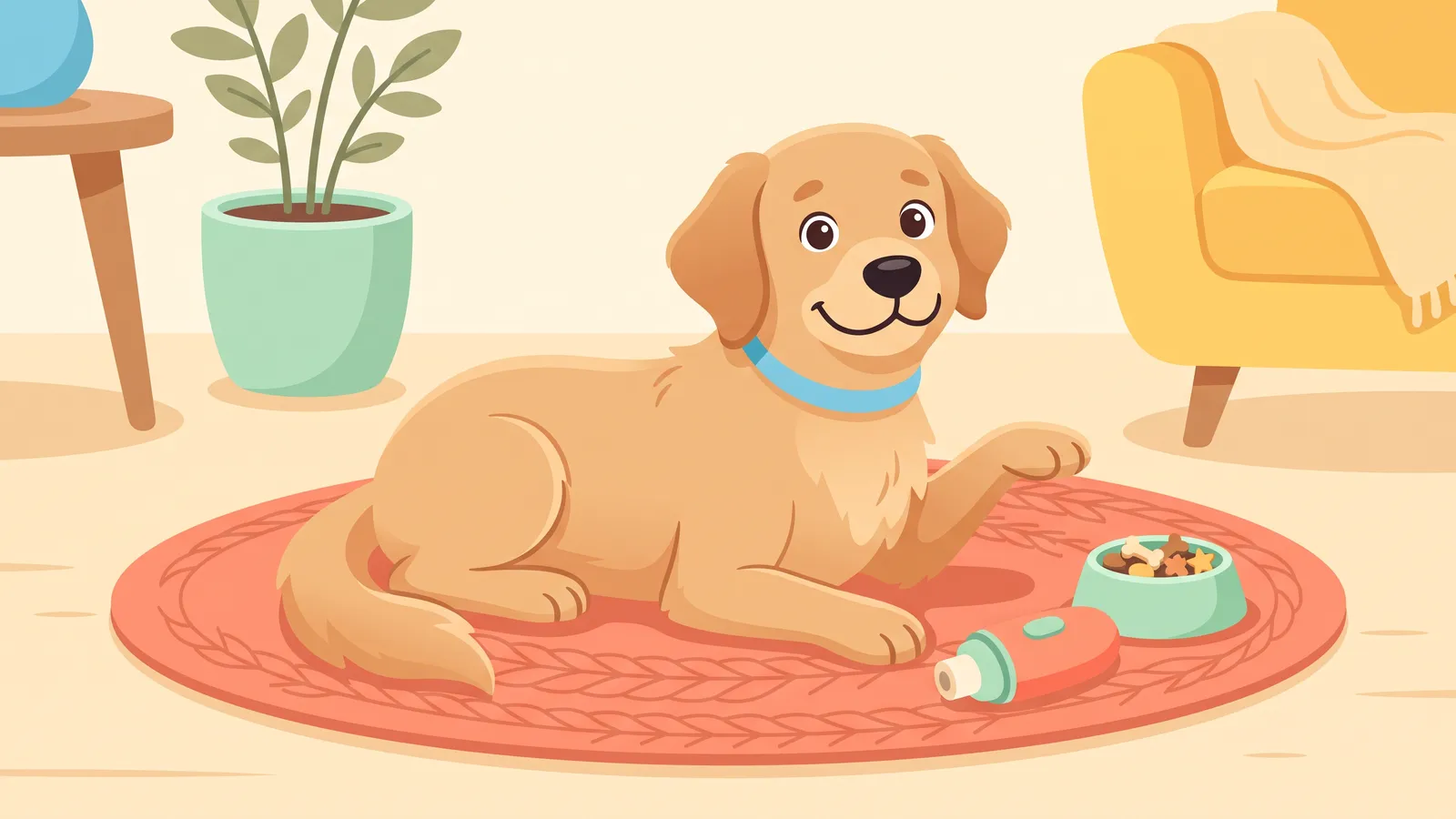
Trim a little at a time: take only the tip of each nail, in front of the quick (the pink core with the blood supply), and stop at the curve. Most dogs need a trim every three to four weeks, per the AKC; if you hear nails clicking on the floor, you're late. A grinder makes it easier to stay clear of the quick; clippers are faster. Either works if your dog is relaxed about it.
Nail trims go wrong for one reason more than any other: doing too much at once, to a dog who isn't ready. Get the dog comfortable first, take tiny amounts, and trim often. The rest is technique.
Our take. We haven't used these tools ourselves. The method comes from the AKC and Whole Dog Journal, and the grinders are the ones Whole Dog Journal's tester, Jae Thomas, tried on dogs with different nail types.
Where is the quick on a dog's nail?
A dog's nail has a hard outer shell, a chalky layer underneath, and inside that the quick: the living core with blood vessels and nerves. Cut into it and it hurts and bleeds.
- On white or clear nails you can see the quick as a pink area. Stay well in front of it.
- On black nails you can't. The AKC says to watch the cut surface: as you take off thin slices, a chalky white ring shows up as you get close. Stop there.
- The quick grows with the nail. On long nails it reaches further toward the tip. The AKC says regular trimming makes it recede, which is why little-and-often beats one big trim.
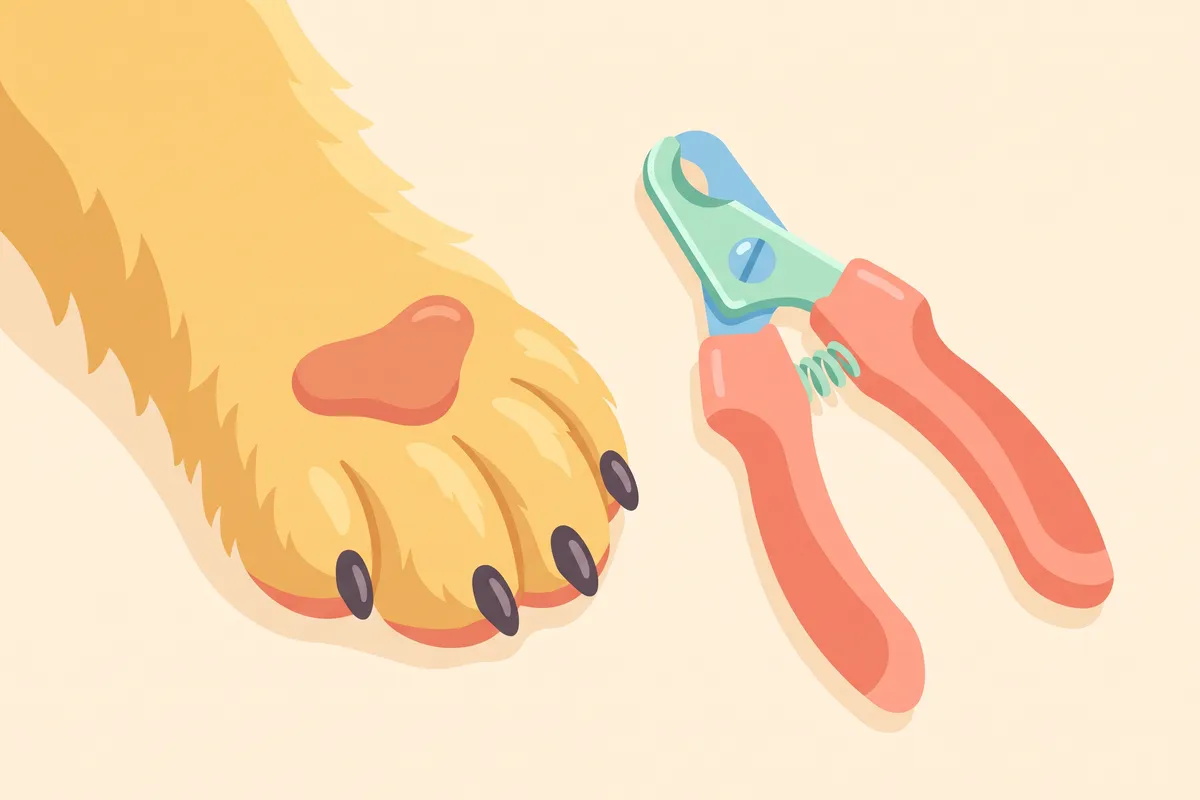
Clippers or grinder?
| Clippers | Grinder | |
|---|---|---|
| Speed | One snip per nail | Slower, a few seconds per nail |
| Quick risk | Easier to take too much at once | Whole Dog Journal says grinders can get closer to the quick with less risk of bleeding |
| Finish | Can leave sharp edges | Smooth edges that don't scratch |
| Dog's view | Pressure and a snap | Noise and vibration, which some dogs never accept |
| Watch out for | Dull blades crush instead of cut | Gets warm; long hair can wrap around the bit |
Whole Dog Journal describes two clipper styles. Scissor-type clippers are "the workhorses" and can round off edges on big, thick nails. Guillotine clippers push the nail through a loop and suit some people's hands better, but have more small parts that wear.
Many people combine both: clip first, then smooth with the grinder. WDJ's writer Kate Basedow, a licensed vet tech, uses a small pair of Millers Forge clippers and a cordless Dremel weekly on her three dogs.
How to trim dog nails with clippers
From the AKC's step-by-step guide:
- Get set up. Good light, treats, and styptic powder within reach in case you nick the quick. The AKC's chief vet suggests asking your vet or vet tech for a lesson if you've never done it.
- Hold the paw. Thumb on the pad of the toe, forefinger on top of the toe above the nail. Push the thumb slightly up and back and the forefinger forward, which extends the nail. Move any fur out of the way.
- Take only the tip. Don't clip past the curve of the nail.
- Do the dewclaws on the inner side of the leg if your dog has them. They don't touch the ground, so they don't wear down on walks.
- Reward after every nail, or every paw once your dog is comfortable.
Straight across or angled? The AKC's how-to says clip straight across. Trainer Deb Jones, writing in AKC Family Dog, suggests a tiny bit off each side and then a tiny bit off the front, working around the quick instead of across it. Both agree on the main rule: tiny amounts.
How to trim dog nails with a grinder
- Introduce the sound first. Turn it on across the room, with treats, for a few days before it touches a paw.
- Keep long hair back. Hair on the paws, ears or tail can catch in the spinning bit.
- Support the toe firmly but gently, and hold the grinder near the top for control, as the AKC suggests.
- Grind a little at a time: across the bottom of the nail, then in from the tip, smoothing the edges.
- Touch and lift. A second or two per pass, so the nail doesn't get warm.
How often to trim dog nails
The AKC's answer is every three to four weeks for most dogs, depending on how fast the nails grow and how much they wear down on walks. A few breed specifics:
- Dachshunds: the AKC says every month.
- German shepherds: the AKC says trim or grind monthly.
- Labs: a groomer quoted by the AKC suggests the grinder every three to four weeks, and says clicking on the floor means it's time.
- To keep the quick short: trim a little every week. Groomer Dale Martins told the AKC that weekly trims keep nails softer and make it less likely you'll cut the quick, especially on black nails.
Long nails aren't just noisy. The AKC says they can splay the foot, reduce traction and, over time, strain the toes and tendons.
How to shorten overgrown nails
You can't fix very long nails in one session without hitting the quick. Instead:
- Trim the very tip every week, or grind a little twice a week.
- Let the quick recede. The AKC says regular trims make it move back from the end.
- Be patient. It can take weeks to months.
If your dog's nails are so long they curl, catch or change how your dog walks, talk to your vet. The AKC Family Dog piece suggests a sedated nail trim by your vet team as a way to buy time while you train a fearful dog.
How to trim the nails of a dog who hates it
The AKC's puppy plan works for adult dogs too, just more slowly:
| Day | What you do |
|---|---|
| 1 | Let your dog sniff the clipper or grinder. Treat and praise. |
| 2 | Touch the tool lightly to each paw. Treat. |
| 3 | Touch the tool to each paw and squeeze the clipper so they hear it, or switch the grinder on so they feel the buzz. No cutting. Treat. |
| 4 | Repeat day 3. |
| 5 | Trim the tiniest tip off one nail. Stop there, even if your dog would allow more. Repeat daily until your dog is relaxed about it. |
| 7 on | Add a nail or two each day until you can do all of them. |
Deb Jones adds three rules from her work with fearful dogs:
- Treat each paw, even each toe, as new. Success on one front paw doesn't mean the back paws are OK.
- Reward after each step, not as a constant distraction.
- Use the 24-hour rule. If it isn't going well, stop, give a treat for the information, and try again tomorrow.
Some dogs never accept a tool. A scratch board (abrasive paper on a board your dog learns to swipe) is an alternative both the AKC and Whole Dog Journal mention.
How to cut a dachshund's toenails
The same steps, with two extras. Keep your dachshund's long back well supported, on your lap or a non-slip table. And trim monthly, as the AKC suggests, since a long, low dog with long nails has less grip on slippery floors. A grooming hammock holds small dogs with their feet off the ground, which helps with wrigglers.
Gear that helps
Dremel PawControl 7760-PET
Best nail grinder. Evidence level: tested by Whole Dog Journal, whose favorite it was. WDJ found it powerful enough for most dogs without being too loud, with four speeds and a safety guard that sets a 45-degree angle and catches the dust. Good for first-timers. Several similarly named Dremel pet kits exist, so check the model number.
Casfuy Dog Nail Grinder
Quietest grinder. Evidence level: tested by Whole Dog Journal, which found it "easily the quietest" of its picks: good for puppies, small dogs and noise-sensitive dogs. It has a diamond bit and three ports in a built-in guard. WDJ says it lacks power for large breeds.
Millers Forge Designer Nail Clipper
Best scissor-style clipper. Evidence level: specs only. Whole Dog Journal's writer, a licensed vet tech, has used a small pair weekly for 15 years and calls scissor clippers the workhorses of nail trimming. WDJ says the orange ones suit medium and large dogs and the red ones small dogs.
Also worth a look
- Ryobi USB Lithium Rotary Tool (tested by Whole Dog Journal, its pick for large dogs): the strongest grinder WDJ tried, but it has no safety guard, so it's for confident users.
- Kkiimatt Dog Grooming Hammock (tested by Dog Notebook): a padded sling that keeps a small or medium dog's feet off the ground so you can lift one paw at a time. More in our grooming table guide.
Looking for clippers for hair, like the fur between the pads? That's a different tool: see our dog clippers guide, which suggests a #30 blade for feet. Trimming that paw hair also keeps it out of a grinder. For the rest of the routine, our bathing and brushing schedule covers timing by coat, and our shedding guide covers the brushing side.
This guide is general information, not veterinary advice. If you're worried about your dog, talk to your vet. If you cut the quick, press styptic powder onto the nail and stay calm; the AKC says to call your vet if the bleeding doesn't stop. See your vet for a split, broken or ingrown nail, a swollen or red toe, limping, or nails so overgrown they curl into the pad.
FAQs
How do I trim black dog nails without hitting the quick?
Take thin slices from the tip and look at the cut surface each time. When you see a chalky white ring, stop: the AKC says that means you're near the quick. A grinder makes this easier because it removes a little at a time.
How often should I trim my dog's nails?
Every three to four weeks for most dogs, per the AKC. If you hear clicking on hard floors, they're too long. A small trim every week keeps the quick short.
Is a grinder or clipper better for dogs?
Neither is better for every dog. The AKC says both are safe when used correctly. Grinders give a smoother edge and make the quick easier to avoid; clippers are quicker and quieter. Many owners clip, then smooth with a grinder.
How do you shorten a dog's quick?
Trim or grind a little off every week. The AKC says regular trimming makes the quick recede. It takes weeks to months, and there's no safe shortcut at home.
What do I do if I cut the quick?
Stay calm, press styptic powder onto the nail, and keep your dog still for a minute. If the bleeding doesn't stop, call your vet. Then give your dog a break and finish another day.
Tiny amounts, every week or two, with a treat after each nail. Your dog will get there, and so will you.