
A good winter coat for dogs keeps a small, lean, short-coated or older dog warm enough to enjoy a walk on a 20°F morning. The hard part is fit: a coat that rides up, rubs under the front legs or won't go over a harness ends up in a drawer. So this guide covers five coats worth buying, how to measure your dog so the first order fits, and notes for the breeds that feel the cold most.
Our verdict. We haven't put these coats on a dog. This pick rests on Whole Dog Journal's coat test, the American Kennel Club's vet advice and each maker's specs, all linked below. For real cold, we'd buy the Hurtta Extreme Warmer III: rated from +20°F down to -20°F, with a heat-reflecting foil lining and a hood, and its previous version was Whole Dog Journal's top pick. For a dachshund, Greyhound, Whippet or Frenchie, we'd look first at the Chilly Dogs Great White North, which comes in three body shapes and gave the best range of motion in Whole Dog Journal's test.
How we picked. We started with Whole Dog Journal's test: trainer Nancy Tucker, in Quebec, tested the coats most recommended by dog owners in northern climates for warmth, water resistance, comfort and ease of putting on. That test dates from 2018, so we checked each maker's current page for today's model, and added Ruffwear and Kurgo for harness access and budget. Every pick shows its evidence level.
Quick picks
| Badge | Pick | Sized by | Evidence |
|---|---|---|---|
| Top pick for serious cold | Hurtta Extreme Warmer III | Back length | Earlier version tested by Whole Dog Journal |
| Best fit for hard-to-fit breeds | Chilly Dogs Great White North | Size guide, three body shapes | Tested by Whole Dog Journal |
| Best over a harness | Ruffwear Powder Hound | Chest girth | Specs only |
| Best full-body snowsuit | Hurtta Extreme Overall II | Back length | PetsRadar research pick; maker specs |
| Best budget everyday jacket | Kurgo Loft Dog Jacket | Neck and chest | Specs only |
Does my dog need a winter coat?
Not every dog does: the AKC notes that breeds like Malamutes, Newfoundlands and Siberian Huskies were bred with thick fur for snow. It lists these dogs as likely to need a coat:
- Small breeds, which can't hold their body heat well.
- Hairless breeds, and dogs who are clipped, like Poodles.
- Dogs low to the ground, like Basset Hounds and Dachshunds, whose bellies get wet in snow.
- Short-coated, high-energy dogs, like Vizslas and German Shorthaired Pointers.
- Lean dogs with short coats, like Greyhounds, Whippets and Azawakhs.
- Puppies, seniors and dogs with conditions such as arthritis.
How to measure your dog for a winter coat
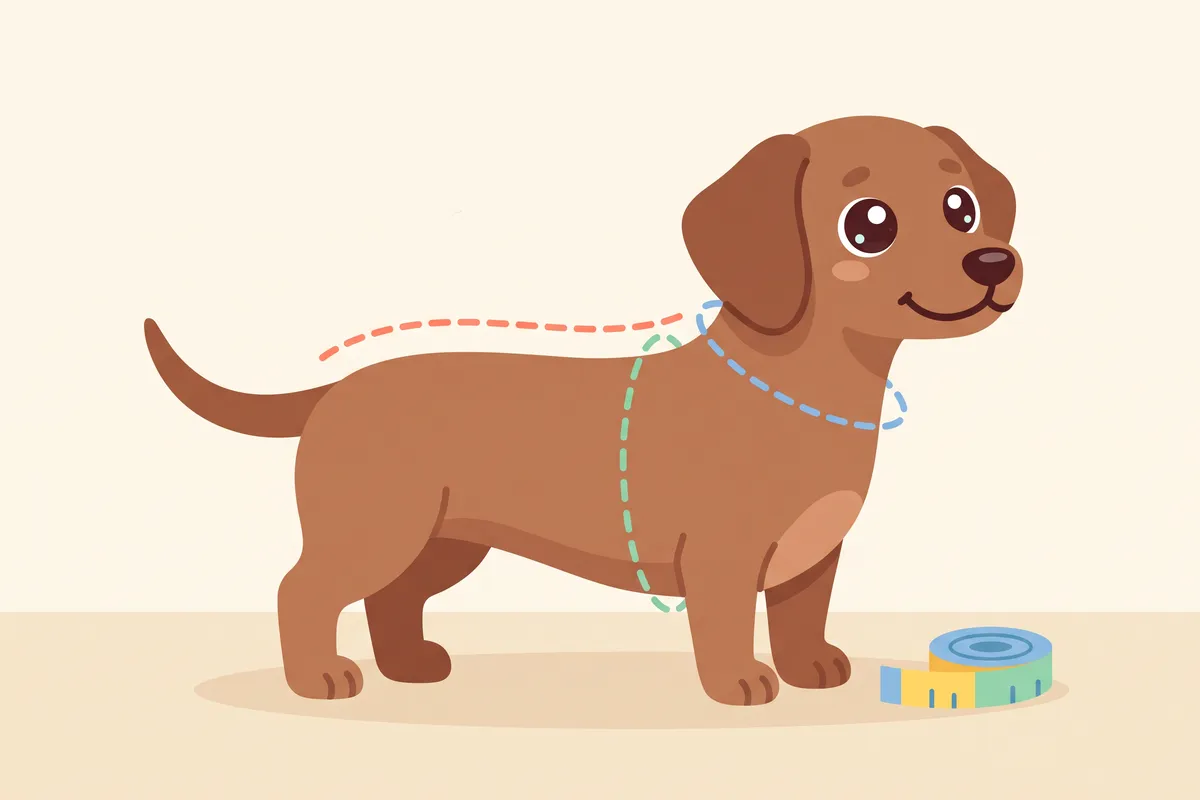
Measure with a soft tape while your dog is standing up, as Hurtta asks.
- Back length. Along the spine from the base of the neck, where the collar sits, to the base of the tail. Hurtta sizes its coats by this number.
- Chest girth. Around the widest part of the rib cage, just behind the front legs. Ruffwear sizes by this alone, and Kurgo uses it with the neck.
- Neck. Around the base of the neck where a collar sits, not high up by the ears.
Two rules from the makers: Between sizes, go up: Hurtta and Ruffwear both say so. Measure for the brand you're buying: Kurgo says its neck and chest numbers matter more than back length, and its back coverage "will vary."
A good fit: you can slide two fingers under the coat at the neck and chest; your dog can sit, lie down and trot without the coat pulling across the shoulders; the belly panel stops short of the genitals on a male dog; and the back ends near the base of the tail. If the coat slides sideways or rides up when your dog walks, it's too big.
Winter dog coat sizing table
| Coat | What the size is based on | Size range | Harness access | Maker's warmth rating | Waterproof? |
|---|---|---|---|---|---|
| Hurtta Extreme Warmer III | Back length | Sizes 25–65 | Harness opening on sizes 30–65; leash loop on size 25 | +20°F to -20°F | Water column over 10,000 mm, taped seams; "not a raincoat" |
| Chilly Dogs Great White North | Chilly Dogs size guide; Standard, Long & Lean or Broad & Burly cut | 15 Standard sizes, 14 Long & Lean, 5 Broad & Burly | Separate "with harness hole" version | Not stated | Waterproof nylon shell; fleece neck isn't, so not for rain |
| Ruffwear Powder Hound | Chest girth | 9 to 42 in | Leash portals on chest and back | Not stated | Waterproof, 10,000 mm |
| Hurtta Extreme Overall II | Back length | Not checked | Closable harness opening | +20°F to -20°F | Water column at least 10,000 mm |
| Kurgo Loft | Neck and chest | Chest 15 to 45 in (XS–XL) | 2-way zipper to the harness or collar | Not stated | Water-resistant |
Our data. Method: sizing basis, ranges and features come from each maker's own product page and size chart, read on 2026-10-08. "Not stated" means the maker's page doesn't say. What stands out: the brands don't agree on what to measure. Hurtta goes by back length, Ruffwear by chest alone, and Kurgo by neck and chest. Only Hurtta publishes a temperature rating.
Hurtta Extreme Warmer III
Best for: short-haired, older and cold-sensitive dogs in a real winter.
Hurtta's warmest coat is rated for +20°F down to -20°F. A foil lining reflects your dog's body heat, over a new down-like ball-fiber insulation, and a high tricot hood covers the neck and ears. Hurtta says it's fully seam-taped but "not intended to be used as a raincoat." Whole Dog Journal named the earlier Extreme Warmer its top pick. The testers loved the reflective lining, which kept it warm without bulk, and noted the coat goes on over the head.
What we like
- The widest warmth rating here, from a maker that publishes one
- Foil lining plus insulation, and a hood for the ears
- Harness opening on sizes 30–65, a leash loop on the smallest
Keep in mind
- It goes over the head. Whole Dog Journal flagged the turtleneck-style collar as a problem for dogs who dislike that
- Whole Dog Journal tested the earlier version; we found no published test of version III
Key specs: sized by back length (sizes 25–65) · +20°F to -20°F · foil lining · taped seams
Evidence: earlier version tested by Whole Dog Journal; specs from Hurtta.
Chilly Dogs Great White North Coat
Best for: dachshunds, sighthounds and broad-chested breeds that standard sizes don't fit.
Chilly Dogs, from Ottawa, says its patterns are "not just larger or smaller but are configured differently," and it has special sizing for Greyhounds, Dachshunds, Whippets, Great Danes and Vizslas. The Great White North comes in three cuts: Standard, Long & Lean and Broad & Burly. It has a waterproof nylon shell, a Canadian polar fleece lining and 3M Scotchlite reflective piping. Whole Dog Journal gave it four paws, saying it offered "the best range of motion" of all the coats tested, and praised one of the widest size ranges on the market.
What we like
- Three body shapes and nearly 35 sizes in all
- Best range of motion in Whole Dog Journal's test
Keep in mind
- Not for rain: Chilly Dogs says the fleece neck isn't waterproof
- Whole Dog Journal found the wide hook-and-loop closures noisy
- The coat Whole Dog Journal tested had no harness slit; pick the "with harness hole" version if your dog wears one
- Amazon availability not confirmed; Chilly Dogs sells direct
Key specs: waterproof nylon shell · polar fleece lining · reflective piping · Standard, Long & Lean, Broad & Burly cuts
Evidence: tested by Whole Dog Journal; specs from Chilly Dogs.
Ruffwear Powder Hound Jacket
Best for: active dogs who walk in a harness and hate taking it off.
Ruffwear's insulated winter jacket has a waterproof, windproof shell rated at 10,000 mm, 250 g of recycled insulation in the back and belly panels, and stretch StormSleeves over the front legs to seal in warmth. A full-length zipper makes it easier to put on than an over-the-head coat. Leash portals on the chest and back let it go over most harnesses, so you can clip on at either point. Reflective accents and a light loop help on dark evening walks.
What we like
- Front and back leash portals, so it works with front-clip harnesses
- Waterproof shell and belly insulation
- Zips on: no pulling over the head
Keep in mind
- Specs only. We found no independent test of the current model. Whole Dog Journal tested a different Ruffwear coat, the Quinzee, and found it stiff and noisy
- Ruffwear calls the fit "active, tailored": snug by design. Between sizes, Ruffwear says go up
Key specs: sized by chest girth · 10,000 mm waterproof nylon shell · 250 g recycled insulation · chest and back leash portals · wash cold, hang dry
Evidence: specs from Ruffwear.
Hurtta Extreme Overall II
Best for: dachshunds, Bassets and other low dogs whose bellies drag in snow, and thin, leggy dogs who feel the cold.
An overall covers the legs and belly as well as the back. The AKC says snowsuits give the most all-over protection, and that they especially help lean or hairless dogs with longer legs. Hurtta calls the Extreme Overall II its warmest design, with the same +20°F to -20°F rating as the Extreme Warmer, a foil lining, a high hood, and a closable harness opening. Hurtta says it has 6 to 11 adjustment points and no inner leg seam to rub. PetsRadar named Hurtta's Extreme Overall snowsuit its best dog coat for winter, in a guide written with its vet adviser; the page doesn't describe testing it.
What we like
- Full belly and leg coverage for snow and slush
- Closable harness opening
Keep in mind
- Harder to put on than a coat: head, front legs, back legs, then a side zip. Practice indoors with treats
- More fabric means more places to rub; check the armpits and groin after early walks
Key specs: full-body overall · +20°F to -20°F · foil lining and hood · closable harness opening · half-zip
Evidence: a pick in PetsRadar's best dog coats guide (research, no test described); specs from Hurtta.
Kurgo Loft Dog Jacket
Best for: everyday walks where winter is wet more than frozen.
The Loft is a quilted, reversible jacket with polytech fill under a water-resistant Microtomic ripstop shell. A 2-way zipper opens to your dog's harness or collar, two hook-and-loop side straps adjust the fit, and reflective accents help at dusk. Kurgo backs it with a lifetime guarantee against manufacturing defects. It's the most affordable pick here and a good fit for cool, damp walks, but it's a light insulated layer, not a coat for deep cold.
What we like
- Reversible, with two colors in one jacket
- Zipper access to the harness or collar
- Lifetime guarantee against defects
Keep in mind
- Water-resistant, not waterproof, and lighter than the other picks
- Kurgo says back coverage "will vary": size by the neck and chest
- Specs only
Key specs: XS chest 15–20" to XL chest 35–45" · neck 14–26" · reversible · water-resistant · 2-way harness zipper
Evidence: specs from Kurgo.
Winter coats for cold-sensitive breeds
French bulldog
Frenchies have a short coat and a compact, broad-chested body that standard small sizes often fit badly: a coat that fits the chest can be too long, and one that fits the back can pinch at the chest. Look at Chilly Dogs' Broad & Burly cut, or a coat sized by chest and neck like the Kurgo. Keep two Frenchie facts in mind. The AKC says the breed does poorly in heat, so don't over-bundle a Frenchie for a mild day, and take the coat off indoors. And keep the collar of any coat loose at the throat; our French bulldog gear guide explains why we keep pressure off a Frenchie's neck.
Dachshund
The AKC singles out Dachshunds as low dogs whose bellies get wet in snow. That makes belly coverage the priority: a full-chest coat like the Powder Hound or Great White North, or the Hurtta Extreme Overall for deep snow. Size by back length as well as chest, because a coat sized for the chest alone can be too short on a long dachshund. Chilly Dogs has dachshund-specific sizing. More in our dachshund gear guide.
Chihuahua
The AKC says special care must be taken with Chihuahuas in cold weather, and to carry your dog home if they're struggling to keep up. For a dog the AKC standard caps at 6 pounds, start at the smallest sizes: Ruffwear's Powder Hound starts at a 9-inch chest, and Hurtta's smallest Extreme Warmer has a leash loop. Indoors, a self-warming bed helps; see our Chihuahua gear guide.
Whippet and Greyhound
The AKC lists Greyhounds and Whippets among the lean, short-coated dogs that get cold quickly. Their deep chest and narrow waist mean standard coats often gape at the belly or slide sideways. Chilly Dogs' Long & Lean cut is made for this shape. For long-legged sighthounds, the AKC says a bodysuit gives the most protection, which is where the Hurtta Extreme Overall fits. Check the armpits after the first few walks for rubbing.
Winter coat safety: fit, chafing and when to take it off
- Take it off indoors. PetsRadar's vet adviser, Dr. Hannah Godfrey, says it isn't a good idea to leave a coat on once you're inside out of the cold: coats can restrict movement and can rub, especially when muddy or damp.
- Don't leave a dog in a coat unattended. The AKC warns a coat shouldn't be loose enough for a dog to get tangled in it.
- Check for chafing under the front legs, at the chest and along the belly after the first few walks. Redness or broken hair means the fit needs adjusting.
- Wash it. AKC vet Dr. Jolee Stegemoller says coats collect hair and dander and can breed bacteria if put away damp.
- Introduce it slowly, with treats and short indoor sessions, as the AKC suggests.
- Watch for overheating: heavy panting means the coat comes off.
This guide is general information, not veterinary advice. Puppies, senior dogs and dogs with conditions such as arthritis or heart disease feel the cold more, and a coat doesn't make long outings in extreme weather safe. If your dog is shivering hard, seems weak or confused, or won't walk after time in the cold, get them somewhere warm and call your vet. Ask your vet how long your own dog can be out when temperatures drop.
A coat is one piece of it: our guide on how to keep a dog warm in winter covers beds, walks and paws. Paws get cold too, so see our best dog boots for snow as well.
FAQs
What temperature does a dog need a coat?
There's no single number. Dr. Stegemoller says it depends on the dog's coat, health and how much time they usually spend outside in the cold, and suggests short 15–20 minute sessions when the windchill is below 20°F. Small, short-coated, lean, senior and low-slung dogs usually need a coat well before that.
What is the warmest winter coat for dogs?
Of our picks, only the two Hurtta coats publish a rating: +20°F to -20°F. The Extreme Overall II also covers the legs and belly. For a sighthound or dachshund, the warmest coat is the one that actually fits, so the Chilly Dogs Great White North is worth a look too.
What are the best winter coats for dogs with a harness?
The Ruffwear Powder Hound has leash portals on the chest and back. The Hurtta Extreme Warmer III (sizes 30–65) and Extreme Overall II have harness openings. Kurgo's Loft has a 2-way zipper, and Chilly Dogs sells a harness-hole version of the Great White North.
Measure your dog's back, chest and neck tonight. Those three numbers decide whether a coat fits on the first try.