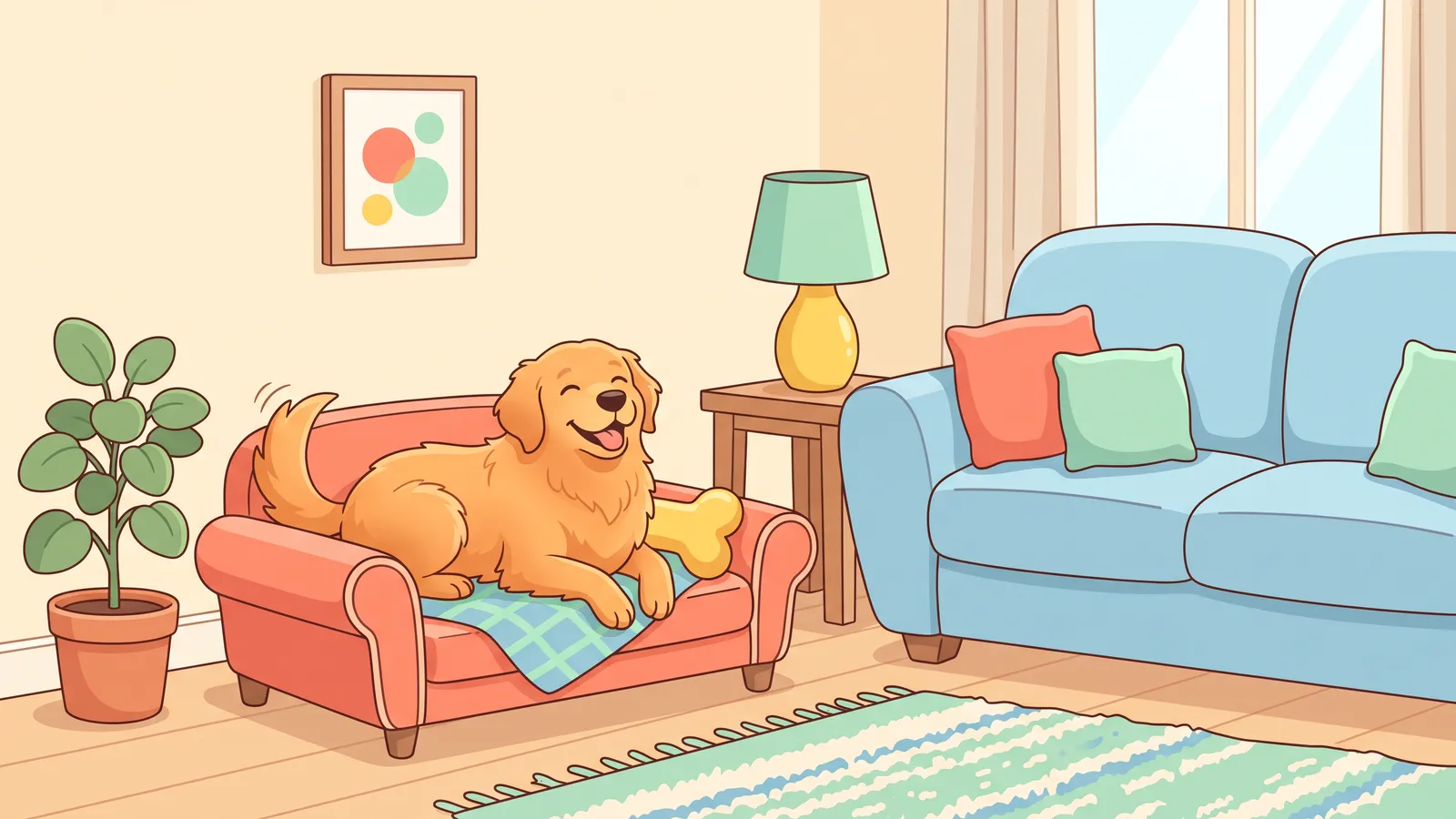
The only thing that reliably works when you're out is blocking access: shut the door, put up a gate, or use a pen. Then make the couch less inviting, give your dog a better spot of their own, and teach an "off" cue with treats for the times you're home. Covers and cameras help, but they won't stop a determined dog on their own.
Training a dog to stay off the couch works fine while you're watching. The trouble starts when you leave. Dogs figure out fast that the rule only applies when you're in the room, and a soft sofa that smells like you is a great place to wait. So the plan has two halves: set up the house so the couch isn't an option when you're out, and teach the habit when you're there.
Step 1: Block access first
Nothing beats a physical barrier when you're away. Rules, scolding and sprays all depend on your dog choosing to cooperate. A closed door doesn't.
- Close the door. If the couch is in a room with a door, shutting it is free and works every time. Just make sure the dog has water, a bed and something to chew in the room where they'll be.
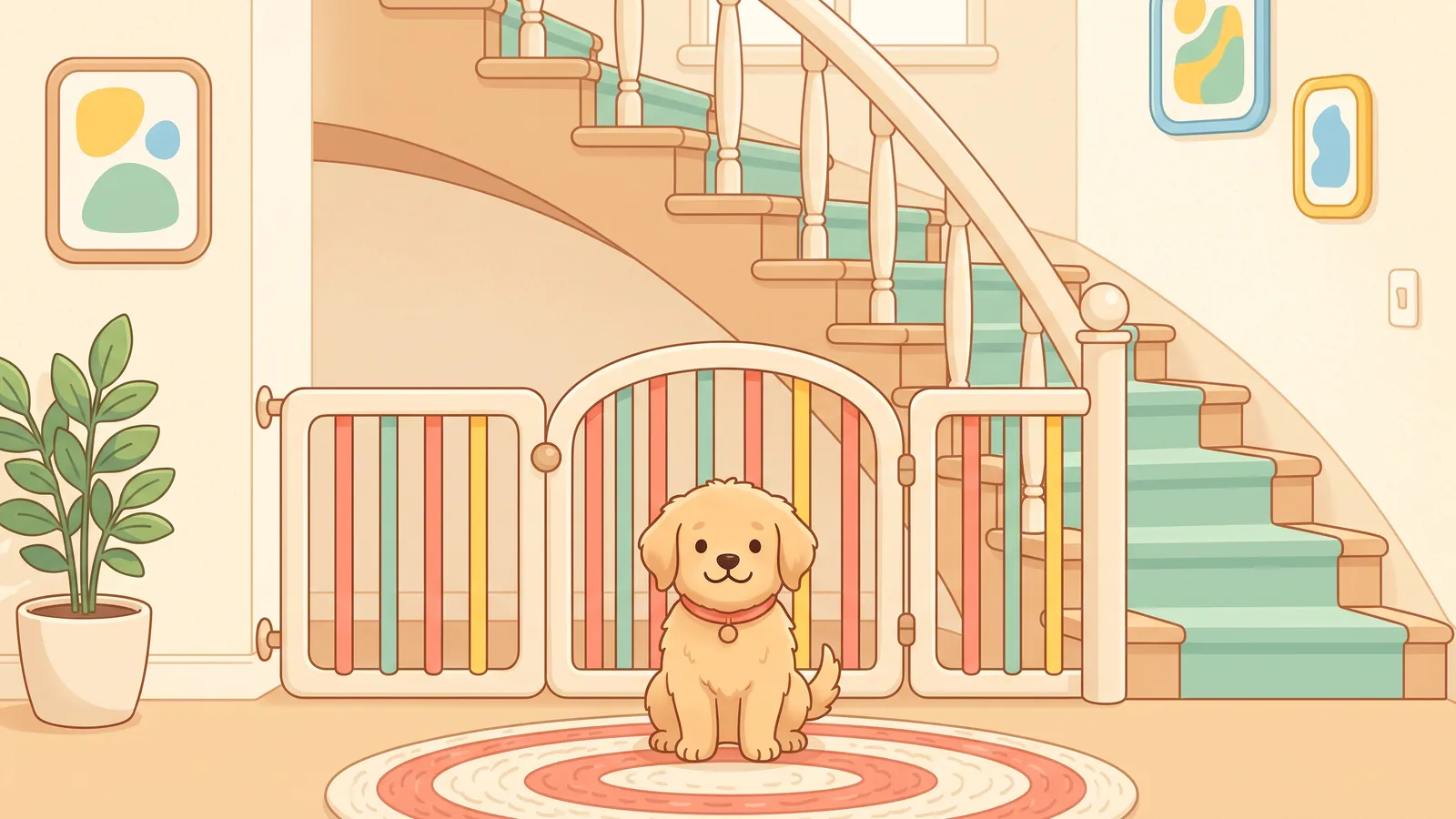
- Use a gate. A gate across a doorway or archway turns the living room into a no-go zone. Jumpers and climbers need a tall one, and some dogs treat a short gate as a hurdle. Our best dog gate roundup covers tall, pressure-mounted and retractable models. One option it lists is the Summer Infant Extra Tall Décor Walk-Thru Gate, a 36-inch walk-through model.
- Use a pen. An exercise pen makes a small dog zone anywhere, which helps if your couch sits in an open-plan space with no door. K9 of Mine's playpen roundup lists a MidWest foldable metal playpen as its budget pick, in heights from 24 to 48 inches, with or without a door. It notes the wire panels aren't especially strong, so a dog who lunges at them might knock a pen over, and it flags jumping and climbing as a problem on some other pens. Pick a height that suits your dog's jumping, and set the pen on a rug or against a wall so it stays put.
One note on safety. Leave a dog in a pen or room only for as long as they can handle comfortably, with water and a safe place to lie down. If your dog panics, barks or tries to escape when confined, talk to your vet or a qualified trainer. Don't just pile on more barriers.
Step 2: Make the couch less inviting
If a room barrier isn't practical, make the sofa a less comfortable place to be. These are low-cost tricks that trainers and pet sites commonly suggest. Results vary, and a dog who really wants the couch may just work around them.
- Stand chairs or cushions on it. Turn the seat cushions up on their sides, or stack pillows or upside-down chairs on the couch, and the flat lounging surface is gone. Pet sites list this as a simple way to put a dog off hopping up while you're out.
- Use a texture they dislike. Some owners lay a plastic carpet runner upside down (nubby side up) on the cushions, or use sheets of aluminum foil or double-sided tape. The idea is that it feels odd under their paws. Dogs often get used to it, and tape can mark fabric, so test a small spot first.
- Try a pet-safe scent spray. Citrus or bitter-style sprays are sometimes used on furniture. They need regular re-application and some dogs ignore them, so treat them as a bonus, not the plan.
- Consider a nubby deterrent mat. These are plastic mats with small raised nubs that make the cushion uncomfortable to stand on. They don't startle or hurt the dog, but they do make the couch less comfy.
A word on "scat" mats. Some products sold as pet-training mats deliver a static pulse or shock when a dog steps on them. We don't recommend them. The American Veterinary Society of Animal Behavior's humane training position statement says reward-based methods are the evidence-supported choice for all dog training and that aversive methods, meaning those that use pain, fear or discomfort, should be avoided. A mat that surprises a dog can also teach the wrong lesson, like making a dog anxious about a room or about being alone. If you want to try a deterrent, pick a passive, texture-based one, and talk to your vet or a certified trainer if your dog has anxiety.
Step 3: Give them a better spot
Dogs get on the couch because it's comfy, high, warm and close to you. Give them something better and they have less reason to cheat. The Honest Kitchen and other trainers suggest putting a dog bed next to the couch and rewarding your dog for using it.
- Put it where the couch is. Place the bed right beside the sofa, or where your dog can see out the window or watch the door. Dogs like to know what's going on.
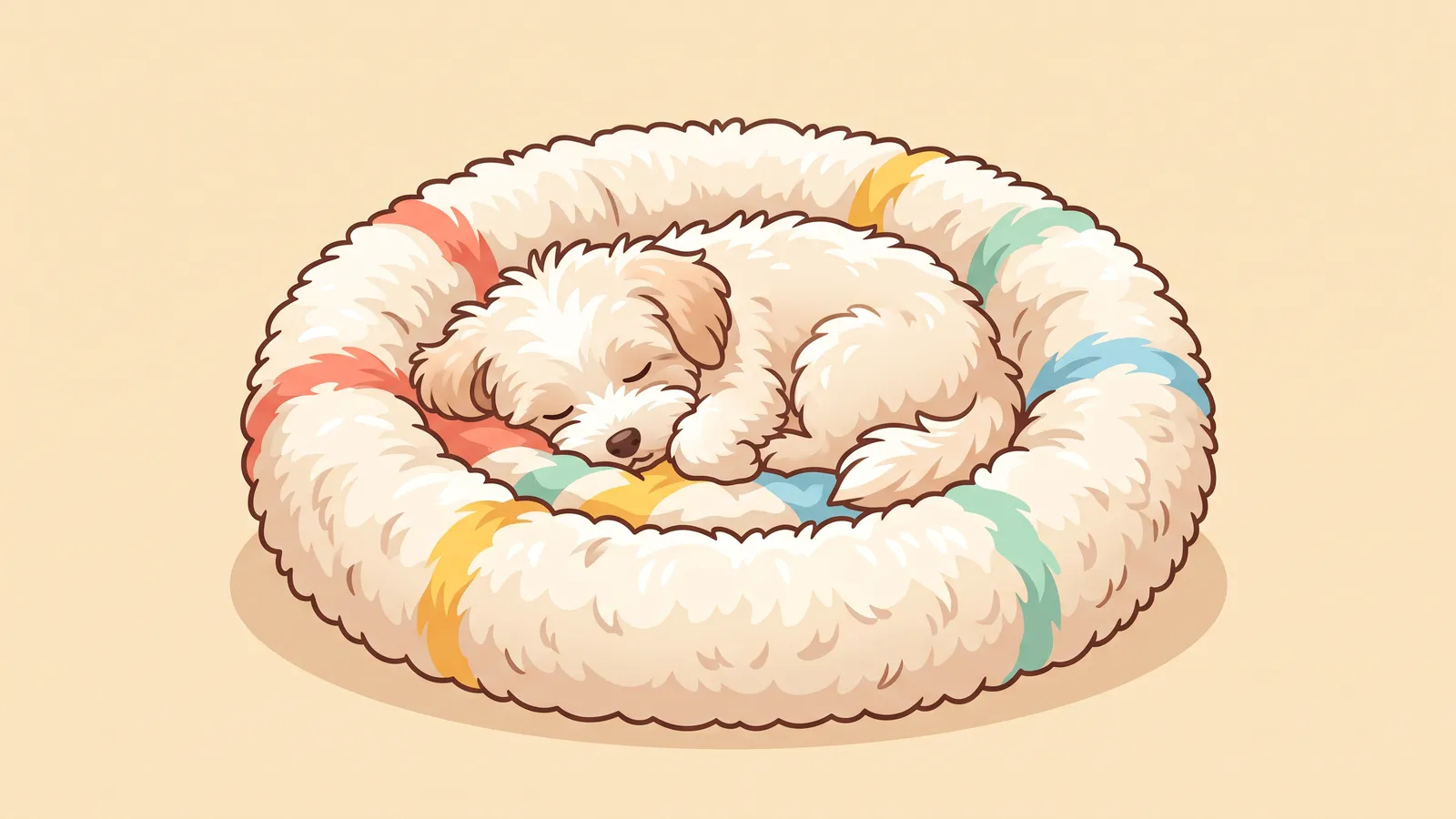
- Pick a bed they'll actually prefer. Thick foam and a raised edge to lean on make a bed feel like a nest. A donut or bolster bed suits dogs who like to curl up and rest their chin. If your dog likes the sofa because it's big and flat, a sofa-style dog bed can be a good swap, since it gives them a couch of their own.
- Make it warm and appealing. Add a worn T-shirt that smells like you, a blanket in winter, or a cooler spot in summer.
- Reward them for it. Whenever you see your dog settle on the bed, quietly drop a treat on it. Within a week or two, many dogs head there on their own.
Step 4: Protect the furniture anyway
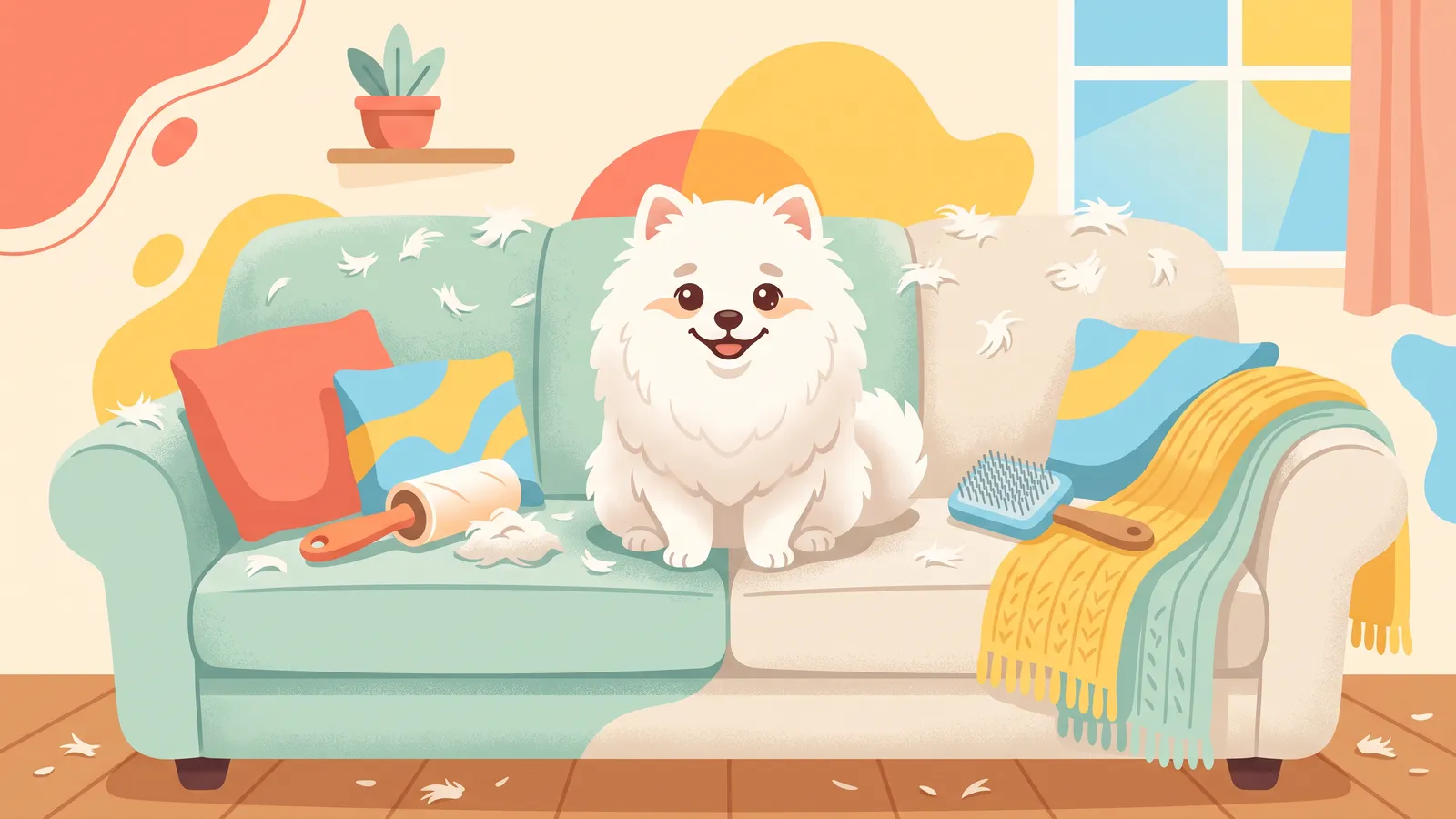
Even a well-trained dog will sneak onto the couch once in a while, and puppies and rescues often don't know the rules yet. A washable cover means a slip-up doesn't ruin the sofa.
One option is the Sanmadrola Waterproof Couch Cover. Canine Journal's roundup picks it as its top overall and describes it as having five layers of polyester, silicone dots on the underside to keep it in place, adjustable elastic straps, and machine-washable fabric, in four sizes from chair to oversized sofa. Its one noted drawback is that some buyers found it smaller than expected, so measure your couch before ordering. We haven't used it.
Covers help with hair too. For more on that, see how to get dog hair off the couch.
Comparison: which option works when you're away?
| Option | Cost tier | Effort | Works when you're away? | Notes |
|---|---|---|---|---|
| Closed door | Free | Very low | Yes | Best option if you have a door. Make sure the dog is comfortable in the room. |
| Dog gate | Low to medium | Low | Yes, for most dogs | Tall gates for jumpers. See our gate roundup. |
| Exercise pen | Low to medium | Medium (setup) | Yes | Good for open plans and puppies. Needs a height to match your dog. |
| Washable cover | Low to medium | Low | Doesn't stop a dog, but protects the sofa | Check size before you buy. |
| Passive deterrent mat | Low | Low | Sometimes | Dogs may work around it. Avoid static or shock mats. |
| Pet camera with treat toss | Higher, and may need a subscription | Medium | Lets you watch and reward, but can't physically stop a dog | Handy for seeing what your dog does while you're out. |
| Chairs or cushions stacked on the couch | Free | Low | Sometimes | Easy to try first. |
Step 5: Use a pet camera to see what's really happening
Before you buy more gear, find out whether your dog actually gets on the couch. A pet camera shows you, and it's useful for spotting separation distress too. Two models with treat tossing are:
- Furbo 360° Dog Camera. Per Petcube's comparison blog, it holds up to 100 treats of a particular size (round, about 1 cm), has two-way audio, and sends barking and activity alerts. A paid plan adds extra features.
- Petcube Bites 2 Lite. The same blog (written by Petcube, so take its claims with a grain of salt) says it accepts larger treats, has a removable container and lets you choose how many treats to toss and how far. Its subscription is optional but adds video history.
A treat-tossing camera lets you drop a treat when your dog is on their bed, which rewards the behavior you want. It doesn't stop a dog from jumping on the couch, though. Treat tossing can also startle noise-sensitive dogs, so introduce it while you're home, and check current features and subscription costs on the makers' sites before buying. We haven't used either one.
Check Petcube Bites 2 Lite on Amazon
Keeping a dog off furniture at night
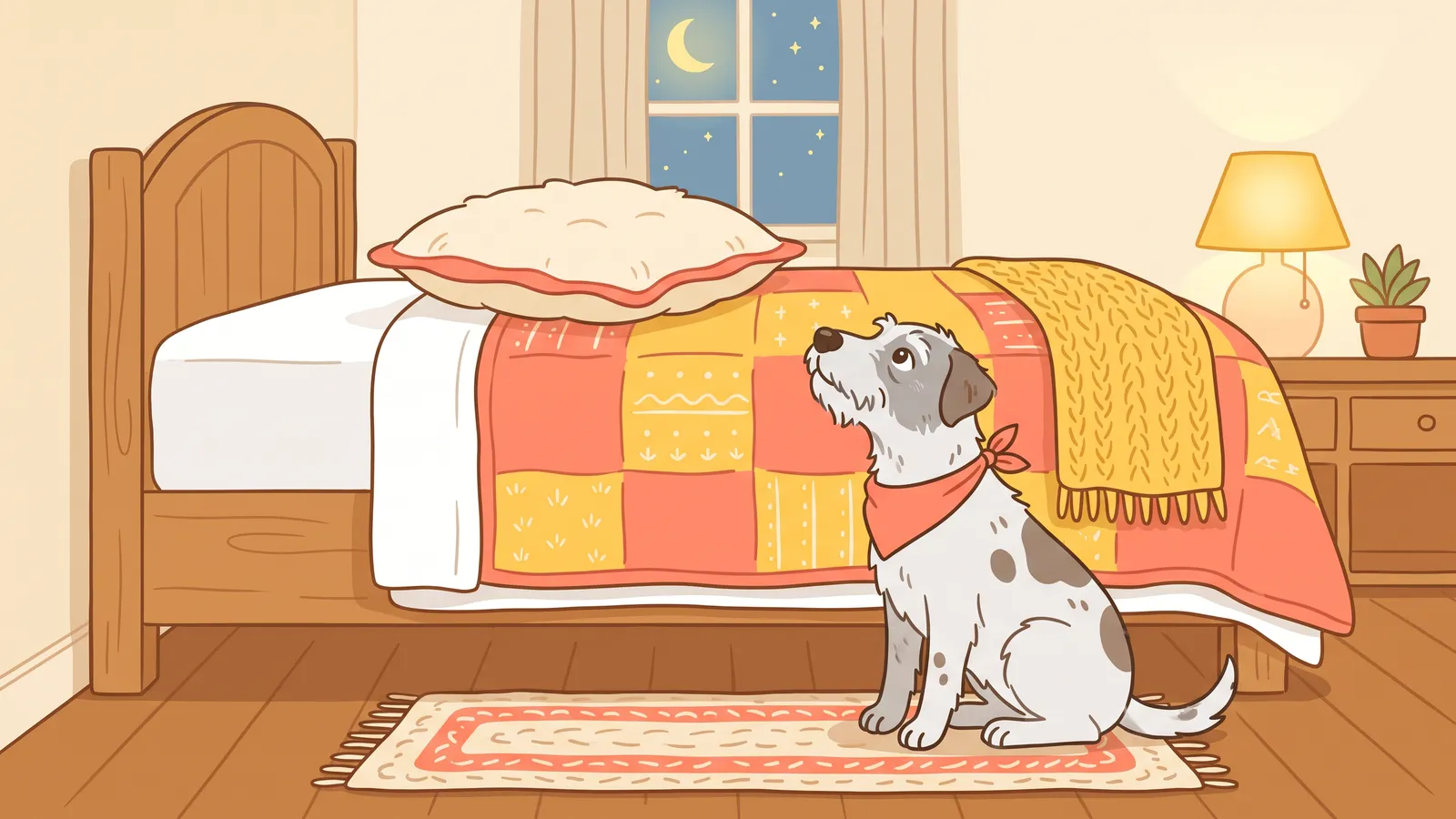
Nights are the same problem in a different setting. The dog is awake, you aren't, and nobody's supervising. The best fix is to take the choice away: a bedroom door, a gate or a pen, or a crate if your dog is already comfortable in one. Put a good bed in the sleeping area, close enough to you that your dog feels settled. If your dog is a puppy, expect a few restless nights while they learn the routine.
After surgery: when the couch is off limits for medical reasons
After an operation, vets often ask owners to limit jumping, climbing and running for a while. A dog who leaps onto the couch can strain a healing area. If your dog is on rest, follow your vet's activity instructions exactly.
This guide is general information, not veterinary advice. Your vet's instructions for your dog come first, including how long to limit jumping and how to confine your dog. If you're not sure whether a gate, pen or crate is right for your dog's recovery, or if you notice anything that worries you, call your vet's office.
Some practical ways to make that rest easier, as long as your vet agrees:
- Block the whole room, not only the couch, so there's nothing to jump on or off.
- Bring comfort to floor level. A thick, low bed puts rest at ground level, and a rug stops slipping. If your dog is also struggling to get onto furniture beds as they age, our guide on a dog who can't jump on the bed anymore covers easy ways up and floor bed options.
- Keep your dog close. Put the bed where they can see you. Dogs on rest often get restless when left alone.
- Ask about chews and puzzle toys that are suitable for recovery, so their mind has something to do.
Teach a simple "off" cue
You can't be there to say "off" when you're out, but the cue is still worth teaching, because your dog learns what the couch rule is. Reward-based trainers use the same basic steps:
- Wait until your dog is on the couch, or invite them up on purpose to practice.
- Say "off" once, in a calm voice, then lure them down with a treat held near their nose.
- Mark and reward the moment all four paws are on the floor. Both Best Friends Animal Society and AKC Pet Insurance describe this lure-and-reward approach.
- Fade the lure. After a few repetitions, say "off" and wait a second before showing the treat. Then reward from your pocket.
- Reward the bed. Point to your dog's bed, say "bed" and reward them for lying on it.
- Don't repeat the cue over and over while your dog stays put, and don't push them off. Vetstreet warns that forcing a dog off a favorite spot can cause problems.
Some trainers teach the opposite, an "invite only" rule: the dog may get on the couch only when you say "up." That can be clearer for the dog than a flat ban, but it only works if everyone in the house is consistent.
How to stop a puppy from jumping on the couch
Puppies are the easiest to train, because you can prevent the habit before it starts. Keep a puppy off the couch from day one with a gate or pen, reward four paws on the floor, and give them a soft bed of their own. Short sessions work best, and so does supervision. Don't expect a young puppy to behave unsupervised: when you can't watch, use a pen or a closed door. If you're crate training, our puppy crate training guide covers that setup.
FAQs
What is the best way to keep a dog off the couch when you're not home?
Block access. A closed door, a tall gate or an exercise pen works because it doesn't rely on your dog's choices. Covers, mats and sprays are extras, and dogs often learn to ignore them.
How do I keep my dog off the furniture without a gate?
Use a closed door, a pen, or make the couch less comfortable by standing cushions or chairs on it. Give your dog a better bed next to the couch and reward them for using it. If you have none of those options, a washable cover at least protects the sofa.
Are scat mats safe for dogs?
We don't recommend static or shock-style mats. The AVSAB's humane training position says reward-based methods are the evidence-supported choice and that aversive methods should be avoided. A passive nubby mat or a physical barrier is a gentler choice. Ask your vet or a certified trainer if you're unsure.
How do I keep my dog off the furniture after surgery?
Follow your vet's activity instructions. In practice this usually means keeping your dog in a room or pen with no furniture to jump on, and a comfortable low bed. Ask your vet exactly how long and how strict the limits should be.
What are some home remedies to keep dogs off furniture?
Common ideas are stacking cushions or chairs on the couch, laying a plastic carpet runner upside down, or using foil or double-sided tape on a small test patch. They're low-cost and results vary, so pair them with a better bed and a reward-based "off" cue.
How do I stop my puppy from jumping on the couch?
Prevent it with a gate or pen, reward four paws on the floor, and teach "off" with a treat. Give your puppy a soft bed beside the couch, and keep sessions short and positive.
Block the couch when you're out, give your dog somewhere better to be, and reward the right choice when you're home. Add a washable cover for the slip-ups and the sofa will survive.