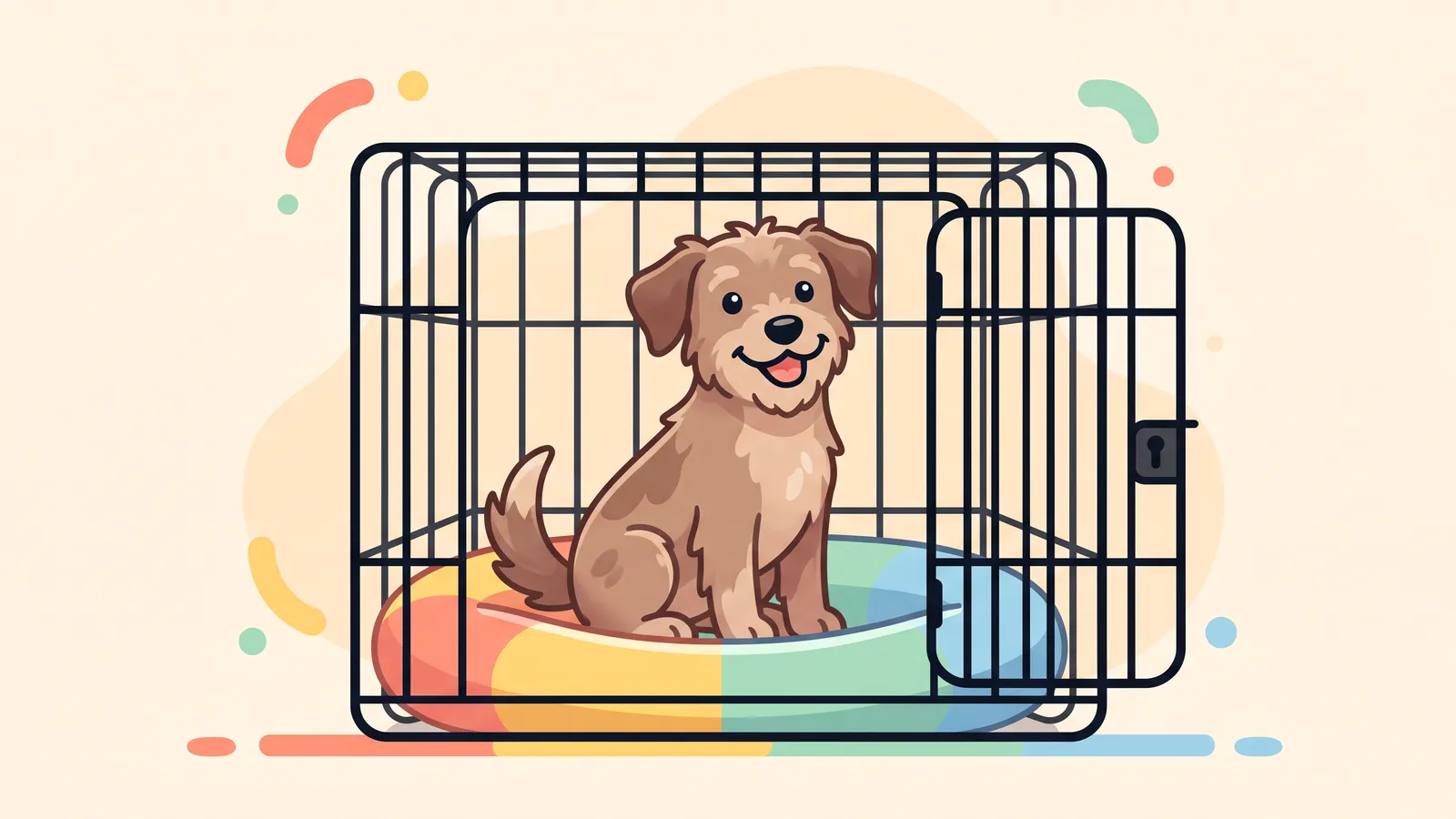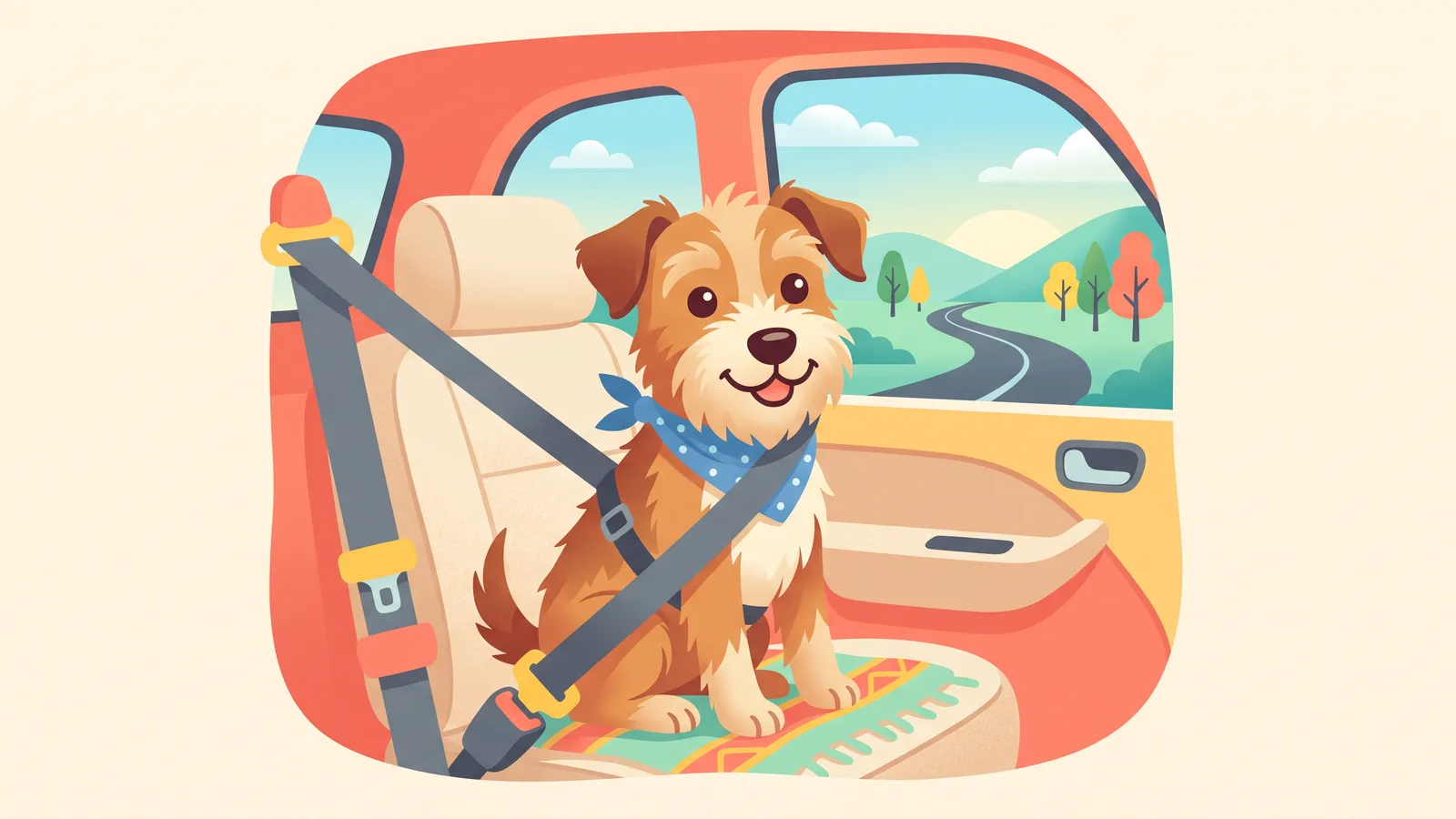
The safest way to travel with a dog in the car is in the back seat, in a restraint that has passed an independent crash test: a CPS Certified harness, crate or carrier in your dog's size. The Center for Pet Safety (CPS) advises against extension tethers and zipline-style products, and booster seats aren't crash protection. Never let your dog ride loose or in the front seat, and never leave them in a parked car.
Most dog car gear is sold on comfort, and much of it says "crash tested" without anyone independent having checked. CPS, a nonprofit that crash-tests pet travel products, describes the field as "an unregulated industry where safety claims go unchecked". So this guide sticks to what CPS has actually found and certified. We haven't crash-tested anything ourselves.
The 6 rules for safe car travel with a dog
- Back seat or cargo area, never the front. CPS says the front seat "is not the safest location in the car for your pet", because it exposes them to "airbag deployment" and "occupant compartment intrusion in frontal crashes".
- Use a CPS Certified restraint, in your dog's exact size. CPS certification is size by size, and crates are certified with a specific strap kit. Check the CPS Certified list before you buy.
- No extension tethers or zip lines. CPS says it "does not recommend extension tethers or zipline-style products" because they increase the risk of injury to you, your passengers and your pet. Its advisory explains that a tether gives a dog too much movement in a sudden stop, so the dog is thrown forward and snapped back.
- Strap crates down with strength-rated anchor straps. CPS says crates should always be secured this way.
- Check your cargo anchors. CPS warns that cargo area anchors "are not always weight-rated" for crash forces, and suggests asking your vehicle manufacturer whether yours are strength-rated.
- Never leave your dog in a parked car. The AKC says heatstroke can develop within minutes in enclosed spaces like cars, and the ASPCA notes it's illegal in several states.
Which restraint for which dog?
| Your dog | Safest option we found | CPS status | Where it goes |
|---|---|---|---|
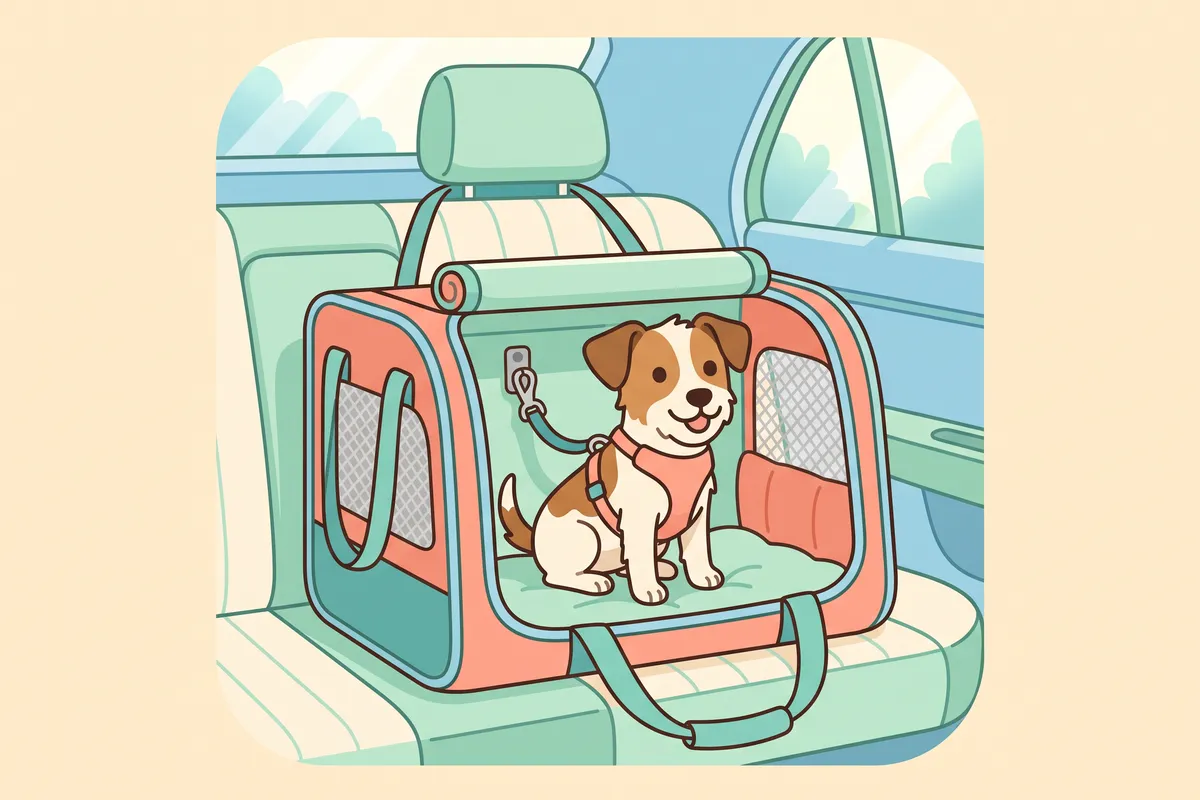
| Up to about 15 lb | CPS Certified carrier, such as the Sleepypod Mobile Pet Bed | CPS Certified, 5 Star, 15 lb test dog | Back seat, belted in as the maker instructs |
| Small to large, rides on the seat | CPS Certified harness, such as the Sleepypod Clickit Sport | CPS Certified, 5 Star, S to XL (CPS rates the Medium to X-Large up to 90 lb) | Back seat, car's seat belt through the harness |
| Very large, rides on the seat | Sleepypod Clickit Range | CPS Certified, 5 Star, 110 lb test dog | Back seat |
| Up to about 75 lb, rides in a crate | Gunner G1 Kennel | CPS Certified, 5 Star, Small, Medium, Intermediate (not Large) | Cargo area, with the tested straps |
| Up to 110 lb, rides in a crate | Lucky Duck Lucky Kennel | CPS Certified, 5 Star, Medium, Intermediate, Large | Cargo area, with the tested straps |
| Any size, booster seat | Not crash protection | CPS certifies no booster seats | Comfort only |
Our data. Method: certified products, sizes, ratings and test dog weights are from each product's page on centerforpetsafety.org, read on October 7, 2026; the tether and cargo advisories were read on October 10, 2026. A product missing from the list may never have been submitted; that isn't proof it failed. Our dog car seat guide has the full CPS table.
How to travel with a large dog in the car
You have two certified routes.
A certified harness on the back seat. CPS lists the Sleepypod Clickit Sport as CPS Certified with a 5 Star rating in Small, Medium, Large and X-Large. The car's own seat belt runs through the harness, so there's no tether, and it doubles as a walking harness. Fitting is fiddly at first; check CPS's weight rating for each size against Sleepypod's girth chart before ordering. A back seat cover underneath protects the upholstery.
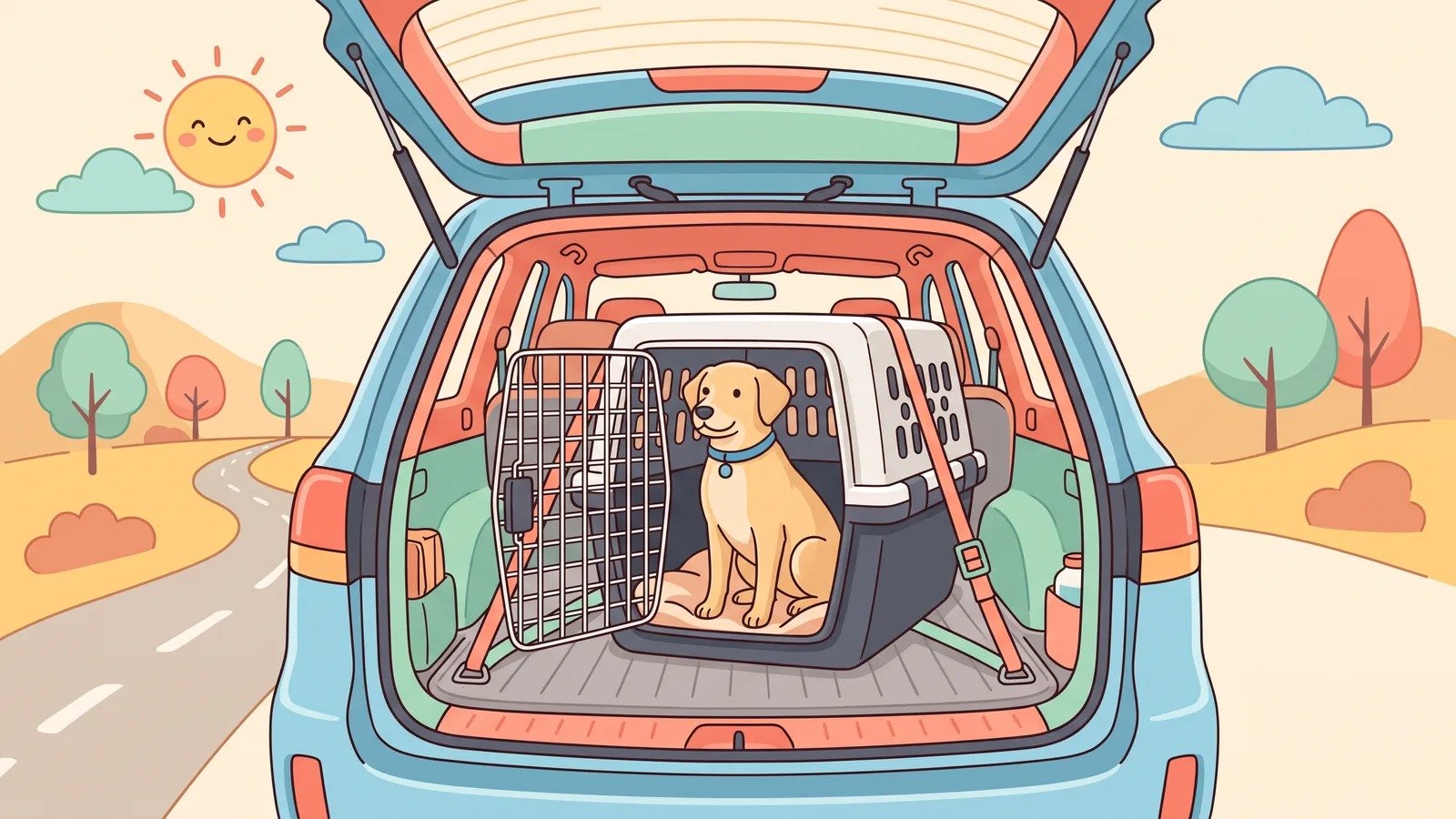
A certified crate in the cargo area. CPS lists the Lucky Kennel with Lucky Ratchet Strap Kit as CPS Certified, 5 Star, in Medium, Intermediate and Large; the Large was tested with a 110 lb dog. For dogs up to about 75 lb, the Gunner G1 Kennel with Strength Rated Anchor Straps is CPS Certified, 5 Star, in Small, Medium and Intermediate. The Gunner Large is not on the CPS list. Gunner says gunner.com is its only authorized retailer unless it says otherwise, so on Amazon, check the seller is Gunner.
How to get a big dog in the car
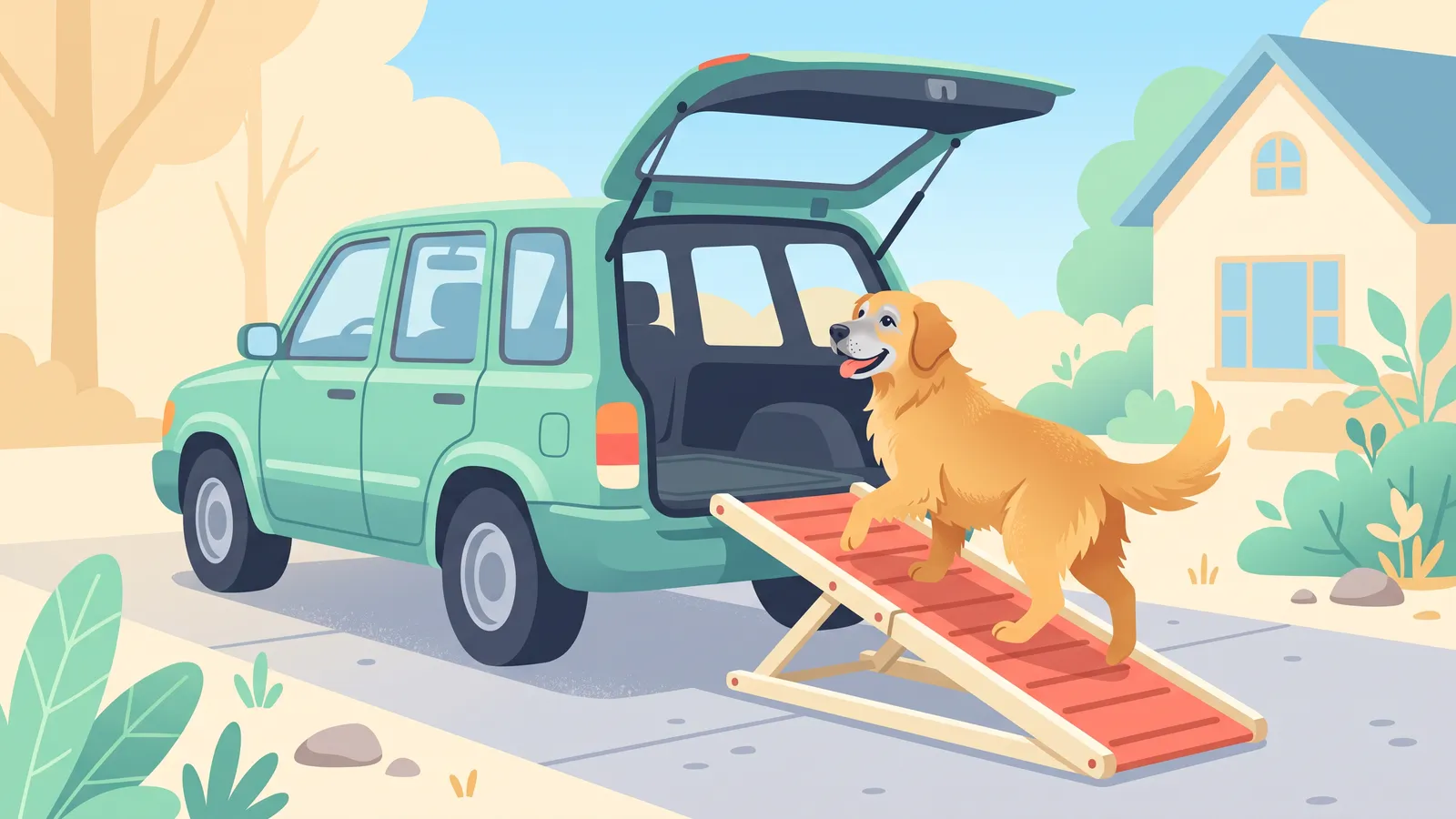
Lifting a big dog into an SUV is hard on your back, and jumping down is hard on theirs. A ramp fixes both. The PetSafe Happy Ride Extra Long Telescoping Ramp slides to any length from 47 to 87 inches, which suits trucks and tall SUVs; PetSafe rates it to 300 lb. Measure ground to cargo floor first: our dog ramp for car guide has lengths by vehicle.
How to travel with a small dog in the car
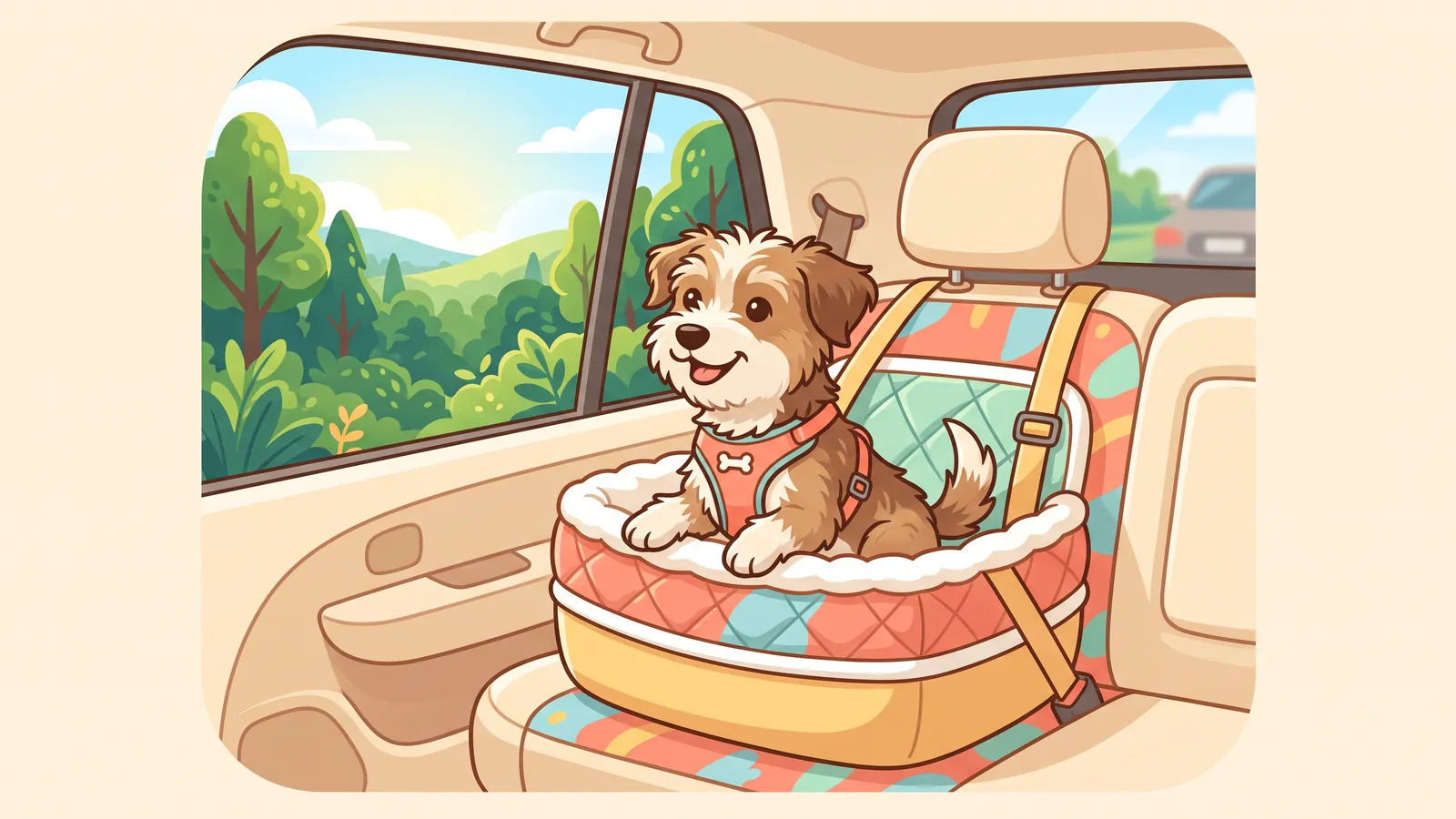
A small dog does best in a certified carrier on the back seat. CPS lists the Sleepypod Mobile Pet Bed as CPS Certified, 5 Star, tested with a 15 lb dog in August 2024. It's also a bed at home, so your dog knows it before the first trip. CPS also certifies carriers from PawsInCar and Away, with test dogs from 7 to 25 lb.
What about booster seats? They lift a small dog to see out and keep them off your lap, which is useful. But in CPS's 2015 pilot study of four popular booster seats, each one had a failure: CPS reports the Kurgo Skybox "became a fully unrestrained projectile", and in two others the test dog ended up "fully unrestrained". Treat a booster as comfort gear only.
Where to put a dog crate in the car
- Small crate or carrier: back seat, secured as the maker instructs (for certified products, exactly as tested).
- Larger crate: the cargo area of an SUV or wagon, strapped down with strength-rated anchor straps. CPS's crate testing found proper straps significantly reduced how far crates moved into the seatback.
- Check the anchors. Ask your vehicle manufacturer whether your cargo anchors are strength-rated and how much the cargo floor can take, as CPS suggests.
- Size it snug. In a car, a crate with less spare room is safer than a roomy one. Our crate size guide explains how to measure, and our travel dog crate guide covers each certified crate size by size.
What doesn't protect your dog in a crash
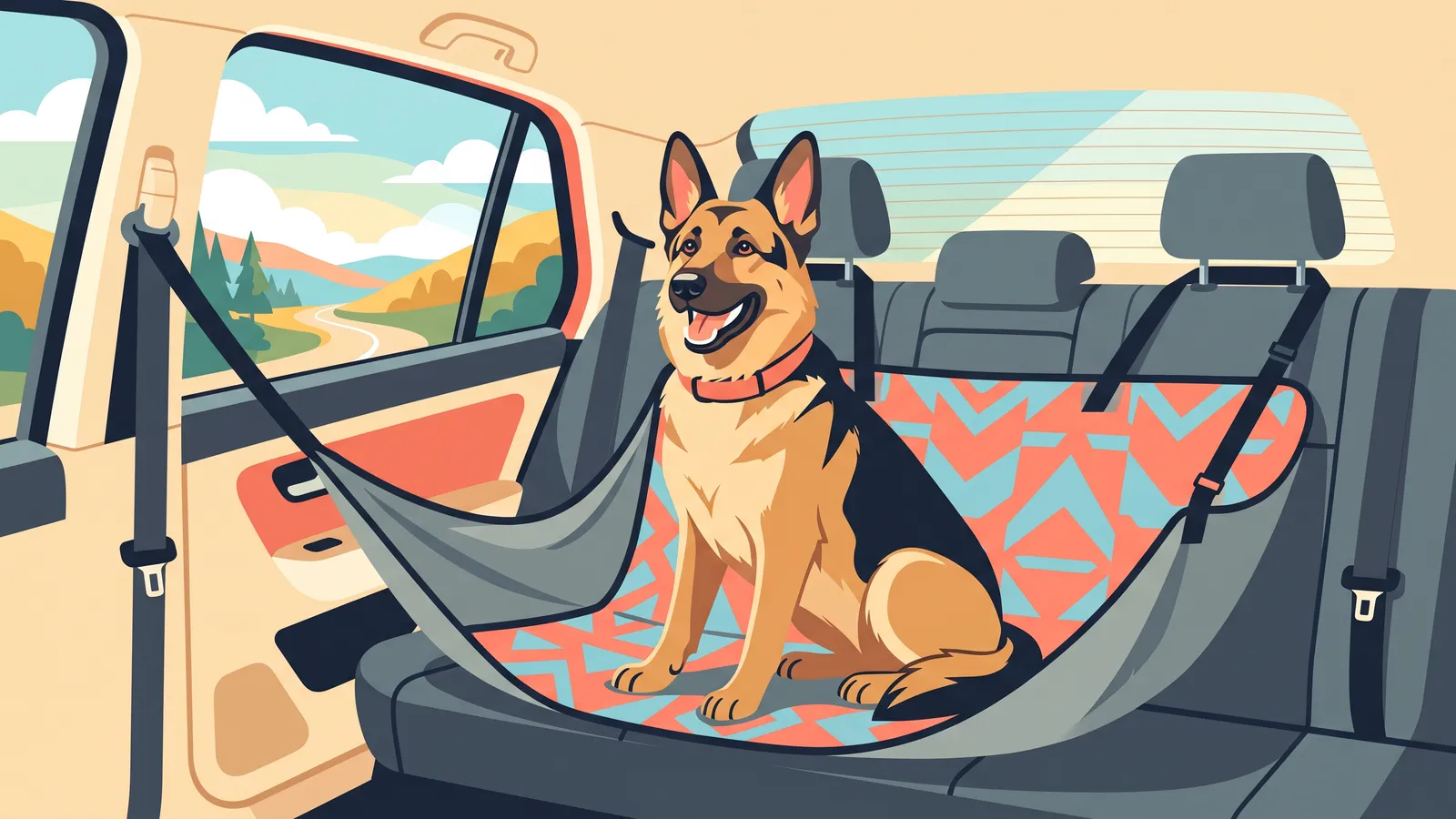
- A seat cover or hammock. It protects your car, not your dog. The 4Knines Rear Seat Cover with Hammock is a sturdy one (a service-dog trainer at Anything Pawsable reviewed it after long-term use), but it's not a restraint.
- Extension tethers and zip lines, per CPS's advisory.
- A collar clipped to anything. Always a harness.
- "Crash tested" on the box, unless the product and size are on the CPS list.
How to get a dog to relax in the car
- Start parked. Sit in the car with the engine off, treats and praise, a minute or two. Then engine on. Then around the block.
- Make the restraint familiar first. Let your dog wear the harness on walks, or nap in the carrier or crate at home.
- End at good places. Short trips to the park beat trips that always end at the vet.
- Keep the car comfortable. Cool air, no loud music, a familiar blanket.
- Plan breaks on longer drives for a drink, a sniff and a toilet stop, on a leash.
If your dog drools, shakes, vomits or panics in the car, talk to your vet: motion sickness and travel anxiety are both worth raising.
FAQs
Is it legal to have a dog loose in the car?
It depends on your state. Rules on restraining dogs in cars vary, and the ASPCA notes that leaving a pet in a parked car is illegal in several states. Whatever the law says, CPS's advice is the same everywhere: a certified restraint, in the back.
Can my dog ride in the front seat?
Not safely. CPS says the front seat exposes pets to airbag deployment and to intrusion into the cabin in a frontal crash.
Are dog seat belt tethers safe?
CPS doesn't recommend extension tethers or zipline-style products. It says they give a dog too much movement in a sudden stop and can cancel out a harness's crash protection. Use a certified harness that the car's own seat belt runs through, as its maker instructs.
Is a crate or a harness safer in the car?
Both can be, if they're CPS Certified in your dog's size and used as tested. A crate suits dogs who ride in the cargo area and settle well in a crate; a harness suits dogs who ride on the back seat.
How often should I stop on a road trip with a dog?
There's no set rule. Plan stops for water and a short leashed walk on long drives, and more often for puppies, seniors and dogs who get anxious. Never leave your dog in the car while you stop, even briefly.
Back seat, certified gear in the right size, no tethers, and never a parked car: those four habits do more for your dog's safety than anything else you can buy.