Most dogs eat fast because of instinct, habit or competition: their ancestors had to finish a meal before someone else took it, and dogs from litters, shelters or multi-pet homes often never lose the rush. Sometimes fast eating is new or comes with extreme hunger, and then a vet should rule out medical causes. Either way, a slow feeder, a puzzle toy or a few smaller meals usually stretch a 30-second meal into several minutes.
Fast eating is common and usually fixable. The part worth taking seriously is the risk: gulping can cause choking, vomiting and, in deep-chested breeds, bloat. Here is what drives it and how to slow it down.
Why dogs eat so fast
According to Preventive Vet's Dr. Beth Turner, common reasons are:
- Competition. Another dog or cat in the home, or a past as a stray or shelter dog, can teach a dog to eat before the food disappears.
- Anxiety or resource guarding. A stressed dog may bolt food to feel safe.
- Instinct. Scavenging ancestors benefited from eating quickly, and dogs have far fewer taste buds than people.
- Medical causes. Hormonal disorders such as Cushing's disease or thyroid problems, intestinal worms, an incomplete diet and steroid medications like prednisone can all push appetite up.
A dog who has always eaten fast is usually a habit case. A dog whose appetite suddenly jumps, or who is eating a lot but losing weight, deserves a vet visit rather than a new bowl.
Is eating fast dangerous?
It can be. Dr. Turner lists:
- Choking on food swallowed whole.
- Vomiting or regurgitating right after the meal, from a stomach stretched by food and swallowed air.
- Bloat (GDV). Swallowed air raises the risk in deep-chested breeds, and Preventive Vet calls GDV potentially rapidly fatal. Slowing down is not a guarantee against it.
- Poorer digestion, discomfort and weight gain from begging for a second dinner.
Learn the signs of bloat now, such as a swollen, hard belly, retching with nothing coming up, restlessness and drooling. It is an emergency: call your vet or an emergency clinic right away.
How to slow your dog down
Start with the free fixes, then add gear.
Free fixes
- Muffin tin. Spread the food across the cups. A tennis ball or a little water in each cup slows things further.
- Float the kibble. Add water so the pieces float and are harder to inhale.
- Split the day's food into smaller meals. Keep the total within your dog's calorie needs.
- Feed pets separately, in a quiet, consistent spot, so nobody is racing a rival.
- Never put rocks or small balls in a bowl. Any blocker must be too large to swallow.
Gear that does the work
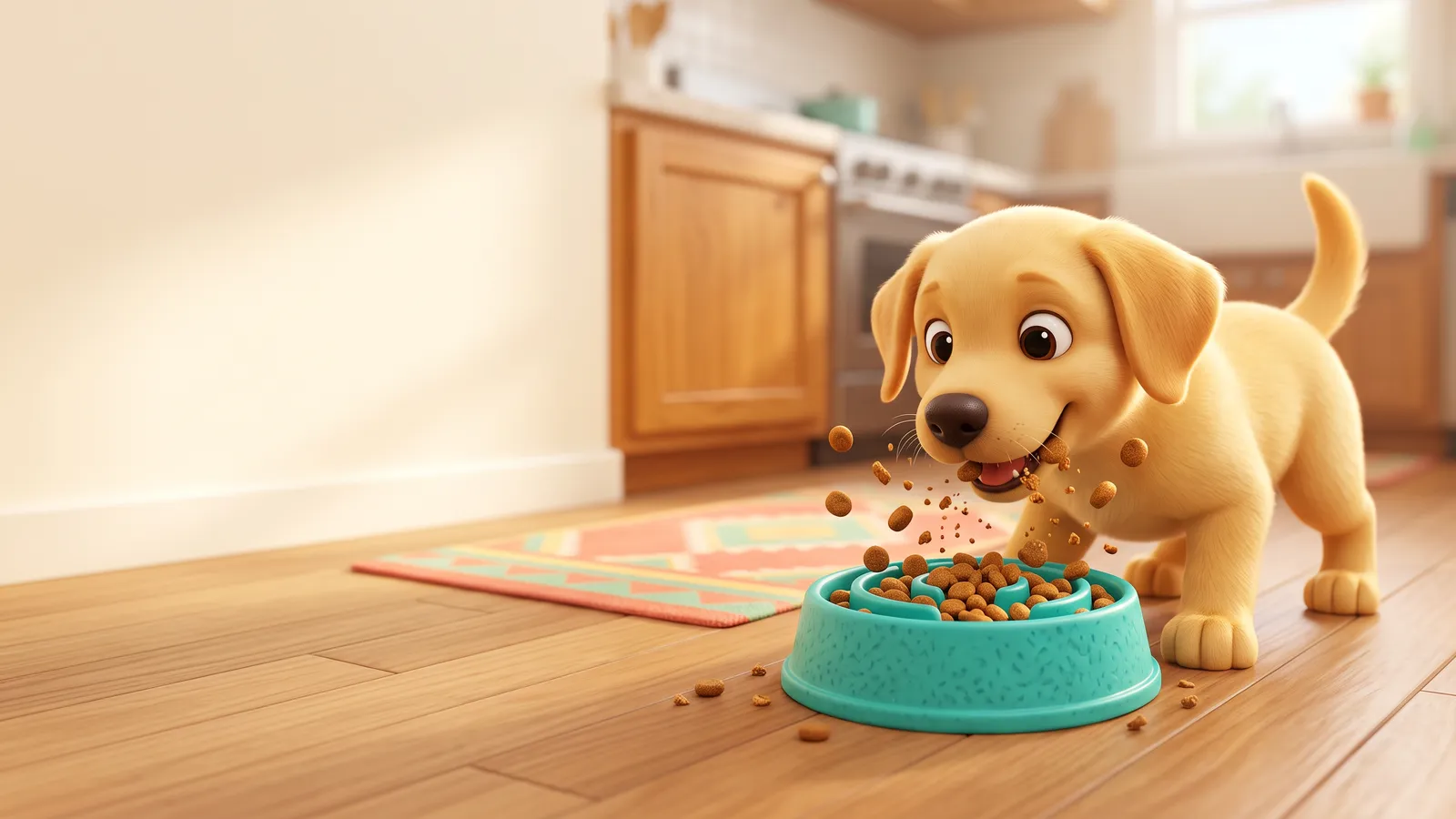
Dr. Turner suggests filling a slow feeder only about one third to one half full, choosing a bowl that suits your dog's size and face shape, cleaning it well, and watching a meal or two to check it works.
What we'd buy
Outward Hound Fun Feeder Slo-Bowl. A maze of ridges makes your dog eat around obstacles. Preventive Vet names Outward Hound's maze bowl as one example of this type. Pick the size by your dog's muzzle, and skip it if your dog is a flat-faced breed who struggles to reach the food.
KONG Wobbler. Kibble falls out as your dog tips and nudges it, so dinner becomes a game. Preventive Vet names it, and one of its team's dogs went from about 10 seconds to 3 to 4 minutes per meal with a slow feeder. It is loud on hard floors.
West Paw Toppl. A hollow rubber toy you stuff with a meal of wet food or kibble. It suits dogs who ignore bowls, and it keeps them busy after the food is gone. Preventive Vet names it too.
A snuffle mat. Scatter the kibble in the fabric folds and your dog sniffs it out. Preventive Vet recommends scattering food on a snuffle mat or a yoga mat. Mats are fabric, so supervise chewers.
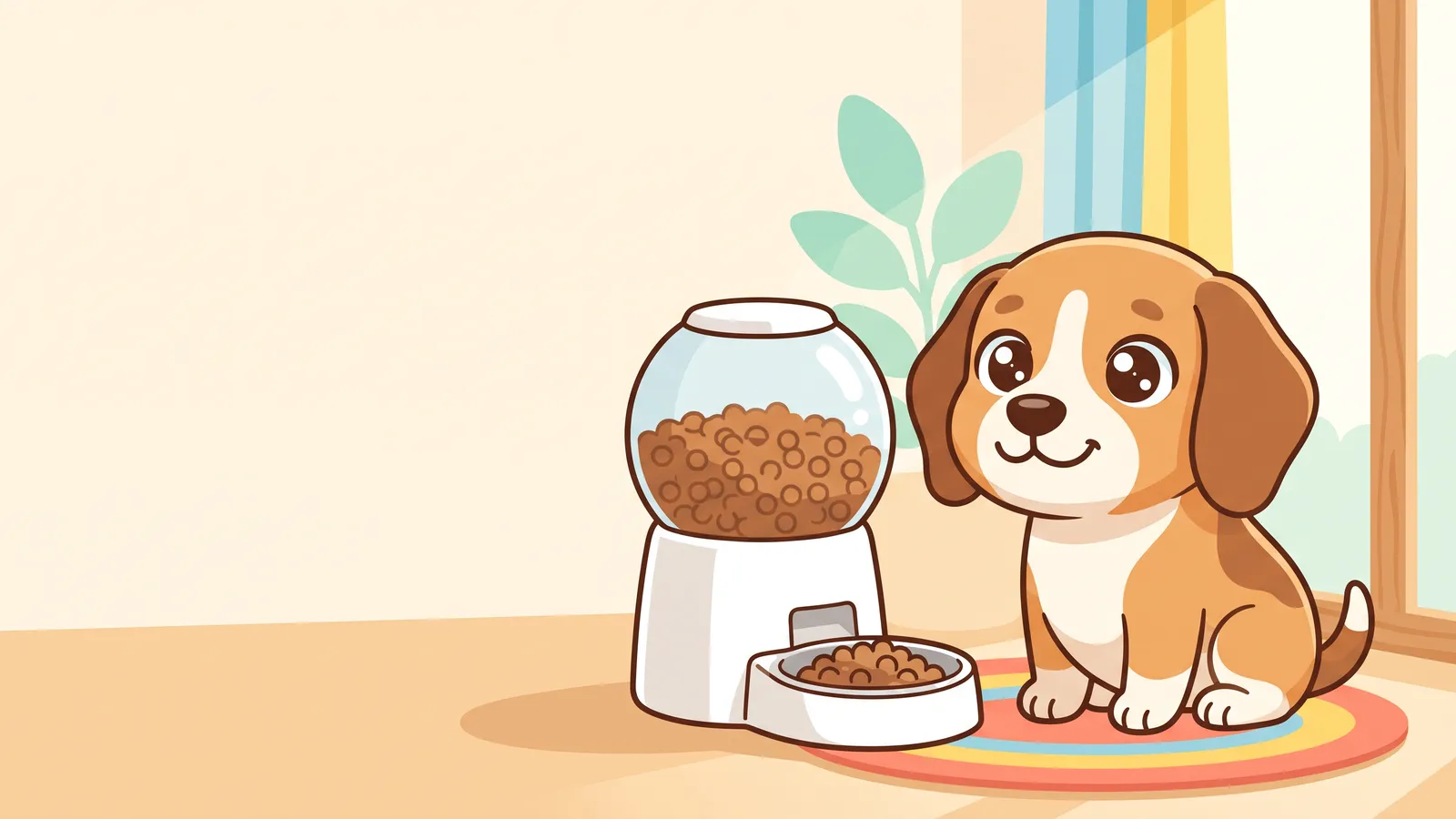
Travelling or out all day? Our automatic dog feeder guide covers feeders with a slow-feed setting, and what is safe while you are away.
This guide is general information, not veterinary advice. See your vet if your dog's appetite changes suddenly, if gulping comes with weight loss, frequent vomiting or a swollen belly, or if you suspect anxiety or guarding around food. A hard, swollen belly with retching and restlessness can be bloat, an emergency: call a vet immediately.
FAQs
Why does my dog eat so fast, as if he is starving?
Usually habit, instinct or competition. If it started suddenly, or your dog is also drinking more or losing weight, ask your vet to check for hormonal problems, worms or diet gaps.
Why does my dog eat so fast and then throw up?
Gulping fills the stomach with food and air, and it can come back up. Slow the meal down and split the ration. If vomiting keeps happening, talk to your vet.
Do slow feeder bowls really work?
For most dogs they stretch meals out. Dr. Turner reports one dog going from about 10 seconds to 3 to 4 minutes. Some dogs stay fast through excitement or anxiety, so watch how your dog eats and check with your vet if it does not help.
Is it normal for a puppy to eat fast?
It is common, especially for dogs raised competing with littermates. Smaller meals and a separate quiet spot help, and your vet can confirm your puppy's food amounts.